


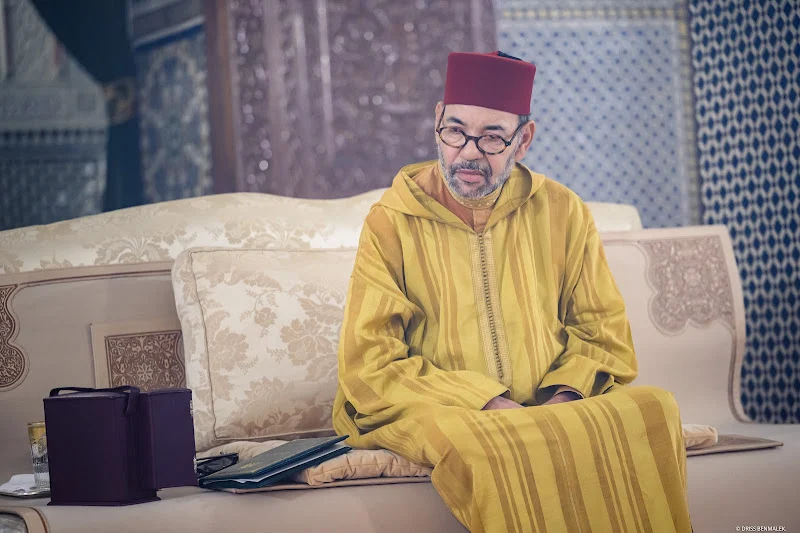
During the Mawlid Annabaoui celebration at the Royal Palace in Rabat, Minister of Endowments and Islamic Affairs Ahmed Toufiq underlined the place of Ceuta in Moroccan religious heritage, speaking before King Mohammed VI.
A formal address before the King in Rabat
The religious ceremony took place at the Royal Palace in Rabat, in the presence of King Mohammed VI, Crown Prince Moulay El Hassan, Prince Moulay Rachid and Prince Moulay Ahmed.
Within this solemn setting, Ahmed Toufiq presented the annual report on the activities of the Supreme Council of Ulema and local councils of ulema. It was during this address that he referred to Ceuta in Moroccan religious heritage.
The minister recalled the particular nature of the bond linking Moroccans to the prophetic tradition, a bond he described as both political and emotional.
Bay‘a, supreme Imamate and territorial integrity
On the political side, Ahmed Toufiq stressed that Moroccans entrust their “supreme Imamate to the Chorfas, descendants of the Prophet”, through the pact of Bay‘a.
According to him, this pact aims to safeguard:
- the integrity of the national territory;
- the religious and national constants of the Kingdom;
- fair arbitration between the different components of the community.
The minister presented this institutional framework as a core element of Morocco’s political and religious heritage, with the monarchy acting as its guarantor.
Ceuta in Moroccan religious heritage
On the emotional side, Ahmed Toufiq highlighted the importance of works devoted to the Prophet in Moroccan religious culture. He cited in particular Ash-Shifa by Qadi Ayyad and Ad-Durr Al-Munaddham by Al-Azafi.
He reminded the audience that both scholars were originally from Ceuta, today an occupied enclave, thereby stressing the role of Ceuta in Moroccan religious heritage and in the formation of this spiritual legacy.
The minister also focused on Dala’il Al-Khayrat by Imam Al-Jazouli, which he presented as a symbol of how Moroccans mobilised “for the liberation of the occupied cities on the Atlantic coast at the beginning of the modern era”.
A message that resonates in today’s context
Officially, this reference to Ceuta and other occupied cities was part of an exposition on religious heritage and the attachment of Moroccans to the Prophet.
Yet it comes at a diplomatically sensitive time around Ceuta and the occupied cities, giving the message added weight. It underlines that the debate over these territories is also rooted in the Kingdom’s religious and intellectual history.
For Moroccans living abroad, this insistence on historical and spiritual links with Ceuta and other occupied cities adds a deeper dimension to the political file. It helps explain how Morocco weaves together, in official discourse, territorial sovereignty, religious heritage and the monarchy’s role as a unifying authority.
The ceremony was also marked by Quran recitations and panegyrics of the Prophet, in line with how Mawlid is traditionally celebrated in Morocco.
For more context, readers can follow Canal212 news for Moroccans abroad.
For official updates, readers can check the relevant official source.
Don’t miss out on the latest news from the diaspora!
Sign up for our next newsletter to receive our practical guides, advice (on procedures and investment) and the latest news for French nationals living abroad, delivered straight to your inbox.