


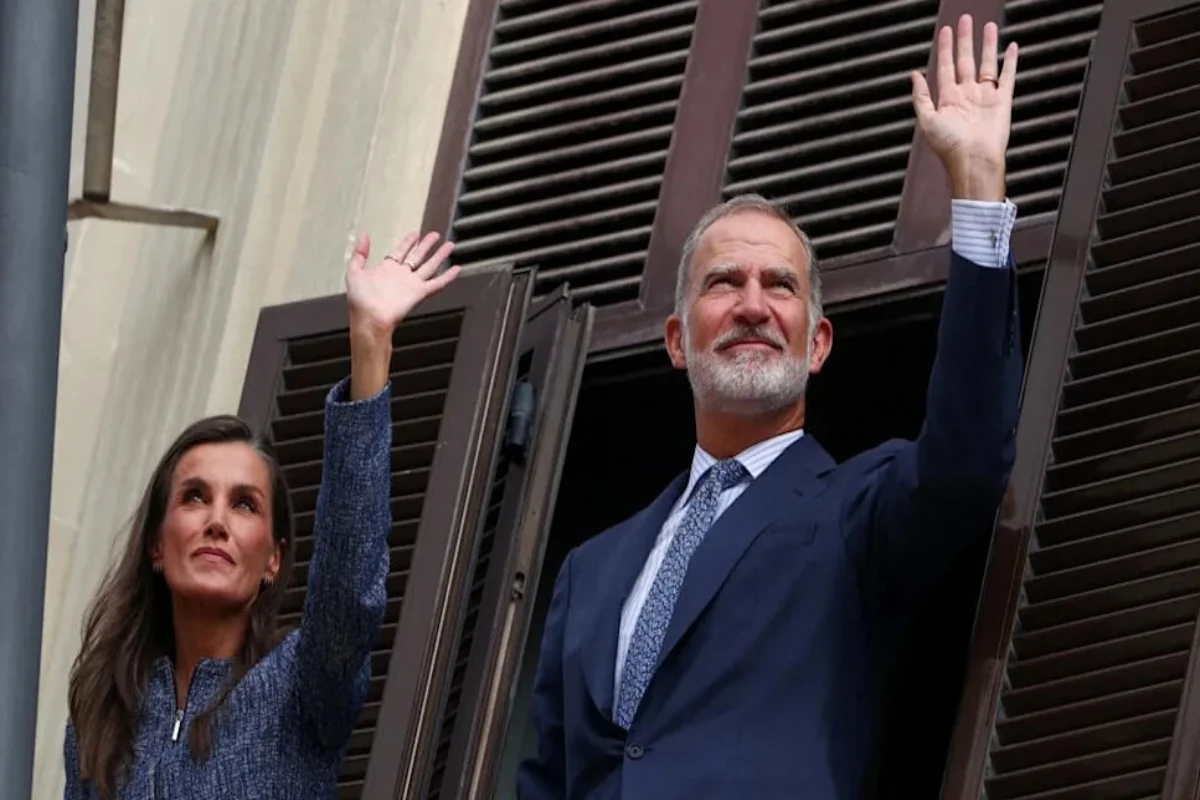
This update focuses on Ceuta visit Felipe VI. King Felipe VI’s rare visit to Ceuta, just over two months after a major migration crisis at the border, is raising new questions among Moroccans about what comes next for crossings between Morocco and Spain.
Ceuta visit Felipe VI: a highly political trip
King Felipe VI and Queen Letizia travelled to Ceuta on Tuesday 13 October for an official visit focused on local institutions and residents. On paper, the programme was institutional. In reality, the timing gives the trip a clear political weight.
The royal couple had never visited Ceuta since Felipe VI took the throne in 2014. The last time a Spanish monarch travelled to the occupied presidios of Ceuta and Melilla was in 2007. Since then, migration, border security and the relationship between Rabat and Madrid have all evolved sharply.
July’s crisis, which saw tens of thousands of people converge on Ceuta’s border, pushed control and reception systems to their limits. Weeks later, the city is still dealing with the consequences and the issue remains politically sensitive in Spain.
A visit planned before the crisis, but reshaped by it
According to several political analysts, the Ceuta visit Felipe VI was already on the table before the events of July. The migration crisis was therefore not the trigger, but it has clearly changed how the trip is perceived.
In his speech in Ceuta, Felipe VI sent two parallel messages: on one hand, a firm reaffirmation of Spain’s position on the city; on the other, an explicit call to preserve good neighbourly relations with Rabat, based on trust and cooperation.
He underlined the importance of joint work on migration, security and the fight against smuggling networks. For Moroccans living abroad, this balance matters: the royal visit fits into the long-term relationship between Rabat and Madrid more than into a short‑term reaction to the July events.
What does it change for Moroccan travellers?
In the short term, this visit does not directly alter border rules or travel conditions between Morocco and Spain. No new concrete measures on visas, checks, or maritime and air links were officially announced in connection with the trip.
However, the Ceuta visit Felipe VI is part of a bigger picture in which the border remains a sensitive symbol for both countries. For Moroccans abroad and families who travel regularly, several points are worth monitoring:
- how security cooperation between Rabat and Madrid develops;
- future decisions on managing migration flows at the Ceuta border;
- possible adjustments to controls during peak travel seasons, such as summer and school holidays;
- political signals that could influence the overall atmosphere at crossing points.
For now, both capitals continue to highlight their “close” cooperation on migration and security. But July’s crisis showed how quickly the Ceuta border can move back to the centre of Spanish and European concerns.
Practical takeaways for Moroccans abroad
For Moroccans living overseas who are planning trips through Spain or back home, the immediate impact of the this case is mostly symbolic. It confirms that the border issue is being handled at the highest political level in Madrid, while Rabat remains a key partner in managing migration flows.
In the coming months, travellers will need to:
- follow official updates from Moroccan and Spanish authorities before any sensitive journey;
- check practical information regularly with airlines, ferry companies and consulates;
- stay alert to possible political tensions that could translate into tougher checks at certain times.
In the absence of new concrete rules, vigilance mainly means staying informed. Moroccan travellers should track how Rabat–Madrid relations evolve and watch for any operational changes at the Ceuta border, while avoiding rumours and unverified claims.
A border shaped by human and economic ties
Beyond the political symbolism, this visit is a reminder that Ceuta sits at the crossroads of several realities: sovereignty, security, but also the daily movement of workers, families and traders between the two shores.
For Moroccans in Europe, the royal trip does not, at this stage, force them to change travel plans or returns to the country. It does signal, however, that the border will remain a central topic in talks between Rabat and Madrid, with potential consequences for mobility whenever new decisions are made.
For more context, readers can follow Canal212 news for Moroccans abroad.
For official updates, readers can check the relevant official source.
Don’t miss out on the latest news from the diaspora!
Sign up for our next newsletter to receive our practical guides, advice (on procedures and investment) and the latest news for French nationals living abroad, delivered straight to your inbox.