


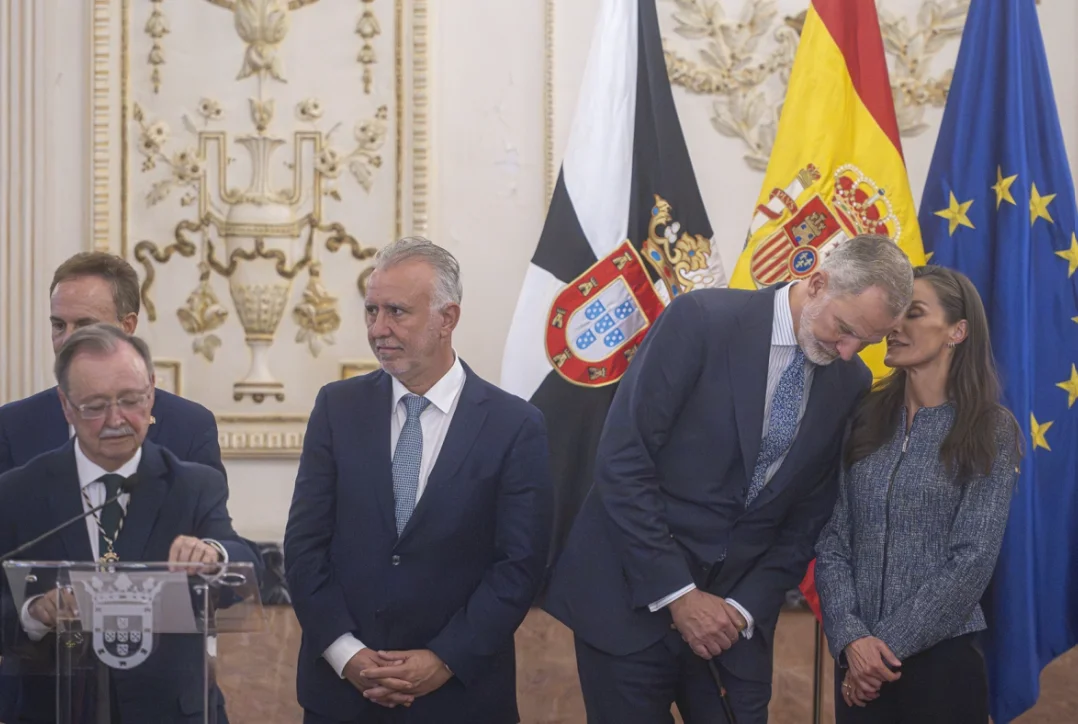
This update focuses on royal visit Ceuta Melilla. The visit of King Felipe VI and Queen Letizia to Ceuta and Melilla has revived a highly sensitive issue for Rabat, with migration management and the diplomatic balance between the two kingdoms in the background.
Royal visit Ceuta Melilla presented as “normal” by Madrid
The royal visit Ceuta Melilla has been described as “historic” by Spanish government spokesperson Elma Saiz. She stressed the “absolute normality” of a trip by the royal couple to “two Spanish cities”.
The official message aims to defuse any controversy. Government sources in Madrid highlight the “excellent diplomatic relations” with Morocco and say they hope for a calm atmosphere.
Behind the scenes, however, some circles within the Moncloa do not rule out a Moroccan response. According to the Spanish press, the possibility that Morocco could recall its ambassador to Madrid for consultations is being floated as a scenario.
A 2007 precedent and a tense migration backdrop
This scenario is based on a well-known precedent. In 2007, Rabat recalled its ambassador to Spain to protest a visit by King Juan Carlos I and Queen Sofía to Ceuta and Melilla.
The current situation is more complex. The visit comes after undeclared tensions between Spain’s royal household and the government over its timing, in a context marked by the arrival of large numbers of migrants in Ceuta at the end of July.
According to the latest official figures cited by Spanish media, 11,686 people have returned to Morocco. Of these, 10,161 did so voluntarily and 525 were expelled. The identities of 3,019 minors have also been recorded; 89 were transferred under family reunification arrangements and 173 relocated to other regions of Spain.
The visit also coincides with reports of incursions by Moroccan warships into Ceuta’s waters on 30 and 31 July. Madrid says this episode was handled within the framework of good-neighbourly relations.
What does this mean for Moroccans living abroad?
For Moroccans living abroad, this royal visit Ceuta Melilla does not, at this stage, change travel or return conditions. No official tightening concerning visas, ferry or air links, or border checks has been announced.
However, the episode is a reminder of how fragile the relationship between Rabat and Madrid remains. That relationship is crucial for:
- the organisation of sea crossings between Morocco and Spain;
- the management of seasonal flows of workers and travellers;
- cooperation on migration and security issues.
For families based in Spain or elsewhere in Europe who transit through Spanish territory to reach Morocco, a sudden deterioration in bilateral ties could complicate journeys, as seen in previous crises.
This is why both capitals insist, at least publicly, on continuity in cooperation. Madrid stresses the “normality” of the visit and today’s “excellent relations”, while Rabat has not yet issued any official reaction.
A key partnership to watch for the Moroccan diaspora
Morocco–Spain relations remain strategic for return plans, investments and mobility projects of Moroccans abroad, particularly in Europe. Bilateral decisions directly affect consular delays, entry conditions and prospects for cross-border projects.
Moroccans living in Europe therefore have every interest in closely following this file, relying on official channels in both countries and, for practical steps, on specialised guides such as the Canal212 guide on key procedures for Moroccans abroad.
For now, Madrid maintains a discourse of appeasement. But recent history shows that Ceuta and Melilla can at any moment return to the centre of a serious diplomatic crisis between the two neighbours.
What the next days will reveal
Any official reaction from Rabat, if it comes, will be decisive in gauging the scale of this episode. A recall of the ambassador would signal significant tension, while the absence of a strong gesture would confirm a shared will to preserve the current phase of cooperation.
In the meantime, no concrete change affects the usual travel of Moroccans abroad to and from their home country. The coming days will show whether this visit remains a symbolic moment or whether it reopens a cycle of tensions between the two kingdoms.
For more context, readers can follow Canal212 news for Moroccans abroad.
For official updates, readers can check the relevant official source.
Don’t miss out on the latest news from the diaspora!
Sign up for our next newsletter to receive our practical guides, advice (on procedures and investment) and the latest news for French nationals living abroad, delivered straight to your inbox.