


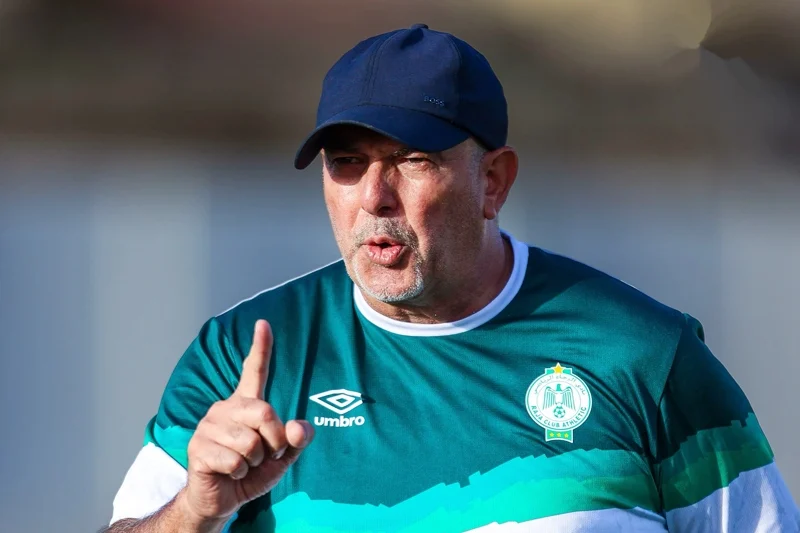
This update focuses on Raja Casablanca sporting director. The end of the collaboration between Raja Casablanca and Tunisian coach Nabil Kouki has brought a sensitive question back to the surface: how should Moroccan clubs organise the balance of power between the head coach and the sporting director?
A departure that goes beyond Raja Casablanca itself
According to information from sources close to the case, Nabil Kouki repeatedly pointed to a lack of clarity over how responsibilities were shared between the technical staff and the sporting department led by Portuguese official Rogério Matias.
The talks did not lead to a framework that the coach considered acceptable, and the partnership with Raja Casablanca came to an end. Beyond the shock for fans, this exit raises broader questions about the model of sporting governance used by Moroccan clubs.
For Moroccans living abroad, many of whom feel a strong connection to Raja and the Botola, the episode is a reminder that any project remains fragile as long as roles and decision-making powers are not clearly defined.
Raja Casablanca sporting director: where does the coach’s job stop?
Over the past few seasons, the sporting director position has slowly taken root in professional Moroccan clubs. But in many structures, the exact scope of this job is still unclear, and that ambiguity can fuel tension.
Moroccan coach Abderrahim Taleb argues that the relationship between head coach and sporting director must be built on close cooperation, while keeping their areas of responsibility strictly separated.
- The head coach defines the playing philosophy, the team’s sporting needs and the profiles of the players required.
- The sporting director turns those needs into a recruitment strategy.
- The club’s board arbitrates, in line with the overall project and available funds.
In practical terms, if a coach asks for a quick central defender who can hold a high line and build from the back under pressure, the sporting director has to identify available profiles, assess the costs and submit options to the staff and management.
Why this matters to fans abroad following Moroccan football
The situation at Raja Casablanca shows how a lack of clear boundaries between head coach and sporting director can weaken a project, even in a historic club with a huge fan base in Morocco and across the Moroccan community abroad.
For Moroccans living in Europe, North America or the Gulf, following the Botola and iconic clubs such as Raja or Wydad is often a key emotional link with home. The stability of these institutions therefore matters to this audience as well, who watch matches from abroad, buy merchandise when visiting Morocco and pass this passion on to their children.
In the medium term, clarifying the role of the sporting director could bring several concrete benefits:
- More consistent recruitment policies.
- Continuity of the project when coaches change.
- A long-term vision for the academy and reserve teams.
- Clearer communication with fans, both in Morocco and abroad.
For clubs that aspire to meet international standards, building a clear model in which each actor assumes their responsibilities is becoming essential. Nabil Kouki’s departure therefore looks less like just another twist in Raja’s turbulent story and more like a sign that professional football in Morocco is still working on its internal architecture.
The coming months will show whether this episode pushes club managements to formalise more clearly how coaches and sporting directors work together, in order to avoid further early break-ups and to strengthen the sporting projects closely followed by supporters in Morocco and across the world.
For more context, readers can follow Canal212 news for Moroccans abroad.
For official updates, readers can check the relevant official source.
Don’t miss out on the latest news from the diaspora!
Sign up for our next newsletter to receive our practical guides, advice (on procedures and investment) and the latest news for French nationals living abroad, delivered straight to your inbox.