

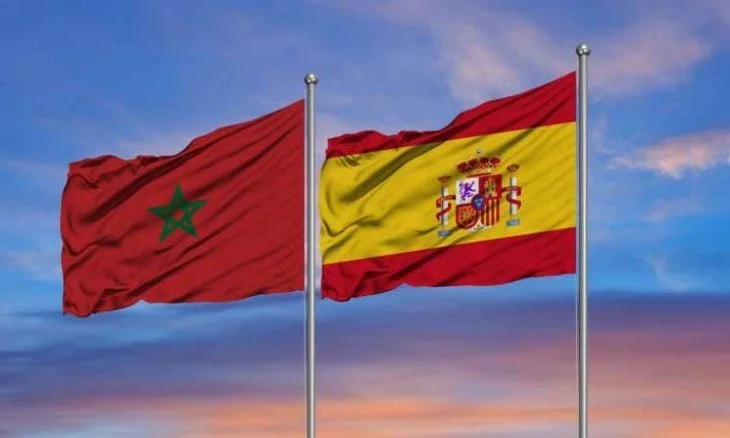
This update focuses on Morocco key market for Spanish exports. Morocco is emerging as a key market for Spanish exports, now close to the level of the United States, according to Spain’s Economy Minister Carlos Cuerpo.
Morocco key market for Spanish exports, close to the US
Speaking on Monday, the First Vice‑President of the Spanish government underlined the growing importance of the Kingdom for Spanish companies. He said Spanish exports to Morocco now exceed €12 billion, compared with €16 billion to the United States.
For Carlos Cuerpo, this narrow gap shows how strategic a Morocco key market for Spanish exports has become in Madrid’s economic policy. He called for continuing efforts to strengthen the presence of Spanish products and companies in the Kingdom.
This trend confirms Morocco’s role as Spain’s main trading partner south of the Mediterranean. Trade flows mainly cover automotive products, agrifood, capital goods and services.
Impact on projects and purchases for Moroccans abroad
For Moroccans living in Spain and across Europe, this stronger relationship can have several concrete consequences in the coming months.
- A broader Spanish offer in Morocco, especially in retail, automotive, tourism and services.
- More career opportunities for Moroccans abroad working for Spanish firms active on both shores.
- Greater interest in joint business partnerships, where bilingual and bicultural profiles have a clear advantage.
Over time, this deeper integration may influence prices, competition and quality for some products available in Morocco, including those that Moroccans abroad buy when they return home.
For Moroccan entrepreneurs in the diaspora, Morocco’s position as a key market can also make it easier to find Spanish industrial or distribution partners already well established between the two countries.
Economic ties framed by reciprocity
Carlos Cuerpo insisted on one central principle: in his view, trade, economic and financial relations must be based on reciprocity. That is what Spain expects from its counterparts, including Morocco.
His remarks come at a time when the two countries are experiencing record‑high levels of trade, while still exposed to occasional political or migration tensions. The minister was in fact questioned about the recent mass arrival of migrants in Ceuta at the end of July.
He chose not to speculate on possible Spanish actions if Morocco’s involvement were proven. Instead, he stressed the importance of bilateral economic relations first, while noting that the investigation is continuing to understand the causes of the influx.
Migration, investigation and a message to Ceuta residents
The Spanish official underlined that this economic approach does not prevent Madrid from deploying all necessary means to avoid a repeat of such migration events. Once the facts are established, he said, firm measures will have to be taken.
He presented this as the message the government wants to send to the residents of Ceuta, a city on the frontline of the border between Spain and Morocco.
For Moroccans living abroad, this episode is a reminder that bilateral ties combine strong economic complementarities with sensitive political issues. The status of Morocco as a key market for Spanish exports is an important lever, but it fits within a broader balance where cooperation and reciprocity weigh as much as political context.
Moroccans abroad who are planning business projects, investments or professional returns between the two shores will therefore need to monitor both official economic data, including from institutions such as Bank Al‑Maghrib, and the evolving dialogue between Rabat and Madrid.
For more context, readers can follow Canal212 news for Moroccans abroad.
For official updates, readers can check the relevant official source.
Don’t miss out on the latest news from the diaspora!
Sign up for our next newsletter to receive our practical guides, advice (on procedures and investment) and the latest news for French nationals living abroad, delivered straight to your inbox.