


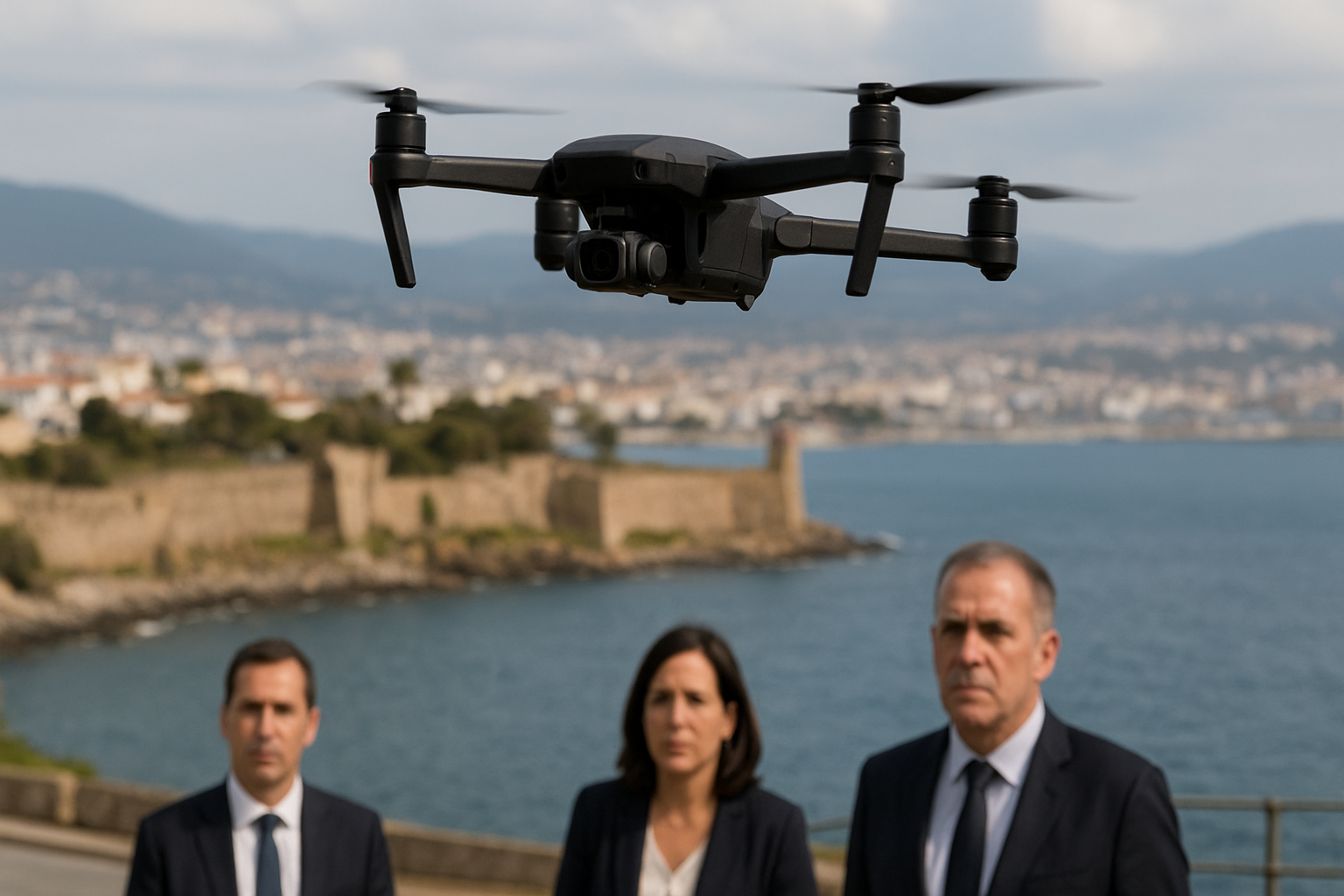
Reports of a Moroccan drone over Ceuta on 9 September, allegedly operated by the Royal Armed Forces (FAR), have stirred debate in Spain about security and surveillance over the enclave.
Moroccan drone over Ceuta: what to know
According to Spanish outlets including ABC, the authorities detected a Moroccan drone over Ceuta while the directors of the National Police and the Guardia Civil, Francisco Pardo and Mercedes González, were paying an unannounced visit to the border area.
The same reports say the aircraft carried a device under its fuselage designed to bypass potential electronic jamming systems. At the same time, Spanish army drones were already active in the area to secure the senior officials’ movement.
So far, neither Madrid nor Rabat has issued a detailed official statement confirming or denying the incident. At this stage, information about the Moroccan drone over Ceuta is based on media narratives that still need institutional confirmation.
What this says about Morocco–Spain security ties
The alleged presence of a this case comes as Spain closely monitors Morocco’s growing military and surveillance capabilities, particularly after the migration crisis that hit Ceuta in 2021.
Yet in February 2022, the Spanish government clearly stated, in response to a question from a senator of the Compromís party, that Morocco is “sovereign” in deciding to deploy missiles and drones near Ceuta and Melilla. Madrid stressed that Rabat has the right to manage its borders with the tools it deems appropriate.
On the Moroccan side, this trend has gone hand in hand with structural changes. In 2022, the FAR created a new military zone in the east of the country, which includes the regions facing Ceuta and Melilla.
Spanish response: anti-drone systems and disputed islets
Despite acknowledging Moroccan sovereignty over its defence choices, Spain has moved to strengthen its own posture. In 2024, it deployed anti-drone systems on several small Mediterranean islets it controls and that Morocco claims.
Among them is the Chafarinas archipelago, located about three kilometres off Ras El Ma on the Moroccan coast. These deployments show Madrid’s determination to tighten control over its airspace, including against unmanned aircraft.
For Moroccans living abroad who travel frequently through northern Morocco or via Spain, these moves remain, for now, mostly military and diplomatic. They do not translate at this stage into concrete changes in border formalities or ferry and flight connections.
What it could mean for travel and return plans
The case of the this issue nevertheless highlights several elements that are worth keeping in mind when planning trips or a possible return to Morocco:
- the Morocco–Spain land and sea border is under very tight and increasing surveillance;
- both Rabat and Madrid are investing heavily in technology (cameras, radars, drones) to manage migration flows and security;
- high-profile incidents can fuel political tension, without necessarily affecting travellers in the short term.
For Moroccans abroad who use Ceuta as a crossing point or drive between Europe and Morocco, the current framework remains that of standard border checks. Should anything change, reliable information will come from Moroccan and Spanish authorities and consular services.
Pending any official confirmation or clarification about this episode, it adds to the signals showing how northern Morocco has become a laboratory for new security practices, with the drone emerging as a central tool for surveillance on both sides of the strait.
To prepare trips and returns home with peace of mind, Moroccans living abroad should monitor these developments calmly, relying on official communications and practical updates from consulates and specialised guidance on cross-border procedures.
For more context, readers can follow Canal212 news for Moroccans abroad.
For official updates, readers can check the relevant official source.
Don’t miss out on the latest news from the diaspora!
Sign up for our next newsletter to receive our practical guides, advice (on procedures and investment) and the latest news for French nationals living abroad, delivered straight to your inbox.