
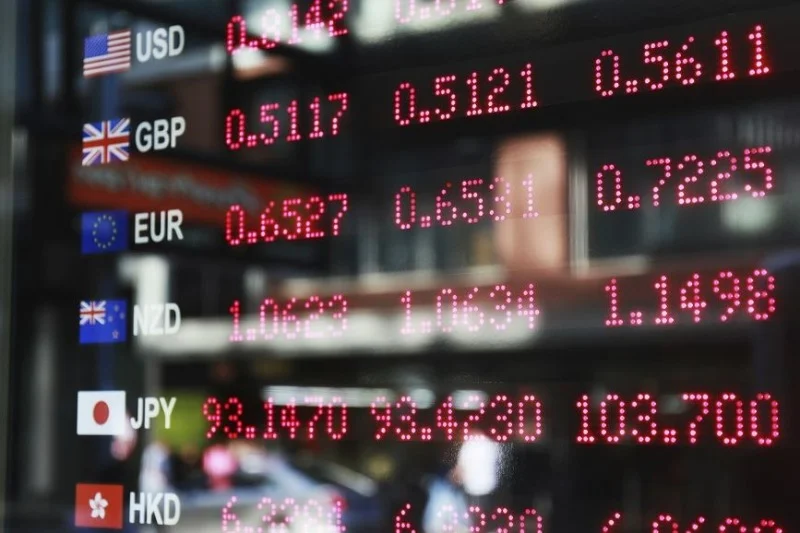
The Moroccan dirham has weakened again against major currencies, a move in the Moroccan dirham exchange rate that closely concerns Moroccans living abroad who send money home, invest or plan a return to the country.
Moroccan dirham exchange rate: weaker against euro and dollar
In its weekly indicators for the period 17–23 September 2026, Bank Al-Maghrib reports that the dirham lost 0.3% against the euro and 1.5% against the US dollar.
During that week, the central bank did not carry out any foreign-exchange auction operations. The move in the Moroccan dirham exchange rate therefore mainly reflects market flows and the balance between demand and supply on the interbank market.
Concrete effects for Moroccans living abroad
The adjustment remains moderate, but it already has practical consequences for Moroccans based in Europe, North America or the Gulf who manage a budget split between two currencies.
A weaker dirham means that those sending euros or dollars to Morocco get slightly more dirhams for the same amount:
- family remittances can cover a slightly larger share of local expenses;
- property purchases priced in dirhams become marginally cheaper in foreign currency terms;
- some savings and investments in dirham accounts in Morocco may look more attractive in the short term.
On the other hand, Moroccans abroad who finance expenses in foreign currency from income in dirhams — studies, healthcare or online purchases — may see these costs edge up when converted back into euros or dollars.
Reserves and central bank action
As of 18 September 2026, Morocco’s official foreign-exchange reserves stood at 503 billion dirhams, up 0.6% compared to the previous week and 21% year-on-year. This comfortable buffer gives Bank Al-Maghrib room to support the market and preserve overall stability of the Moroccan dirham exchange rate.
Over the same period, the central bank’s interventions reached 149.6 billion dirhams on average per day. These included seven-day advances (54.2 billion dirhams), longer-term repurchase agreements and secured loans. Such operations keep the banking system liquid and ensure the transmission of monetary policy.
On the interbank market, daily trading volumes averaged 3.5 billion dirhams, with the interbank rate around 2.25%. On 23 September, Bank Al-Maghrib injected 63.7 billion dirhams in seven-day advances, underlining its role as a key liquidity provider.
this case and investor confidence
The dirham’s depreciation against the euro and dollar remains contained and does not call into question the overall stability of the framework. But it sends signals that investors, including Moroccans abroad, closely monitor.
For those thinking of opening an account, starting a business or building a portfolio in Morocco, several elements are worth watching:
- the trend in dirham/euro and dirham/dollar exchange rates over the coming months;
- future monetary policy decisions by Bank Al-Maghrib;
- the strength of foreign-exchange reserves;
- the performance of the Casablanca Stock Exchange.
On the equity market, the MASI index gained 0.3% between 18 and 23 September 2026, but is still down 4.3% since the start of the year. This mixed picture is a reminder that stock investments should be made cautiously and based on up-to-date information.
To refine their transfer or investment strategy in this context of a softer this issue, Moroccans living abroad can consult the official bulletins of Bank Al-Maghrib on its website, as well as our Canal212 special coverage dedicated to investments by Moroccans abroad in their home country.
For more context, readers can follow Canal212 news for Moroccans abroad.
Don’t miss out on the latest news from the diaspora!
Sign up for our next newsletter to receive our practical guides, advice (on procedures and investment) and the latest news for French nationals living abroad, delivered straight to your inbox.