


This update focuses on EU migration cooperation Morocco. The European Commission has confirmed in Brussels that Morocco remains a strategic partner on migration and the fight against human trafficking, a key signal for mobility between both shores of the Mediterranean.
EU migration cooperation Morocco: a confirmed course
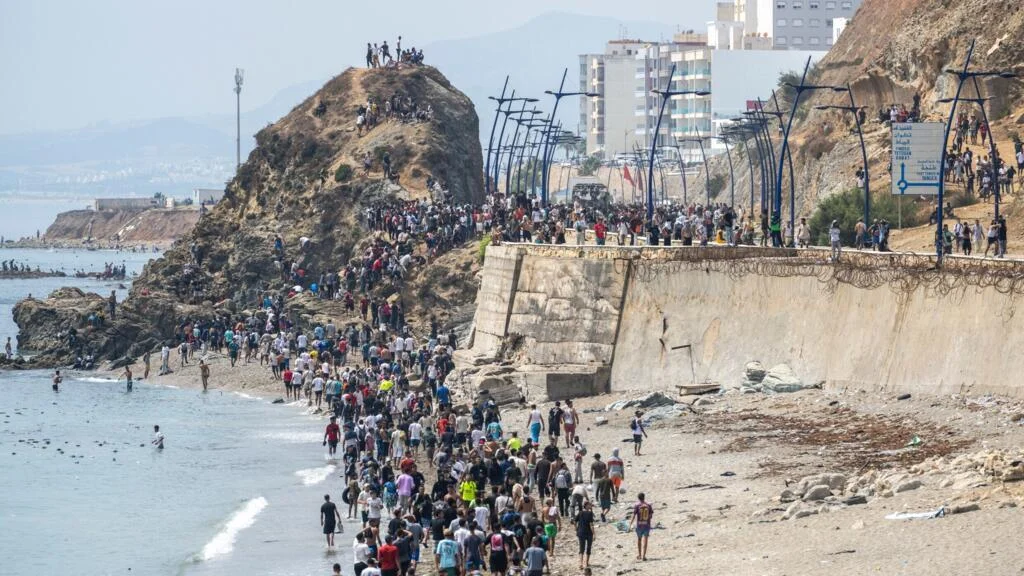
On Monday, a senior official from the Commission’s Directorate-General for Home Affairs reaffirmed migration cooperation between the EU and Morocco. She was speaking before the European Parliament’s Petitions Committee during a session on the situation in Ceuta.
According to this official, cooperation is “overall beneficial for both parties” and has already delivered concrete results. She stressed that this approach would continue, with joint efforts on migration and anti-trafficking policies set to carry on.
For Moroccans living in Europe, this confirmation means that Morocco remains a central counterpart for the EU on all issues related to people’s movement, border management and returns.
Sharp drop in irregular crossings
The Commission presented several figures on recent migration flows. Irregular crossings along the Western Mediterranean and Atlantic routes are said to have dropped by 42% in 2025 compared with 2024.
For the first half of 2026, the decline reportedly reached 34% compared with the same period a year earlier. These figures were given for the period before the massive arrival of migrants in Ceuta at the end of July.
Within this framework, Brussels supports close cooperation between Spain and Morocco to manage the situation on the ground and to “ensure the return of people who do not have the right to stay” on European territory.
This confirms that Morocco remains at the heart of EU migration policy, with constant attention to sea routes and border controls.
What it means for Moroccans living abroad
For Moroccans settled in Europe, the reaffirmed EU migration cooperation Morocco does not change residence permits or rights already acquired. It does underline, however, that European and Moroccan authorities are coordinating more closely on borders and returns.
Several concrete points are worth keeping in mind:
- Irregular crossings are increasingly monitored and repressed.
- Returns are facilitated for people in an irregular situation.
- Morocco is expected to act as an active partner in managing migration flows.
For Moroccans abroad planning a permanent return or frequent trips, this context may translate into better consular coordination and smoother information-sharing between European and Moroccan administrations.
However, this political framework does not replace individual procedures. Moroccans considering a status change, family reunification or a relocation project to Morocco still need to rely on:
- Moroccan consulates and embassies in their country of residence;
- immigration services in their host country;
- information published on the official portal dedicated to Moroccans abroad;
- practical resources such as Canal212’s guide to key procedures for Moroccans abroad.
A partnership to watch over time
The confirmation of this migration cooperation between the EU and Morocco comes in a sensitive context marked by migration pressure around Ceuta and Melilla.
For Moroccans abroad, the main concern remains legal security in their mobility paths: regular travel, seasonal back-and-forth, plans to return to Morocco, transmission of nationality or family investments.
The stability of dialogue between Rabat, Brussels and Madrid offers a predictable framework. It does not remove administrative hurdles, but it helps limit sudden decisions that could affect legal travel or readmission agreements.
The coming months will show whether these political commitments are followed by concrete tools for users: clearer procedures, better managed processing times and stronger coordination between European and Moroccan services.
For more context, readers can follow Canal212 news for Moroccans abroad.
Don’t miss out on the latest news from the diaspora!
Sign up for our next newsletter to receive our practical guides, advice (on procedures and investment) and the latest news for French nationals living abroad, delivered straight to your inbox.