
The future of education in Morocco is increasingly defined by creativity rather than rote learning, as the world of work changes fast.
Future of education in Morocco: a model under pressure
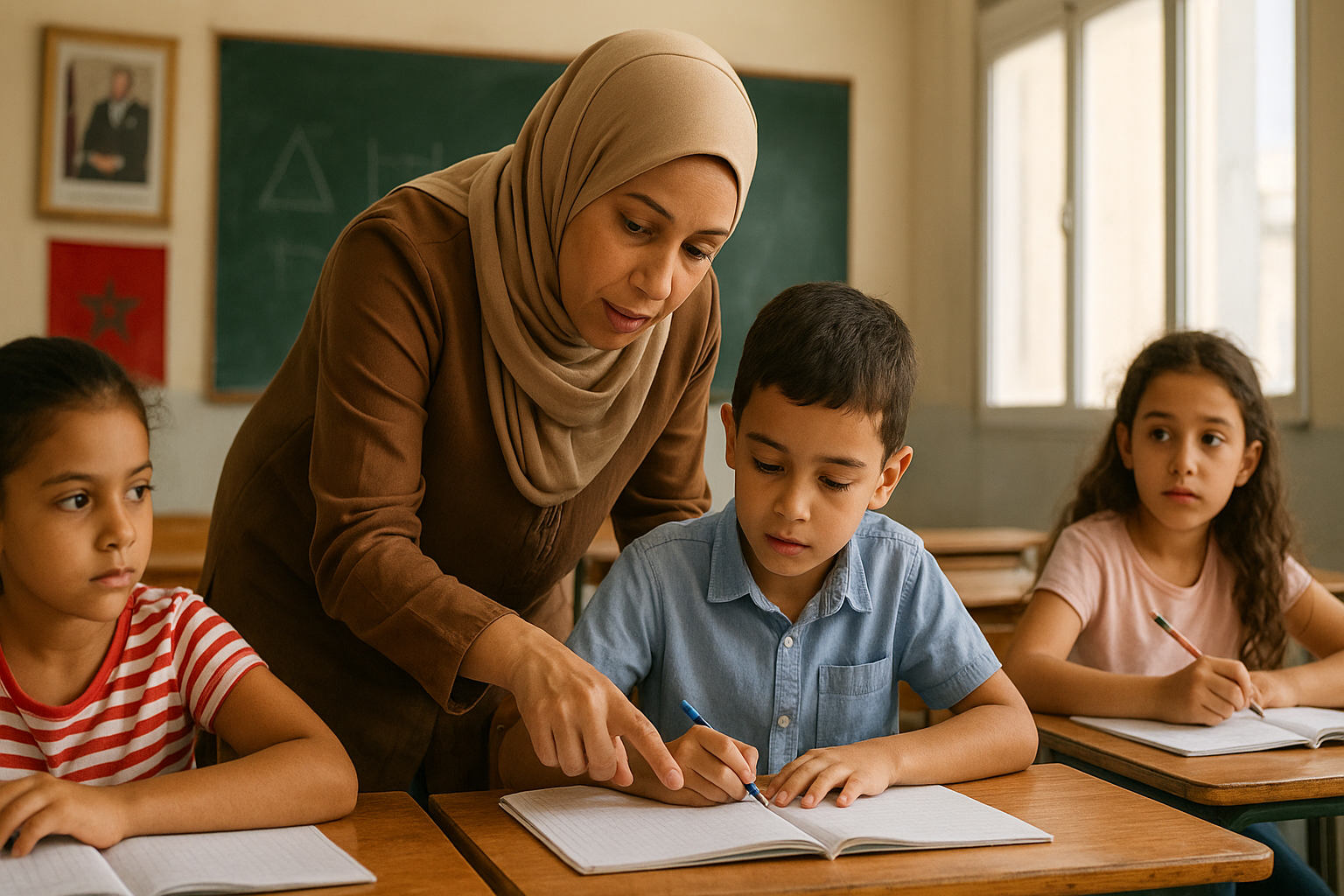
In many Moroccan classrooms, the same pattern still dominates: the teacher explains, students listen, take notes and repeat the lesson. This model has long shaped the system, but it now reveals its limits.
A well-known story highlights this tension. As a child, singer Shakira was rejected from her school choir because her voice sounded too unconventional. What was seen as a flaw in a rigid school setting later became a key ingredient of her global success. The story shows how certain talents are overlooked when schools reward conformity above all.
In Morocco, the same question arises: how can schools identify and support students who think differently, who imagine, create or solve problems in ways that do not fit standard answers?
A job market transformed by technology
Recent work on the future of employment, including reports highlighted by the World Economic Forum, points in the same direction: technology is taking over more and more routine and repetitive tasks. In such a context, skills based solely on memorizing information lose much of their value.
Employers increasingly look for profiles able to:
- think creatively;
- show flexibility and agility;
- handle stress and rapid change;
- tackle new problems with ingenuity.
For the future of education in Morocco, this means that schools must prepare students to use knowledge in varied situations, not only to reproduce lessons in exams.
Creativity is not only for the arts
Creativity is still too often reduced to painting, music or theatre. Yet experts insist it is just as crucial in science, mathematics, engineering or entrepreneurship.
A student who designs a new way to solve a physics problem, proposes an original fix to a daily issue or codes a small useful app is demonstrating real creativity. This ability can become a major asset on the job market, in Morocco and abroad.
For Moroccan families living overseas and considering a return, the future of education in Morocco is directly relevant. Many parents already compare classroom practices in their country of residence with those in the Kingdom before deciding whether to move back or organize a mixed schooling path.
What this means for Moroccans living abroad
Moroccans abroad follow these debates closely. When they plan to enroll their children in a Moroccan school, several questions come up:
- Does the school encourage group work and projects, rather than just recitation?
- Do students learn to use technology in creative ways?
- Are curiosity, initiative and imagination encouraged or discouraged?
These factors increasingly influence schooling decisions, alongside language of instruction or the school’s reputation.
For those preparing a long stay or a permanent return with children, it can be useful to:
- visit several schools before deciding;
- discuss teaching methods directly with teachers and principals;
- ask about projects that focus on creativity and innovation.
In that sense, the this case does not concern only students currently in the country. It also matters to diaspora families who want to keep a strong link with Morocco without sacrificing the skills their children will need tomorrow.
A transition that still needs support
Shifting schools toward more imagination does not mean abandoning basic knowledge. Reading, writing, arithmetic and language skills remain essential. But they should serve as a foundation for experimenting, questioning and proposing new ideas.
If Morocco manages to embed more creativity into everyday classroom practice, it will give its young people – including those returning from abroad – a stronger capacity to adapt to an unpredictable world. That is the real challenge behind the this issue: turning difference into strength, as happened with Shakira, instead of seeing it as a problem.
For more context, readers can follow Canal212 news for Moroccans abroad.
For official updates, readers can check the relevant official source.
Don’t miss out on the latest news from the diaspora!
Sign up for our next newsletter to receive our practical guides, advice (on procedures and investment) and the latest news for French nationals living abroad, delivered straight to your inbox.