


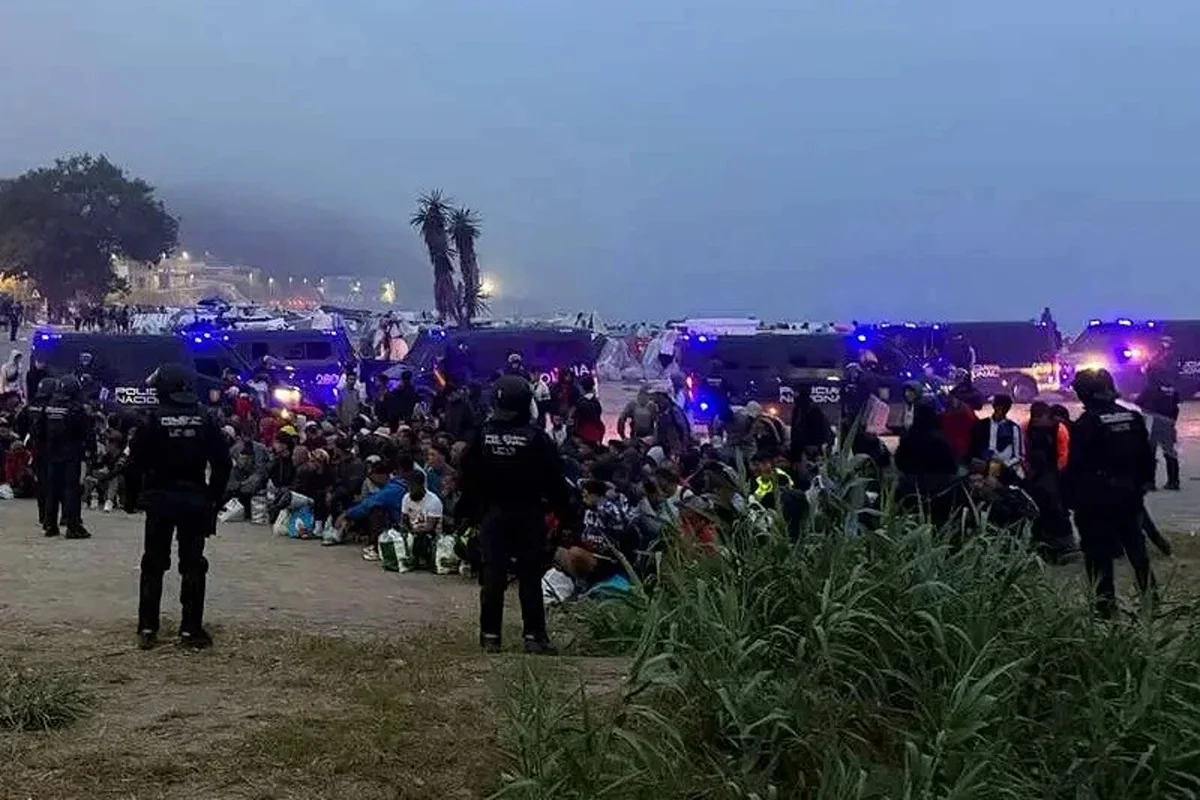
This update focuses on Ceuta El Tarajal camp dismantling. Spanish authorities have launched the first phase of the operation to clear the informal El Tarajal camp in Ceuta, a new chapter in the migration crisis unfolding just off Morocco’s northern coast.
Ceuta El Tarajal camp dismantling: a major security operation
According to Spanish authorities, the National Police, backed by army units, began dismantling part of the El Tarajal migrant camp early on Sunday morning in the occupied city of Ceuta.
Spanish news agency EFE reports that the camp shelters more than 3,000 people, while local police say the figure may exceed 3,500 migrants, making it one of the largest informal settlements created in recent weeks.
The Ceuta El Tarajal camp dismantling involves intervention units of the National Police, more than 30 police vehicles, armoured BMR vehicles and a VAMTAC vehicle, underlining the security-sensitive nature of the operation.
Step-by-step clearance due to limited accommodation capacity
The first phase focused on the area close to the local desalination plant, which authorities want to secure and keep clear of any camp structures.
The dismantling of the El Tarajal camp is being carried out in several stages. Officials cite two main reasons: the very high number of people present and the lack of available accommodation to relocate everyone at once.
Migrants affected by the evacuation are being transported by bus to the Temporary Centre for Foreigners (CATE), also located in the Tarajal area. There they undergo identification and screening procedures before their subsequent destination is decided on an individual basis.
For Moroccan families living abroad, this episode is another reminder that Ceuta remains a hotspot of migration pressure only a few kilometres from Moroccan shores.
Voluntary return option offered to Moroccan nationals
Spanish media report that authorities are offering Moroccan migrants transferred to the CATE in Tarajal the possibility of a voluntary return to Morocco. Local figures published on Sunday indicate that more than 150 Moroccans have already chosen to cross back through the border post and return home.
This mechanism follows Spain’s usual procedures regarding irregular migration and comes after a new collective entry of migrants into Ceuta at the end of July, which led to the emergence of several temporary camps across the enclave.
For Moroccans abroad, the situation does not directly affect regular travel to and from Morocco. However, it may:
- add further tension to an already sensitive northern border area;
- prompt tighter, temporary controls in and around Ceuta;
- underline the importance of using official border crossings and regular procedures for any trip or return project.
The official information portals remain the primary source to monitor any changes in border arrangements on both sides.
A long-term migration challenge at Morocco’s gateway
The operation at El Tarajal illustrates a longer-term migration challenge around Ceuta. With each new influx, informal camps reappear, living conditions deteriorate and security responses are stepped up.
While it does not alter, at this stage, the administrative procedures for Moroccans living abroad, the situation highlights how fragile this border remains and why travellers should regularly check updated information before transiting through the area, whether for short visits, investments or a longer-term return to Morocco.
For more context, readers can follow Canal212 news for Moroccans abroad.
Don’t miss out on the latest news from the diaspora!
Sign up for our next newsletter to receive our practical guides, advice (on procedures and investment) and the latest news for French nationals living abroad, delivered straight to your inbox.