


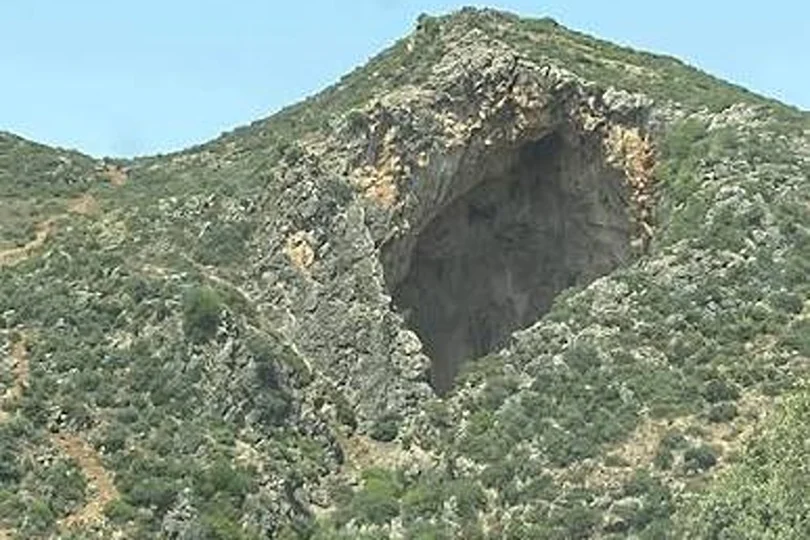
Kaf El Ghar Cave: The Kaf El Ghar Cave. Near Taza in north-eastern Morocco. It stands out as a major site where geology, archaeology and the preservation of underground heritage converge.
Kaf El Ghar Cave: a natural laboratory beneath the earth’s surface
Classified as a karst cave, Kaf El Ghar attracts the attention of specialists due to the diversity of its natural formations. Field research has revealed well-developed karst features, stratigraphic outcrops and a hydrological system that is still active.
Cavers describe a living environment, characterised by the processes of dissolution and deposition typical of underground environments. The walls offer a rare insight into the local geological sequence, thanks to these exposed rock layers.
The presence of numerous speleothems – such as stalactites and stalagmites – enhances the cave’s scientific value. All these features make this geosite a valuable observatory for monitoring the evolution of the karst landscape in the Taza region.
An archaeological site that bears witness to ancient human presence
Beyond its natural interest, the Kaf El Ghar cave preserves traces of human occupation. Archaeological remains, highlighted by researchers, suggest that the site was frequented in antiquity.
These clues place the cave within a broader context of ancient interactions between human communities and the underground environment. They add a significant cultural dimension to the site’s scientific value.
The aesthetic qualities of the cave – mineral formations, interior spaces and features – also contribute to this. They reinforce its status as a natural and cultural heritage site worthy of preservation.
What this means for Moroccans living abroad
For Moroccans living abroad, this international recognition serves as a reminder of the extent of the country’s natural heritage, much of which remains little known. Kaf El Ghar illustrates the potential of the Taza region for a more tranquil form of tourism, focused on nature and scientific discovery.
During visits to Morocco, this type of site can be incorporated into itineraries off the beaten track. It is of particular interest to:
- families wishing to introduce younger generations to a different side of the country;
- nature, geology or archaeology enthusiasts;
- those involved in projects related to scientific or educational tourism.
The spotlight on Kaf El Ghar and other recently studied caves – such as that at Bizmoun in the Essaouira region – also confirms a growing trend. Morocco is increasingly emerging as a research hub for speleology and underground archaeology.
An underground heritage to be better understood and protected
Whilst the cave remains, first and foremost, a sensitive scientific site, its controlled promotion could, in the long term, foster local projects. Above all, it reinforces the awareness that Morocco’s heritage is not limited to above-ground monuments.
For the community living abroad, these discoveries offer a new way to reconnect with their homeland – through curiosity and the sharing of knowledge. They also serve as a reminder of the importance of supporting, where possible, initiatives that combine research, conservation and responsible development around these fragile sites.
To find out more, check out our latest Canal212 news for Moroccans living abroad.
To keep up to date with official announcements, see the FRMF’s official statements.
Don’t miss out on the latest news from the diaspora!
Sign up for our next newsletter to receive our practical guides, advice (on procedures and investment) and the latest news for French nationals living abroad, delivered straight to your inbox.