

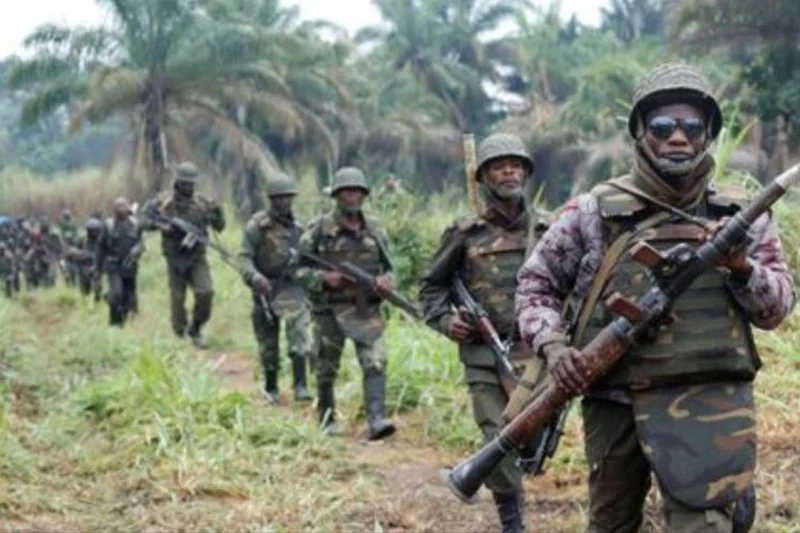
DRC M23 negotiations: The Democratic Republic of the Congo and M23 fighters have taken a new step forward by agreeing on a roadmap for peace negotiations, following several days of closed-door discussions in Switzerland.
This conflict, centred in the east of the DRC, remains a major source of instability in the Great Lakes region, with repercussions for human and economic exchanges across the continent.
DRC-M23 negotiations: a timetable finally clarified
According to a joint statement released by the Swiss authorities, the two parties have worked with international mediators to define the next steps in the process.
Kinshasa and the M23, which had already signed a peace agreement in December negotiated by……… the United States, have thus ‘drawn up, in collaboration with the mediators, a roadmap setting out the successive stages and the timetable for the negotiations under the Doha Framework Agreement’.
The parties also “reaffirmed their commitment to continuing negotiations with a view to achieving a comprehensive peace and a resolution of the conflict through the implementation of the Doha Framework Agreement”.
A strengthened international mediation mechanism
The talks took place from 17 to 21 August in Switzerland, behind closed doors. Seated around the table, alongside representatives of the DRC and the M23, were envoys from:
- the United States, already involved in the December agreement,
- Qatar, host of the Doha Framework Agreement,
- Switzerland, the country organising these discussions,
- the African Union Commission,
- and Togo, appointed as the African Union’s mediator.
This expanded framework aims to provide greater assurances regarding the monitoring and transparency of the process, particularly given that numerous ceasefires have been broken in the past in eastern Congo.
Ceasefire monitoring and follow-up mechanism
At the heart of this new roadmap, the DRC-M23 negotiations emphasise the verification of the ceasefire and the management of incidents on the ground.
Both parties have therefore recognised the need for a standardised method for reporting alleged ceasefire violations. This standardisation should help prevent the rapid escalation of tensions, which is often fuelled by mutual accusations that are difficult to verify.
An initial ceasefire verification mission is planned for Minembwe, in South Kivu province. It is intended to test this mechanism and identify any shortcomings in the monitoring of the truce.
Furthermore, the signatories have agreed to establish a ‘mechanism tasked with reviewing the progress made…… and identifying the challenges associated with the implementation of the obligations and commitments undertaken under the Doha Framework Agreement’.
Another step forward in a conflict spanning three decades
Eastern DRC has been plagued by recurring violence for over thirty years. In the provinces of North Kivu and South Kivu, the Congolese army is fighting the M23, an anti-government armed group that has taken control of vast areas.
This new phase does not bring the conflict to an end, but it further structures a peace process that is already underway. For local communities as well as regional economic stakeholders, the stabilisation of this part of the continent remains a key priority.
The coming weeks will reveal whether this roadmap – supported by several international partners – will result in a lasting reduction in tensions and a tangible improvement in security on the ground.
The authorities are gradually setting out the relevant points. Readers then identify the practical implications. The relevant departments finally adjust their responses. Moroccans living abroad (MREs) are thus able to follow the issue with greater clarity.
The authorities are gradually setting out the relevant points. Readers then identify the practical implications. The relevant departments finally adjust their responses. Moroccans living abroad are thus able to follow the issue with a clearer understanding.
The authorities are gradually providing details on the relevant points. Readers then identify the practical implications. The relevant departments finally adjust their responses. Moroccans living abroad are thus able to follow the issue with a clearer understanding.
For further information, see our latest Canal212 updates for Moroccans living abroad.
To keep up to date with official updates, please see the useful information for Moroccans living abroad.
Don’t miss out on the latest news from the diaspora!
Sign up for our next newsletter to receive our practical guides, advice (on procedures and investment) and the latest news for French nationals living abroad, delivered straight to your inbox.