


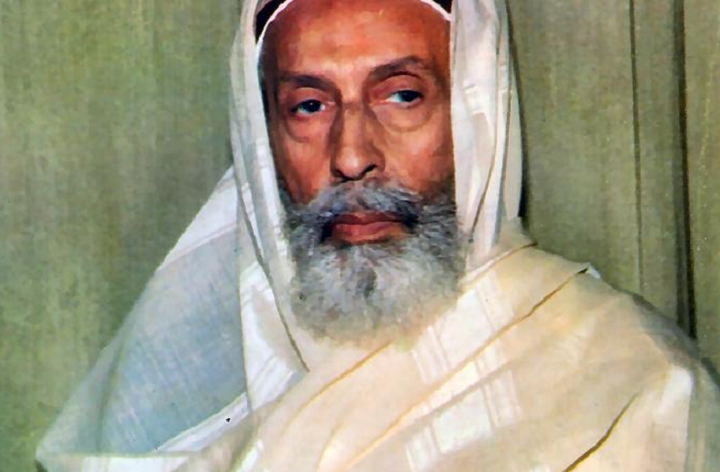
This update focuses on France Mohammed V King Idris. Long before tensions under Muammar Gaddafi, a little-known episode in the early 1950s created a lasting chill between Morocco’s Mohammed V and Libya’s King Idris, as French authorities maneuvered in the final years of the protectorate.
France Mohammed V King Idris: a rift before independence
Many observers see the real breakdown in Morocco–Libya relations as starting with the 1969 coup and Gaddafi’s rise to power. But the first cracks appeared much earlier.
In his book “Le roi et le colonel”, journalist Talha Jibril recalls that relations between the two monarchies were already cooling by 1956. He relies on the testimony of Mohammed Osman al-Saïd, former Libyan prime minister under the Senussi dynasty, who later spent many years in exile in Morocco.
Al-Saïd traces the origins of the misunderstanding back to 1953, at a moment when Mohammed Ben Youssef, the future King Mohammed V, had just been exiled by the French colonial authorities.
A spiritual visit turned into a diplomatic trap
In 1953, King Idris travelled to Switzerland for medical treatment. At the end of his stay, he made a tour that took him through France, Spain and then Morocco, with a clear spiritual goal.
The Libyan monarch wanted to visit the resting place of Moulay Idriss I in Zerhoun, and then the tomb of Idriss II in Fez. As a descendant of this lineage, he had never been to these highly symbolic sites for both countries.
However, the French protectorate in Morocco saw an opportunity. Mohammed Ben Youssef had been deposed and replaced by Mohammed Ben Arafa, and the colonial authorities arranged a meeting between King Idris and the sultan installed by France.
According to Mohammed Osman al-Saïd, quoted by Talha Jibril, Idris was “the victim of a French trap”. The Libyan ruler, he insists, did not raise any political issues with Ben Arafa. Yet the episode quickly took on an international dimension.
Press photos and the anger of the exiled sultan
Several French media outlets published photographs of the meeting between King Idris and Mohammed Ben Arafa. These images reached the exiled sultan, Mohammed Ben Youssef.
For the future Mohammed V, the photos suggested that the Libyan monarch recognised the sultan put in place by France. In the midst of a highly tense struggle for independence, this was a deeply painful signal.
According to the account relayed by Talha Jibril, the personal relationship between the two rulers suffered long-term damage. The chill that Mohammed Osman al-Saïd says he felt as early as 1956 finds its origin here, and would outlast both Morocco’s independence and the political transitions of the 1960s.
A historical key to Morocco–Libya tensions
This episode, in which France, Mohammed V and King Idris intersect in a single story, helps explain why relations between Rabat and Tripoli have often been uneven, swinging between cautious rapprochements and open rifts.
For Moroccans living abroad, this piece of history underlines how Maghreb diplomacy has long been shaped by colonial interference and by symbols of political and religious legitimacy. It also sheds light, with hindsight, on some of the mistrust that continued between neighbouring states well after independence.
In today’s regional context, the story invites a fresh reading of relations between monarchies and neighbouring regimes through several lenses:
- the weight of symbolic gestures such as visits or official photos;
- the role of foreign powers in staging diplomatic encounters;
- how media coverage can freeze one interpretation of an event;
- the long-term impact of such episodes on foreign policy.
More than seventy years after the 1953 “trap” described by Libyan witnesses, the case illustrates how fragile regional balances can be, and how deep the historical roots of Morocco–Libya relations run, well before the rupture brought by the 1969 coup.
For more context, readers can follow Canal212 news for Moroccans abroad.
For official updates, readers can check the relevant official source.
Don’t miss out on the latest news from the diaspora!
Sign up for our next newsletter to receive our practical guides, advice (on procedures and investment) and the latest news for French nationals living abroad, delivered straight to your inbox.