


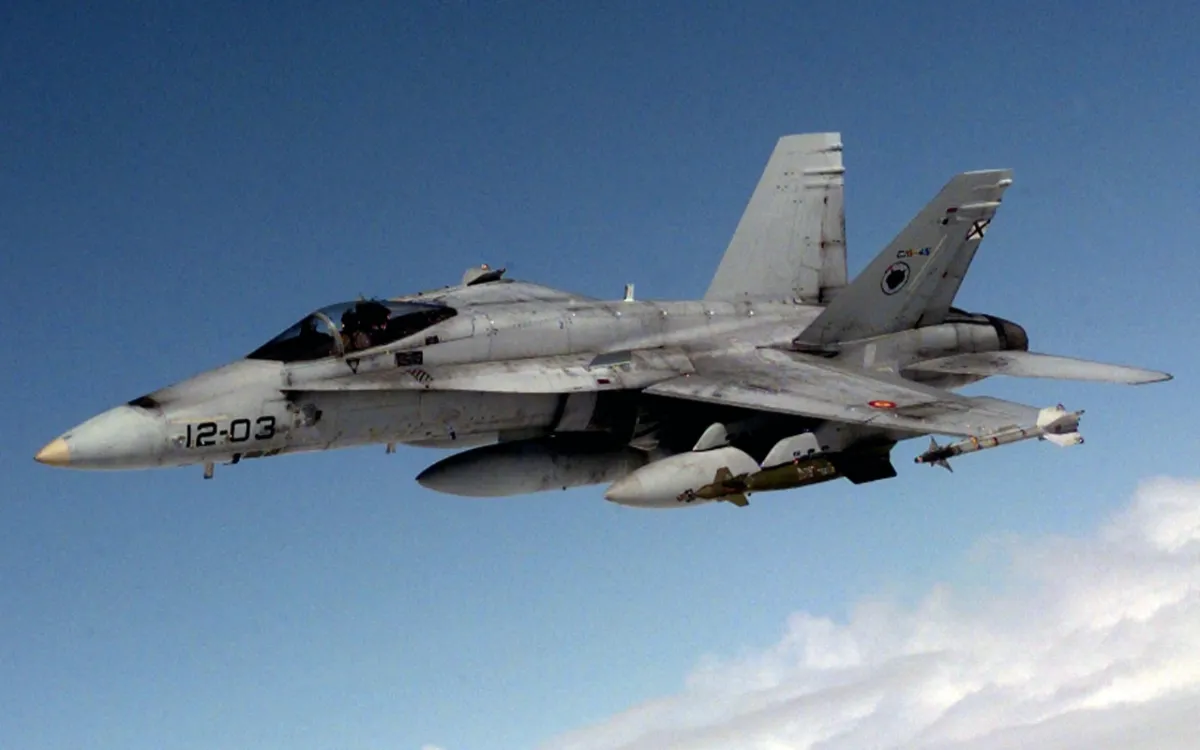
This update focuses on Spain Eagle Eye operation. Spain is temporarily boosting its military surveillance opposite northern Morocco, without changing civilian traffic between the two countries for now.
Spain Eagle Eye operation: what to know
As part of the Spain Eagle Eye operation, Madrid has deployed a combined military set-up in the south of the Iberian Peninsula and in the Alboran Sea.
According to the Spanish defence staff, the Eagle Eye 26-03 exercise started on Monday 21 September and is scheduled to run until Friday 25. It brings together the Air and Space Force, the army and the navy.
The deployment includes:
- six F-18 fighter jets from Wing 15, temporarily based in Malaga;
- the Méndez Núñez missile frigate in the Alboran Sea;
- an air defence unit around Malaga’s air base and port.
The F-18s are on quick reaction alert. They must be able to take off in under fifteen minutes if an unidentified aircraft trace is detected. Their stated mission is to reinforce airspace surveillance and train crews in air policing operations.
A key area facing northern Morocco
The Spain Eagle Eye operation focuses on the area facing the northern Moroccan coast, a zone that already sees dense civilian and military traffic and is closely monitored.
Three air surveillance squadrons are involved from Constantina, near Seville, Motril and Alcalá de los Gazules in the province of Cadiz. Their information is processed by the Central Command and Control Group based in Torrejón, near Madrid.
Out at sea, the Méndez Núñez frigate brings its detection and air defence systems. Its radars complement the coverage provided by the fighter jets and ground stations.
For now, Spain presents this build-up as a planned air defence drill, not as a reaction to any specific incident with Morocco.
Flights, ferries, returns home: what it means for Moroccans abroad
For Moroccans living abroad, the question is simple: does this this case change anything for trips between Europe and Morocco?
At this stage, there are no special notices affecting commercial flights between Spain and Morocco or flights operated by other airlines to Moroccan airports. Civilian air routes have long coexisted with military activity in this region, under strict international navigation rules.
At sea, the presence of the frigate in the Alboran area adds to an already busy flow of military vessels, ferries and cargo ships. Spanish authorities have not announced specific disruptions for passenger crossings between Spain and Morocco.
In practical terms, for your travel:
- border control procedures remain unchanged;
- tickets already booked are not questioned by this exercise alone;
- airports and ports are operating normally.
Still, any military reinforcement in such a sensitive zone can, in case of an unexpected incident, lead to quick adjustments to some air or sea routes.
Smart checks before you travel
With no official restrictions in place, Moroccans abroad can maintain their plans to return home, while taking a few simple precautions.
First, regularly check the status of your flight or ferry directly with your airline or shipping company. Updates are posted in real time on their websites and apps.
Then, look at travel advice from transport operators serving routes between Europe and Morocco. The main Moroccan carriers’ sites remain a useful reference for schedules and any passenger notices.
Finally, keep an eye on developments in the security situation in the Strait of Gibraltar and the Alboran Sea through reliable news sources, alongside official channels.
For now, this Spanish deployment is part of a series of recurring drills. It does not undermine the current pace of travel between Spain and Morocco, but it is a reminder of how strategic this southern European border is for the mobility of Moroccans around the world.
For more context, readers can follow Canal212 news for Moroccans abroad.
For official updates, readers can check the relevant official source.
Don’t miss out on the latest news from the diaspora!
Sign up for our next newsletter to receive our practical guides, advice (on procedures and investment) and the latest news for French nationals living abroad, delivered straight to your inbox.