


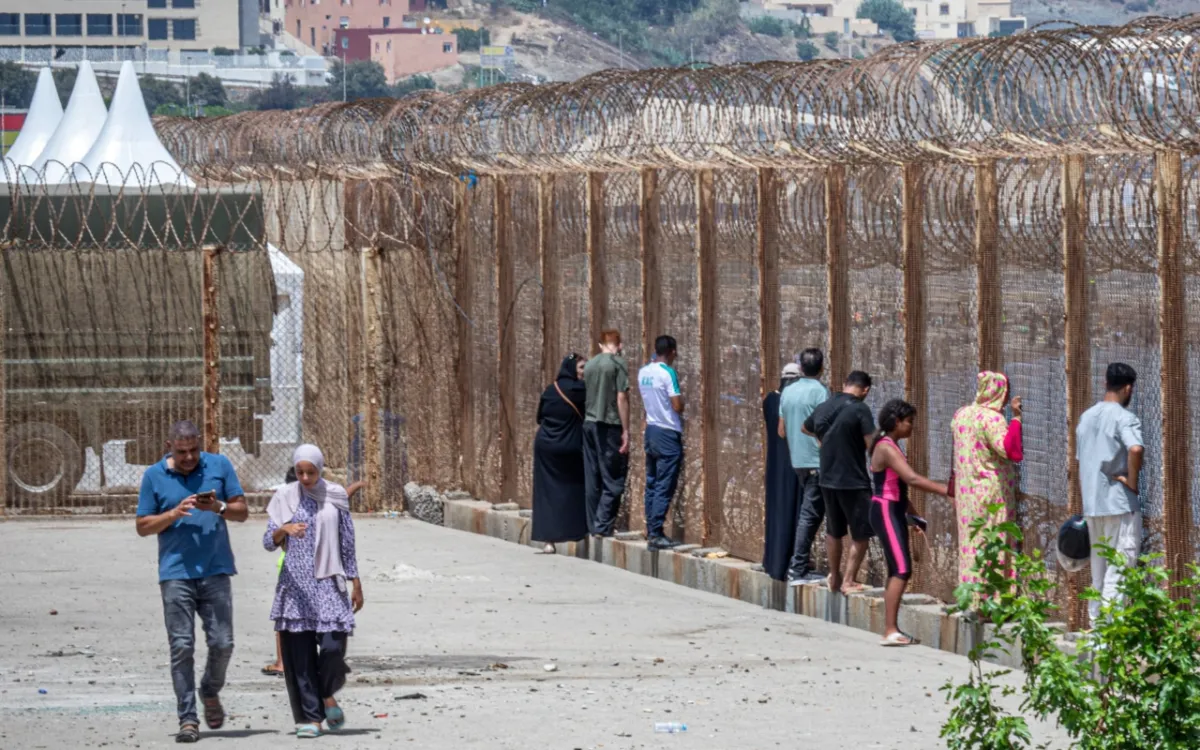
This update focuses on Ceuta border controls Spain. Speaking from New York, Pedro Sánchez kept up his criticism of Rabat over the mass crossings into Ceuta, while announcing a major upgrade of Spain’s own border system – a development Moroccans travelling through Spain will want to track.
Ceuta border controls Spain: what to know
The Spanish prime minister revisited the 30 July events, marked by large groups entering Ceuta. He argued that Moroccan border control mechanisms were not sufficient and that they “gave way” under pressure.
From the UN General Assembly podium, Sánchez repeated this line, after having asked Morocco for “answers” and “measures” in an interview with CNN the previous day.
At the same time, he admitted Spain has no evidence that the Moroccan authorities organised these crossings. His official position remains that Rabat did not prevent them, but cannot be formally accused of orchestrating them.
A softer tone toward Rabat – and €170m for Ceuta and Melilla
The tone shifts when Sánchez describes the current situation. Faced with new threats of mass attempts to reach Ceuta, Morocco has reinforced its police deployment around the enclave. The Spanish leader now publicly welcomes this effort.
He has even urged Spanish parties that are quick to criticise Rabat to also recognise the action taken by the Kingdom.
Alongside this more conciliatory rhetoric, Madrid plans to invest €170 million in protecting the borders of Ceuta and Melilla. Sánchez concedes that the tools and staff deployed so far have not been enough.
The fresh funds are expected to strengthen surveillance, equipment and response capacity around the two enclaves. In parallel, Ceuta is set to receive €309 million in aid by the end of the year, to support accommodation, identification and administrative processing of the many new arrivals.
What tighter controls could mean for Moroccan travellers
For Moroccans living abroad, this political episode is not abstract: the Ceuta corridor remains a key route, especially for those who move between Europe and Morocco by road or sea through Spain.
In practical terms, tougher Ceuta border controls Spain is planning could, over time, lead to:
- stricter checks around Ceuta and Melilla;
- tighter screening of informal crossings, including frequent local movements;
- potentially longer waiting times in high-pressure periods.
For now, there is no change to formal entry rules for dual nationals, EU residents or Moroccan tourists with valid visas or residence permits. But travellers planning their journeys should factor in a context of heightened vigilance around the enclaves.
To keep trips as smooth as possible, a few basic precautions can help:
- use official, well-equipped crossing points such as ports and airports;
- avoid improvised routes towards the enclaves, especially with children or elderly relatives;
- check travel advice from Moroccan and Spanish authorities before departure, particularly in times of migratory tension.
Rabat–Madrid relations under the eyes of travellers
The debate over Ceuta border controls Spain illustrates a logic of shared responsibility. Madrid is asking for more from Rabat, while also acknowledging that Spain must fix its own weaknesses.
For Moroccans abroad, the key is the concrete impact on the ground: any operational tightening in Ceuta or Melilla can affect waiting times, queues and document checks, even for travellers whose papers are perfectly in order.
While longer-term adjustments are still unclear, this new phase confirms that Morocco’s northern border is a highly sensitive political and security area. Moroccans planning returns home should keep this in mind when booking their routes via Spain.
To prepare future trips, you can also refer to Canal212’s practical guide on procedures and travel tips for Moroccans living abroad, alongside updates from airlines such as Royal Air Maroc.
For more context, readers can follow Canal212 news for Moroccans abroad.
Don’t miss out on the latest news from the diaspora!
Sign up for our next newsletter to receive our practical guides, advice (on procedures and investment) and the latest news for French nationals living abroad, delivered straight to your inbox.