


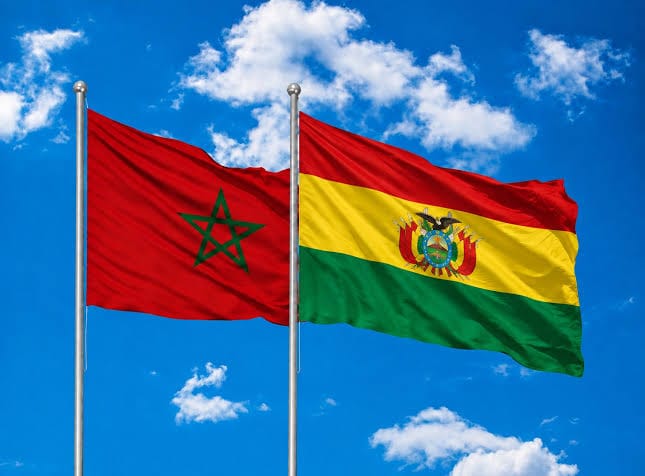
Ties between Bolivia and Morocco are entering a new phase. La Paz has expressed its readiness to open a diplomatic representation in Rabat as well as a trade office in Dakhla. The announcement came after a meeting between the foreign ministers of the two countries, on the sidelines of the UN General Assembly in New York.
In their joint statement, the two countries also discussed Morocco’s autonomy proposal for the Sahara. Bolivia said it has taken note of the plan presented in 2007 and considers that it can serve as a way to move negotiations forward towards a political solution that is “just, lasting and mutually acceptable”.
Bolivia, Morocco and Dakhla: a trade office to reach African markets
The planned trade office in Dakhla is one of the key elements of the agreement announced in New York.
According to the joint statement, this structure is expected to serve as a platform for Bolivian products to access African markets. La Paz aims to strengthen its trade exchanges with the African continent.
This envisaged presence also gives an economic dimension to the rapprochement between Rabat and La Paz. It comes as Morocco continues to develop Dakhla as a regional hub for trade and investment.
The Dakhla Atlantique port project is among the major infrastructures designed to reinforce the connectivity of this part of the Kingdom.
A diplomatic representation planned in Rabat
Bolivia also plans to strengthen its diplomatic presence in Morocco.
La Paz has signalled its readiness to open a diplomatic representation in Rabat. This announcement is intended to support the renewal of political dialogue between the two countries.
The two governments also announced their intention to reactivate the bilateral consultation mechanism created in 1999. The first session of this mechanism should help structure exchanges between the two diplomatic services more thoroughly.
Bolivia: a new stance on Morocco’s autonomy plan
On the Sahara issue, the statement signals a shift in Bolivia’s official language.
Bolivia has taken note of the autonomy proposal presented by Morocco in 2007. It considers that this proposal can help move negotiations forward towards a political solution.
This wording does not, in itself, amount to explicit recognition of Moroccan sovereignty over the Sahara. It nevertheless reflects a position that is open to considering the autonomy plan as a possible way to settle the dispute.
The two countries also reaffirm their commitment to the principles of international law, in particular the sovereignty and territorial integrity of States and non-interference in their internal affairs.
Rabat and La Paz deepen their cooperation
The rapprochement goes beyond the Sahara question.
The two countries have signed an agreement to abolish visas for holders of diplomatic, official, service and special passports. They have also concluded a memorandum of understanding between their diplomatic academies.
These agreements support the stated ambition of Rabat and La Paz to give new structure and momentum to their bilateral relations.
The future Dakhla trade office could thus become a concrete tool of this economic cooperation.
Dakhla at the heart of commercial outreach
The choice of Dakhla gives this announcement a particular significance.
For Bolivia, the planned office is intended to make it easier for its products to reach African markets. For Morocco, this initiative is part of a broader strategy to promote economic development and international openness in its Southern Provinces.
Several countries have already announced, or are considering, the opening of representations in Dakhla. In June 2026, a group of 40 States reaffirmed its support for Moroccan sovereignty over the Southern Provinces and praised the role of consulates opened in Dakhla and Laayoune in boosting economic cooperation.
A new chapter between Morocco and Bolivia
The Bolivia–Morocco–Dakhla rapprochement therefore combines several dimensions: diplomatic, economic and political.
The planned representation in Rabat is expected to strengthen bilateral dialogue. The trade office announced in Dakhla is meant to serve as a platform for Bolivian products heading towards African markets.
On the Sahara file, La Paz now officially views the Moroccan autonomy plan as a possible way to contribute to negotiations. What follows will depend on how these announcements are implemented and how the new cooperation mechanisms between the two countries take shape on the ground.
External sources:
Don’t miss out on the latest news from the diaspora!
Sign up for our next newsletter to receive our practical guides, advice (on procedures and investment) and the latest news for French nationals living abroad, delivered straight to your inbox.