
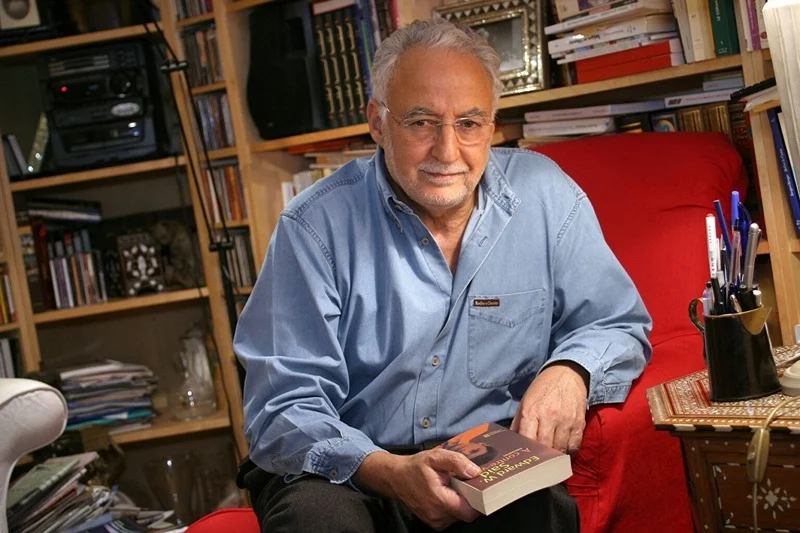
Morocco has lost one of its major journalistic voices with the death of Hamid Barrada, an intellectual and senior reporter whose work accompanied more than half a century of the country’s political and media history.
Hamid Barrada, between Morocco, exile and international media
Born on 3 December 1939 in Tangier, into a nationalist family, Hamid Barrada became involved in public life very early. In 1962, he was elected president of the National Union of Moroccan Students (UNEM), at a time when Moroccan youth was deeply engaged in politics.
A year later, amid intense political tensions, he was sentenced to death in absentia. This forced him into exile between Algeria and France, before he returned to Morocco in 1978. For many Moroccans now living abroad, his path echoes the experiences of a generation pushed out of the country by politics, yet still attached to it.
Trained in philosophy, law and political sociology, he ultimately chose journalism as his main field of engagement. He joined the weekly Jeune Afrique, where he became a senior reporter and then editor-in-chief between 1974 and 1985.
A benchmark in long-form political interviews
Over the years, Hamid Barrada established himself as one of the leading figures of political interview journalism in the French-speaking world. He conducted in-depth conversations with major political and intellectual figures from Morocco, the Maghreb and Africa.
Among those he interviewed were King Hassan II, former Prime Minister Abderrahmane Youssoufi, historian Abdallah Laroui, former Algerian president Ahmed Ben Bella, opposition leader Houcine Aït Ahmed, political figure Rached Ghannouchi, Senegalese president and writer Léopold Sédar Senghor and Moroccan politician M’Hamed Boucetta.
He later headed the Maghreb and Middle East division at TV5, further strengthening his role as a bridge between Morocco, the wider region and French-speaking audiences. For many Moroccans living abroad, these media outlets were for years one of the rare consistent links to public debate at home.
A living archive for younger generations abroad
In 2025, this case published the first volume of his book Anthologie des entretiens, more than 700 pages of interviews conducted between 1977 and 2012. This collection offers a curated selection of conversations that shed light on key political, diplomatic and intellectual shifts in Morocco and its region.
For Moroccans living abroad, the anthology is a valuable entry point to better understand chapters of contemporary history that are often hard to follow from a distance. It allows readers to:
- revisit the debates that shaped Morocco’s political evolution;
- grasp the exchanges between Maghreb and African leaders;
- pass on a structured historical memory to younger generations born overseas.
A witness at the Equity and Reconciliation Commission hearings and a university lecturer until his retirement, this issue leaves behind a body of work that goes far beyond daily news. His texts and interviews are a tool for anyone who wants to keep an informed connection with Morocco, whether they live in the country or abroad.
A legacy shared by Moroccans at home and abroad
Many tributes were posted on social media following the death of the story. Journalist Taoufik Bouachrine called him the “doyen of Moroccan journalists”, highlighting both his professional career and his human qualities.
For Moroccan families settled in Europe, North America, the Gulf and elsewhere, the development’s legacy underlines how important it is to preserve common reference points beyond borders. Many of his interviews remain accessible from abroad and help make sense of Morocco when planning a return, an investment, or simply a longer stay in the country.
As more and more young Moroccans grow up outside the national territory, revisiting the work of figures like this case can help transmit a nuanced narrative of Morocco, marked by debate, tension and strong personal journeys.
With his passing, a demanding way of telling the Moroccan story has fallen silent, yet his imprint remains within reach for all those who wish to keep a meaningful link with the country.
For further information and support with return plans or administrative steps in Morocco, you can consult the official portal dedicated to Moroccans living abroad, as well as Canal212’s practical guide to MRE procedures.
For more context, readers can follow Canal212 news for Moroccans abroad.
Don’t miss out on the latest news from the diaspora!
Sign up for our next newsletter to receive our practical guides, advice (on procedures and investment) and the latest news for French nationals living abroad, delivered straight to your inbox.