


This update focuses on Melilla Moroccan drones. Spain has formally asked Morocco to adjust the flight altitude of some of its military drones operating near Melilla, after an incident involving a passenger plane, renewing questions about air safety in this sensitive border zone.
Melilla Moroccan drones: what to know
According to Spanish public broadcaster RTVE, Madrid has approached the Moroccan authorities to request changes in the altitude of certain drones flying close to Melilla. The stated goal is to “avoid any interference with commercial flights to and from Melilla”.
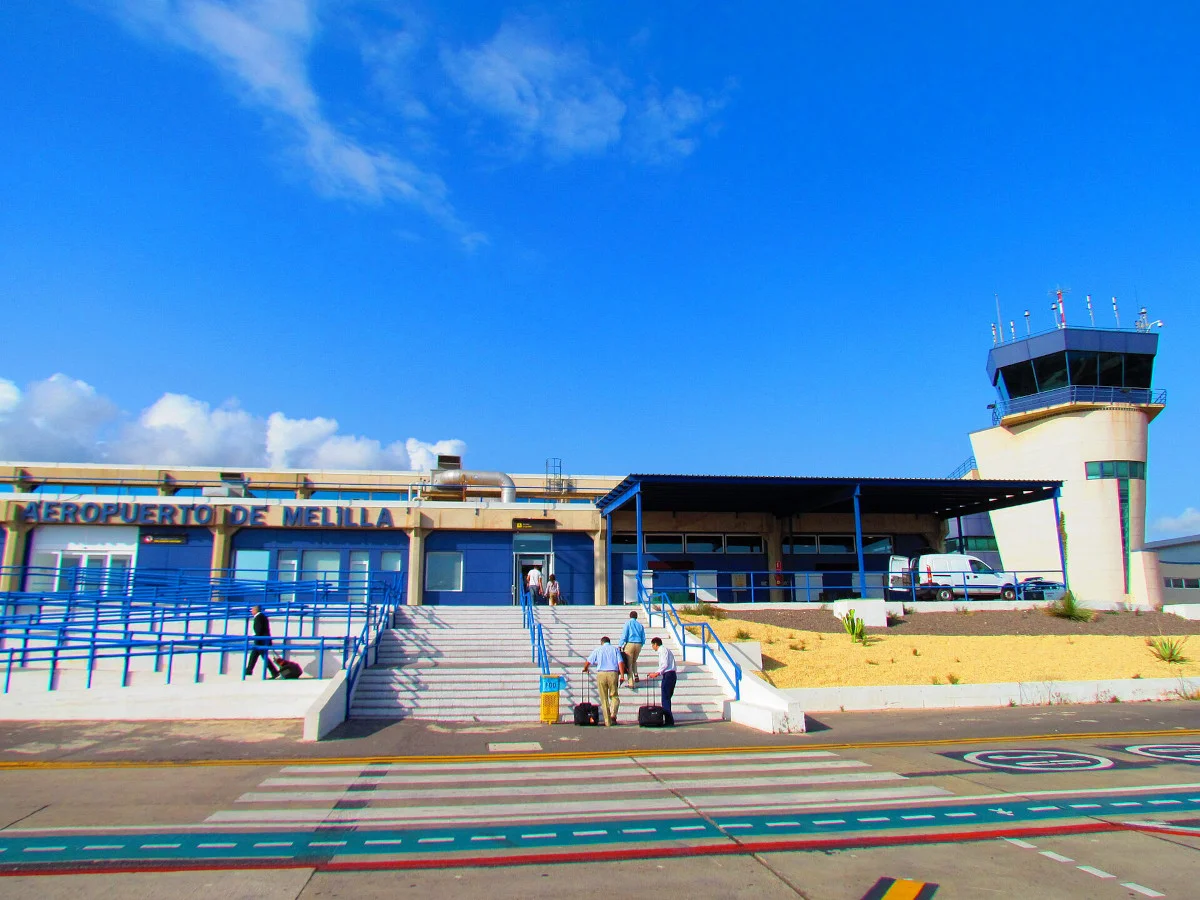
The Spanish government’s delegation in the enclave says the move aims to ensure that drone activity does not disrupt traffic at an airport that is already fragile. Low cloud cover there often leads to delays and cancellations, leaving little room for extra uncertainty.
Melilla and its surroundings have long been an area of reinforced surveillance, where Melilla Moroccan drones now play a growing role in border monitoring and the fight against smuggling and irregular crossings.
Recent incident highlights air safety concerns
The Spanish request follows an incident on the evening of Tuesday 22 September. A Moroccan drone, flying in Moroccan airspace, disrupted the landing manoeuvre of a passenger aircraft at Melilla airport, according to details reported by RTVE.
No damage was reported, but the episode was considered serious enough to trigger an official reaction. It underlines how sensitive airport approaches are when another aircraft, even at some distance, is detected near the path of a commercial flight.
Spanish concerns over Melilla Moroccan drones are not limited to this single event. On 9 September, another Moroccan drone was detected near Ceuta during a visit by the heads of the Spanish National Police and Civil Guard, Francisco Pardo and Mercedes González.
That drone was reportedly equipped with a system designed to bypass electronic jamming, a detail that fuels debates over the technological capabilities of these aircraft and their use in an area where military, security and civilian interests intersect.
What this means for Moroccans abroad and their trips
For Moroccans living abroad, this development raises two practical questions: overall flight safety in the region and any potential impact on air links.
- No airline has, at this stage, announced schedule changes linked to these this case.
- The incident occurred in a very specific zone, around a small regional airport with limited traffic.
- International flights to major Moroccan airports remain governed by standard aviation safety rules.
Moroccans who occasionally transit through Melilla, or combine road journeys with regional flights in Spain, may still want to keep an eye on how the situation evolves. Spanish authorities mainly seek clearer coordination rules between drone operations and commercial air corridors.
In practice, the immediate impact on travellers remains very limited. The exchanges between Madrid and Rabat focus on technical altitude adjustments, a common feature of modern airspace management, even if they take place in a politically and symbolically sensitive border area.
Routes to monitor and checks to make
Moroccans abroad planning trips to the country can continue to rely on the busiest routes, operated by major carriers and supervised by civil aviation authorities.
If there is any doubt regarding a regional flight passing near Melilla or Ceuta, it is still advisable to:
- check flight status directly with the airline;
- consult updates on airline and airport websites;
- allow sufficient time for tight connections.
So far, Spain’s demands do not involve airspace closures or flight suspensions. They instead increase pressure to better regulate the coexistence of drones and civilian aviation in the Melilla area.
For more context, readers can follow Canal212 news for Moroccans abroad.
For official updates, readers can check the relevant official source.
Don’t miss out on the latest news from the diaspora!
Sign up for our next newsletter to receive our practical guides, advice (on procedures and investment) and the latest news for French nationals living abroad, delivered straight to your inbox.