


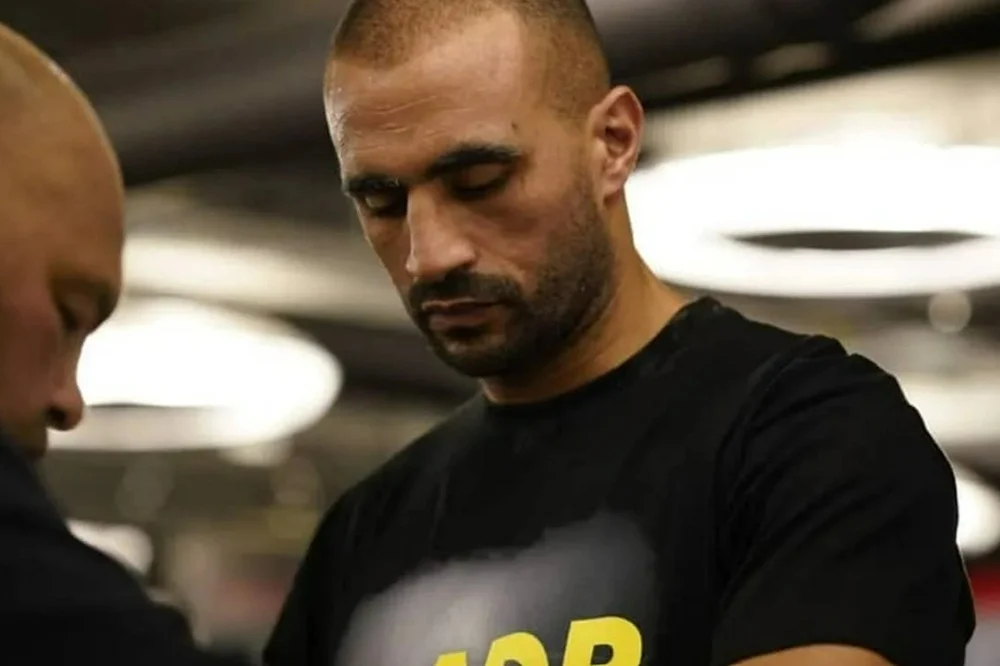
This update focuses on Badr Hari case. Moroccan kickboxing star Badr Hari, a familiar name among Moroccans in the Netherlands, has been released on bail in Amsterdam and is now prosecuted only for verbal threat while the court prepares his trial.
Badr Hari case: what happened in Amsterdam
The 41-year-old fighter was arrested last Tuesday in the Buitenveldert district, in the south of Amsterdam.
Police have not officially disclosed the detailed circumstances of the incident. According to the information made public, the athlete initially faced several accusations, including threats, insults, coercion and the disclosure of sensitive personal data related to his ex-partner.
The Badr Hari case therefore remains, at this stage, a criminal file under investigation, with cautious communication from the Dutch authorities.
Judge narrows the charges to a verbal threat
Badr Hari’s lawyer, Cem Polat, explained the judge’s preliminary conclusions after the hearing.
- No evidence of harassment or insults was found, according to the defence.
- The judge did not identify any indication of disclosure of personal data.
- No element of coercion has been established so far.
In this context, the court decided to maintain only one charge: verbal threat. Badr Hari has been released on bail while waiting for his trial, at a date that has not yet been made public.
The lawyer insists that these conclusions are provisional and may evolve as the proceedings move forward. The champion firmly denies all accusations.
A new chapter in a troubled legal history
This new episode in the Badr Hari case adds to a complicated history between the fighter and Dutch courts.
In September 2025, he was sentenced to 24 hours of community service and a fine. He was prosecuted at the time for acts of violence against a previous partner, against the backdrop of ongoing disputes over the custody of their five children.
Earlier, in October 2015, he had received a two-year prison sentence, including ten months suspended. The court found him guilty of an assault dating back to 2012 in a VIP area of the Amsterdam Arena, targeting businessman Koen Everink.
These precedents now frame the way the this case is perceived, especially as the fighter remains closely followed by many Moroccans living in Europe.
What it means for fans and Moroccans abroad
For Moroccans living in the Netherlands or elsewhere in Europe, this case is a reminder of the particular media exposure surrounding legal affairs involving well-known public figures.
So far, no travel restrictions have been made public regarding Badr Hari. No official decision has been announced either about his potential participation in future sporting events.
Moroccans abroad who follow his career will have to wait for the trial and any additional decision by Dutch justice. As long as the proceedings are ongoing, the presumption of innocence applies and the situation may still change.
Beyond this high-profile case, it is a reminder for every Moroccan living in Europe of the importance of understanding local rules in family, digital and criminal matters, which can be very different from the Moroccan legal framework.
For questions related to your rights, procedures or projects between Morocco and Europe, you can consult the official resources of the competent authorities, as well as Canal212’s practical guide for Moroccans living abroad.
For more context, readers can follow Canal212 news for Moroccans abroad.
For official updates, readers can check the relevant official source.
Don’t miss out on the latest news from the diaspora!
Sign up for our next newsletter to receive our practical guides, advice (on procedures and investment) and the latest news for French nationals living abroad, delivered straight to your inbox.