
This update focuses on AfDB 405 million Morocco. The African Development Bank has approved €405 million for Morocco to modernise its rail network and strengthen youth skills, sending a strong signal to investors and Moroccans living abroad about the country’s long-term attractiveness.
AFRICAN DEVELOPMENT BANK: 405 MILLION FOR RAIL AND SKILLS
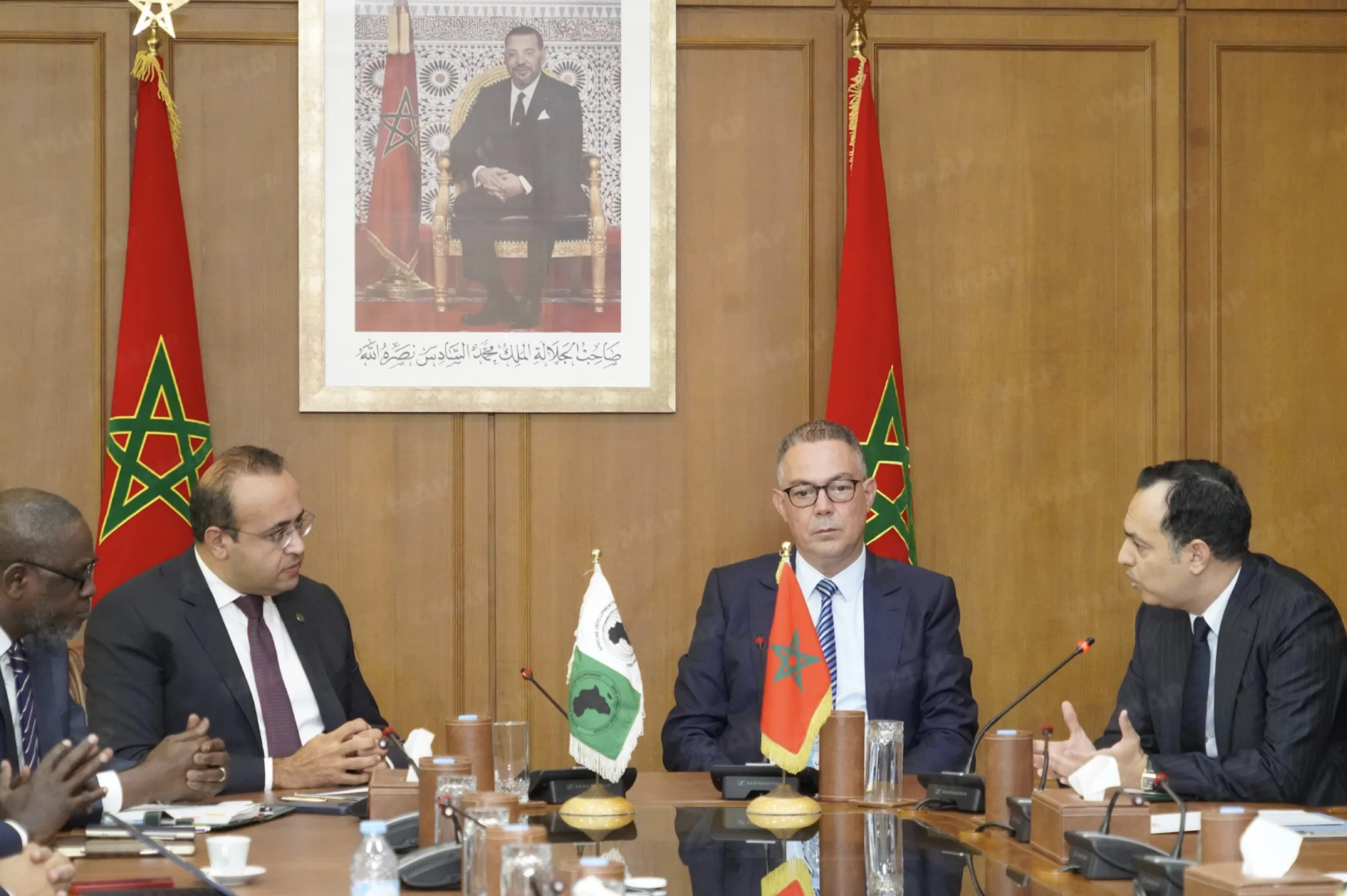
Two financing agreements worth a total of €405 million have been signed in Rabat between Morocco and the African Development Bank (AfDB). One loan targets rail infrastructure, the other focuses on training and employment.
The agreements were signed by Minister Delegate in charge of the Budget Fouzi Lekjaa and AfDB Representative in Morocco Achraf Tarsim. Minister of Economic Inclusion Younes Sekkouri and ONCF Director General Mohamed Rabie Khlie attended the ceremony.
With this new AfDB 405 million Morocco package, the institution is deepening a long-standing partnership. Since 1978, the AfDB has mobilised more than €15 billion in the country, financing over 150 projects in water, agriculture, energy, human development and transport.
UPGRADING THE KENITRA–MARRAKESH CORRIDOR AND MOBILITY
The first loan, worth €205 million, is dedicated to the Rail Infrastructure Development Support Project. Its goal is to improve the capacity and performance of the Kenitra–Marrakesh corridor, a strategic axis for passenger travel and freight.
The project includes extending the high-speed rail line and strengthening existing infrastructure. The aim is smoother mobility, better connectivity between major cities and stronger logistics competitiveness for Morocco’s economy.
For Moroccans abroad, this corridor matters. It links key tourism and economic hubs that often structure trips home or investment plans. In the medium term, a faster and more reliable rail service can:
- make journeys between airports and final destinations easier,
- support real estate and tourism development along the corridor,
- improve logistics for businesses created or funded from abroad.
Fouzi Lekjaa described the high-speed rail line as a “source of pride” for Morocco and stressed the combined impact of the two projects on jobs and infrastructure.
AFDB 405 MILLION MOROCCO: INVESTING IN YOUTH AND TRAINING
The second financing package, €200 million, supports the “Cap Compétences 2030” programme, a nationwide plan to transform vocational training and employment services.
This programme aims to:
- diversify and improve vocational training streams,
- digitise guidance and employment services,
- scale up apprenticeship schemes,
- facilitate labour market entry for young people and women.
According to Younes Sekkouri, the support will be spread over five years and will specifically target 260,000 young people without diplomas through apprenticeship programmes. It is designed to strengthen their access to jobs, notably via ANAPEC and the “Taehil” programme, while modernising support institutions.
For Moroccans living abroad, this skills component is closely linked to decisions about returning or investing in the country. A more organised labour market, with better-trained profiles, can:
- make it easier to recruit qualified staff for businesses set up from overseas,
- offer better prospects for relatives who remain in Morocco,
- make a gradual return more realistic thanks to more stable jobs.
Achraf Tarsim noted that these projects should generate more opportunities, jobs and sustainable growth, and further position Morocco as a regional reference in Africa.
A STRONGER ENVIRONMENT FOR MRE PROJECTS
By combining transport infrastructure and skills development, the AfDB 405 million Morocco initiative underlines a strategic direction: a more connected territory and a more employable workforce.
For Moroccans worldwide who are considering a return, a tourism or industrial project, or simply more frequent trips home, these developments are worth watching. They will influence travel times, service quality and the availability of qualified human resources.
Operational details and precise timetables for implementation still need to be confirmed by the relevant institutions. But the political and financial signal is clear: Morocco is continuing to invest for the long term in its rail system and its youth.
To support your projects in the country, you can also refer to Canal212’s practical guide on procedures for Moroccans abroad, and consult up-to-date economic information from national financial institutions such as Bank Al-Maghrib.
For more context, readers can follow Canal212 news for Moroccans abroad.
Don’t miss out on the latest news from the diaspora!
Sign up for our next newsletter to receive our practical guides, advice (on procedures and investment) and the latest news for French nationals living abroad, delivered straight to your inbox.