


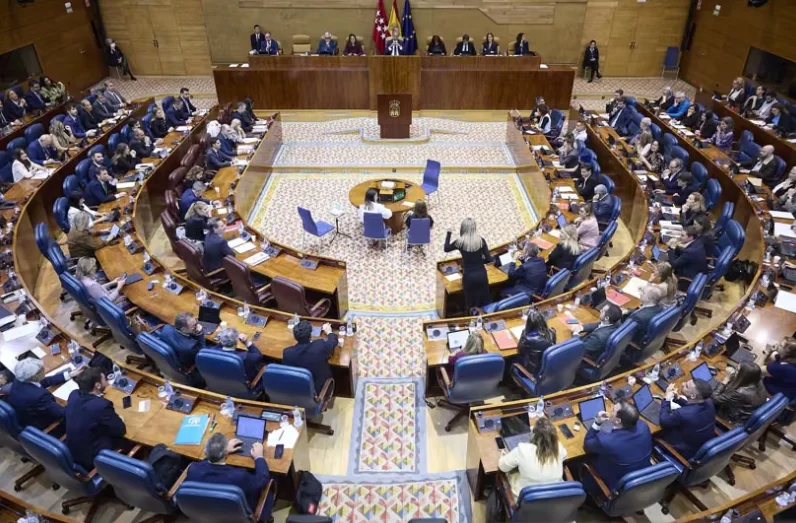
This update focuses on Ceuta Spain border. The approval of two motions on Ceuta by the Madrid Assembly marks a new phase in Spain’s relationship with Morocco, with a strong focus on tightening migration controls at the border.
What Madrid has just decided
Two Spanish parties, the Popular Party (PP) and Vox, pushed through motions on Thursday urging the Spanish government to reassess its relationship with Morocco and to reinforce security at the Ceuta border. The texts follow a major influx of migrants into the enclave in July.
The PP is calling for rapid implementation of voluntary return or expulsion measures for people who entered Spain irregularly. It also wants stronger checks by the immigration police, the deployment of Frontex officers and rapid intervention units.
The party insists that bilateral relations with Rabat must be based on “respect, reciprocity and loyalty to commitments”, and rejects any form of “threat, pressure or blackmail” in the management of borders.
Ceuta Spain border: a tougher security plan
The plan for the Ceuta Spain border includes several concrete measures. First, extending the existing border fence into the sea from the Tarajal barrier. Second, increasing National Police and Civil Guard numbers in the area.
Lawmakers backing these motions also support the rollout of an advanced maritime surveillance system. On the legal side, they argue for legislative changes to extend immediate expulsions to irregular sea entries, not just those by land.
The PP is also asking the European Union to formally recognise a special status for Ceuta and Melilla and to launch a five-year economic recovery plan for both enclaves.
Vox pushes a hard line on Ceuta and Melilla
Vox is taking a much more political stance in this dispute. The party demands that Spain “reaffirm its full sovereignty” over Ceuta, Melilla and other Spanish-held territories in North Africa. It wants any Moroccan claim to them firmly rejected.
Vox is also calling for Morocco’s ambassador in Madrid to be summoned, in response to these territories being described by some Moroccan voices as “occupied territories”.
These positions are likely to fuel public debate in both Spain and Morocco, even though, for now, these are political motions rather than a renegotiated bilateral agreement.
What this could mean for Moroccans abroad
For Moroccans living abroad, the motions do not immediately change visa rules or residence permits in Spain. But they can affect certain concrete situations linked to the Ceuta Spain border and neighbouring regions.
- Day trips or short visits via Ceuta, including shopping visits, could face stricter checks.
- Sea patrols and controls are likely to increase against irregular crossings.
- Political pressure in Spain could, over time, influence entry and return conditions for people in precarious situations.
Moroccans abroad who are in a regular situation, with a valid visa or residence permit, should still be able to travel as usual via airports and organised ports, including conventional ferry routes between Morocco and mainland Spain.
Travel and bookings: be cautious, not alarmed
For upcoming trips, especially in peak season, Moroccans around the world may want to follow a few simple reflexes:
- Always check Spain’s entry conditions on official websites (Spanish Interior Ministry, consulates, airlines or ferry companies).
- Allow extra time if you plan to cross via Ceuta or Melilla, where controls may become tighter.
- Book through reliable carriers and agencies, and keep all documents proving your stay and return plans.
- Stay informed through up-to-date news sources and official communications from Moroccan and Spanish authorities.
At this stage, there is no official measure changing the conditions of regular travel between Morocco and Spain. The Madrid motions are mostly a strong political signal, but they could influence future decisions on border management and shape the broader climate around mobility between the two countries.
For Moroccans abroad planning a return home or a family trip, the most effective approach is to monitor developments in this case closely while relying on formal transport channels and verified information.
For more context, readers can follow Canal212 news for Moroccans abroad.
For official updates, readers can check the relevant official source.
Don’t miss out on the latest news from the diaspora!
Sign up for our next newsletter to receive our practical guides, advice (on procedures and investment) and the latest news for French nationals living abroad, delivered straight to your inbox.