

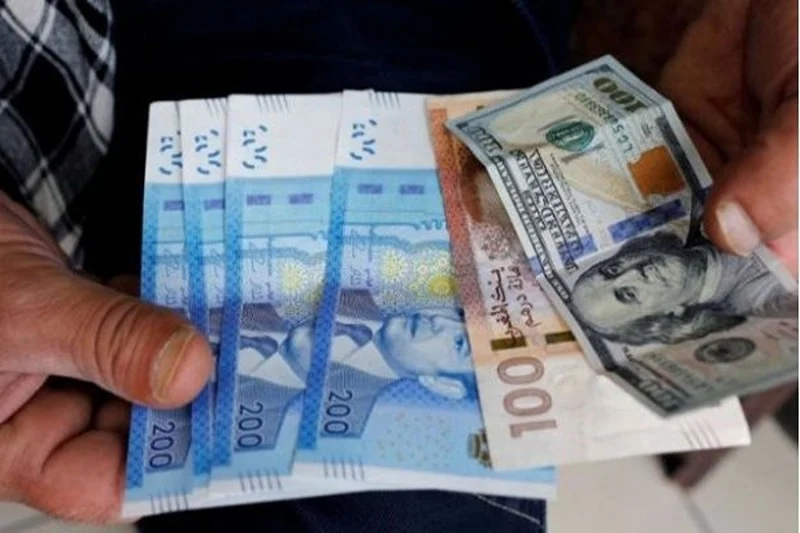
This update focuses on Moroccan dirham dollar. The Moroccan dirham lost ground against the US dollar in mid-September, a move that could affect money transfers, projects and trips for Moroccans living abroad.
Moroccan dirham dollar: what the Central Bank is reporting
According to the latest weekly indicators published by Bank Al-Maghrib (BAM), the dirham depreciated by 1% against the US dollar between 10 and 16 September 2026.
Over the same period, the national currency also slipped by 0.2% against the euro. BAM notes that no foreign exchange auction operations were carried out during that week.
Official reserve assets stood at 500.2 billion dirhams as of 11 September. That is a slight weekly decline of 0.4%, but a robust year-on-year increase of 20.9%.
A money market still supported by the Central Bank
During the period under review, the Central Bank’s operations reached an average of 150 billion dirhams per day. This liquidity was provided through:
- 7-day advances amounting to 54.6 billion dirhams,
- longer-term repo operations of 48.5 billion dirhams,
- and secured loans of 46.9 billion dirhams.
On the interbank market, average daily trading volume reached 4.7 billion dirhams, with the interbank rate hovering around 2.25%.
At the 16 September tender (value date 17 September), BAM injected 54.2 billion dirhams in the form of 7-day advances. For Moroccan savers and investors, at home and abroad, these figures confirm that banking system liquidity remains well supplied.
What this means for remittances from Moroccans abroad
For Moroccans living abroad who send money regularly to their families, movements in the Moroccan dirham dollar and euro exchange rates can affect how many dirhams are received.
When the dirham is weaker against the dollar, each unit of foreign currency can be converted into slightly more dirhams, all other things being equal. A similar, though smaller, effect may apply to the euro over the week in question.
In practice, this can:
- slightly improve the purchasing power of beneficiaries in Morocco,
- make some payments in dirhams (mortgage, tuition, renovation works) a bit lighter for Moroccans abroad paying in foreign currency,
- encourage some people to speed up a project or real estate purchase when the rate looks favourable.
Trips to Morocco and longer-term investment choices
For Moroccans abroad planning a stay in Morocco, a weaker dirham can make certain local expenses relatively more affordable when funded in a strong currency. However, the short-term effect remains limited and depends on local prices, inflation and banking fees.
On the investment side, the weekly move in the Moroccan dirham dollar rate is not, by itself, a decisive signal. But keeping track of how the dirham is moving against the dollar and the euro, as well as monitoring foreign exchange reserves, is useful to:
- time the conversion of savings into dirhams,
- negotiate long-term commitments (loans, contracts, acquisitions),
- and assess the country’s broader macroeconomic stability.
Indicators published by Bank Al-Maghrib, available on its official website (https://www.bkam.ma/), help Moroccans abroad follow these trends over time instead of reacting to a single weekly move.
For those considering a return, an investment or a stronger financial presence in Morocco, the key is to combine these monetary signals with other factors such as price trends, regulations, taxation and personal plans.
For more context, readers can follow Canal212 news for Moroccans abroad.
Don’t miss out on the latest news from the diaspora!
Sign up for our next newsletter to receive our practical guides, advice (on procedures and investment) and the latest news for French nationals living abroad, delivered straight to your inbox.