


This update focuses on Ceuta Moroccan drone. A drone reportedly seen on the Moroccan side of the Ceuta border during a visit by senior Spanish police officials has triggered questions, but so far it has not led to any announced changes for travellers or Moroccans living abroad.
Ceuta Moroccan drone: what is known so far
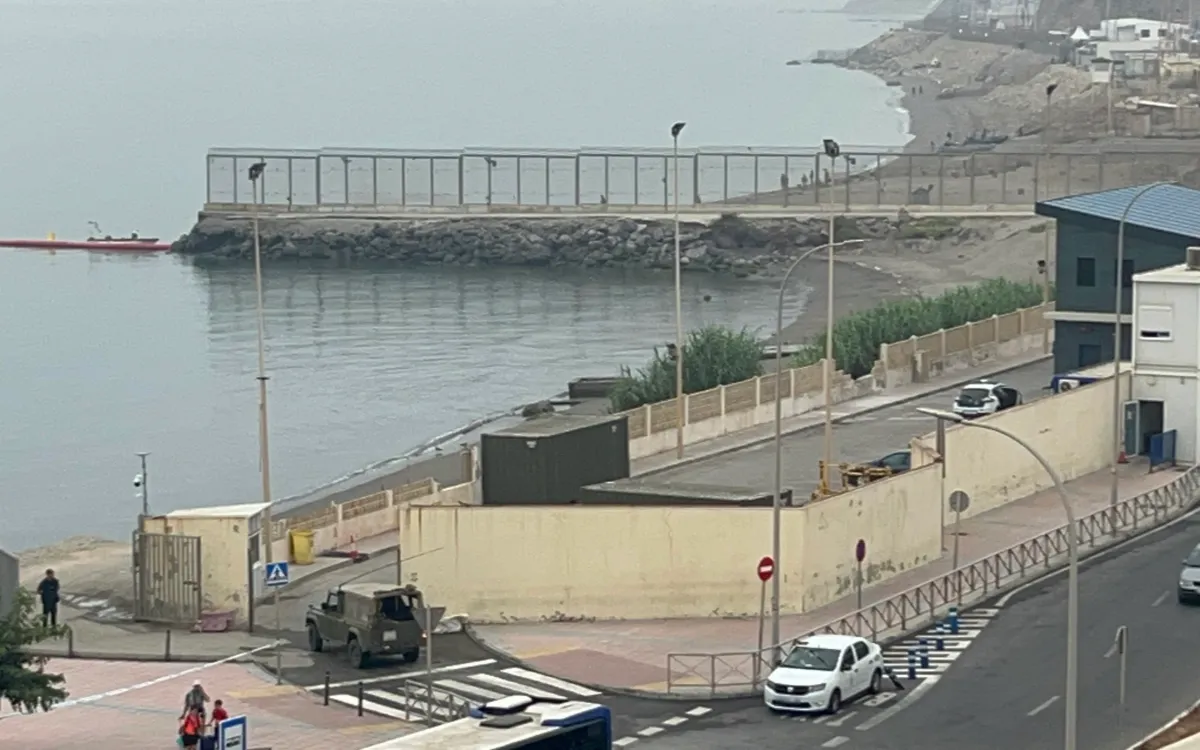
Spanish media report that the overflight happened on 9 September in the Tarajal area, at the land border of Ceuta. The director general of the Spanish National Police, Francisco Pardo, and the director general of the Guardia Civil, Mercedes González, were visiting the site at that time.
Their trip aimed to inspect the border crossing and the temporary reception centre for migrants, following the massive crossings of 30 and 31 July into the enclave. Spanish forces had also deployed their own drones to monitor and film the area.
It was during this visit that an aircraft described as a Ceuta Moroccan drone by several Spanish outlets reportedly appeared on the Moroccan side of the fence. Officers present say they noticed a cable hanging underneath the device.
A mysterious cable and the tethered-drone theory
Police sources quoted in these reports say they are not used to seeing this kind of equipment on drones normally used by their Moroccan counterparts. The presence of a cable, right in the middle of an official visit, quickly fed speculation.
Experts mentioned in the same articles point to the possibility of a tethered drone. This type of system is physically connected to a ground station via a cable that can provide power and, depending on the model, transmit commands and video.
Such a configuration allows a drone to stay in the air much longer than a standard device and reduces its dependence on radio communications, and therefore on some electronic jamming methods. For now, neither the exact function of the cable nor the mission of this Ceuta Moroccan drone has been officially confirmed.
Border crossings: no new restrictions announced
For Moroccans living abroad who travel through Ceuta, the key point is that there has been no official change in crossing rules linked to this incident. Controls remain those put in place after this summer’s record flows.
In practical terms, this means:
- no public announcement of new limitations specifically tied to the drone episode;
- continued tight checks at already heavily monitored border posts;
- heightened vigilance expected around peak travel dates, especially summer and school holidays.
Authorities on both sides have not communicated about any direct impact of this overflight on procedures for drivers, pedestrians or coaches travelling between Ceuta and Morocco.
What Moroccans abroad should keep in mind when travelling
For your trips, returns home and bookings, this episode mainly reflects a broader trend: the growing use of surveillance technology at borders. Drones, cameras and electronic systems are now routine tools around Ceuta and the Strait area.
So far, no transport operator has reported schedule changes linked to this incident. It is still wise to:
- check your ferry, coach or flight information regularly with your operator;
- consult recent advisories from authorities and consulates before peak seasons;
- allow extra time for border formalities if you plan to cross via Ceuta during busy periods.
For practical paperwork and return procedures, Moroccans abroad can also refer to Canal212’s guide to useful procedures, which is updated regularly.
Pending any official clarification about this this case, the incident mainly illustrates how surveillance technologies are gaining importance in an already sensitive area for managing cross-border travel flows.
For more context, readers can follow Canal212 news for Moroccans abroad.
For official updates, readers can check the relevant official source.
Don’t miss out on the latest news from the diaspora!
Sign up for our next newsletter to receive our practical guides, advice (on procedures and investment) and the latest news for French nationals living abroad, delivered straight to your inbox.