


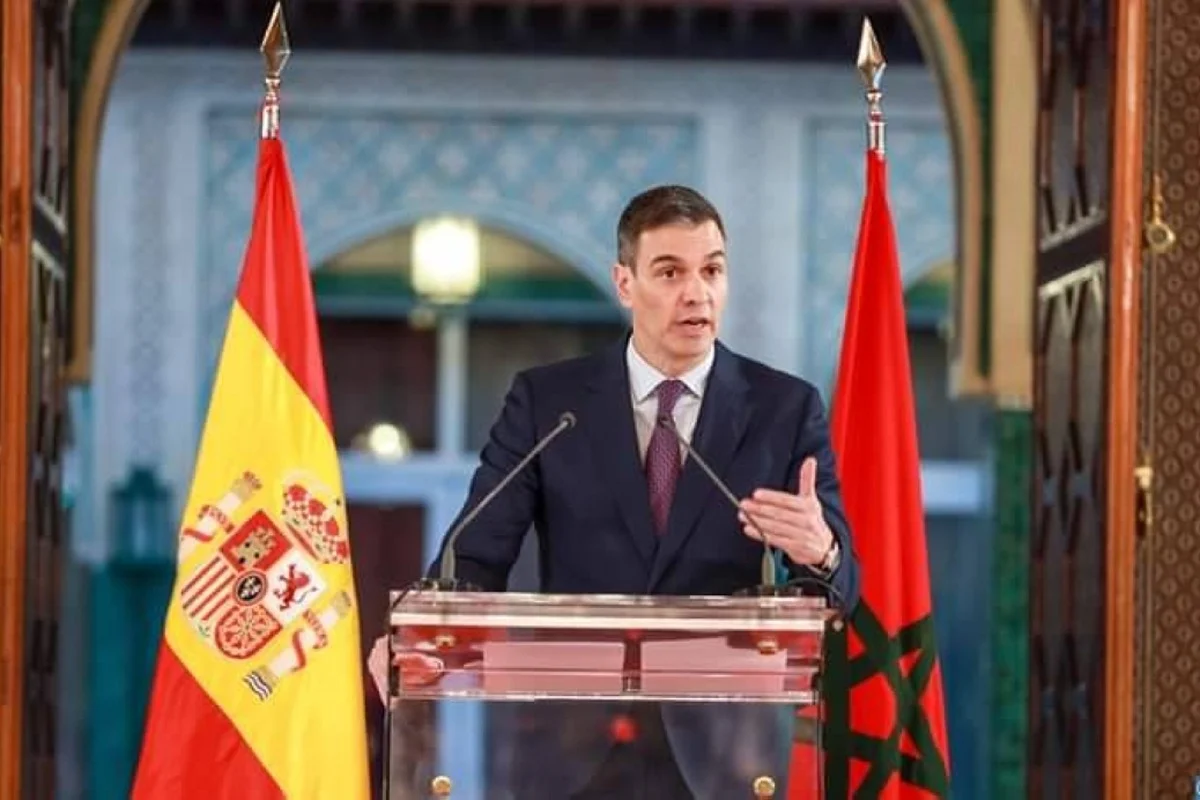
This update focuses on Sebta Sánchez rejects remarks. Spanish Prime Minister Pedro Sánchez strongly condemned in Parliament comments attributed to two Moroccan ministers on Ceuta and Melilla, while insisting that Spain has no evidence that Morocco orchestrated the late-July mass migrant entry into Sebta.
Sebta Sánchez rejects remarks: what to know
Addressing the plenary session of the Congress of Deputies, Pedro Sánchez described as “unacceptable” the remarks attributed to Moroccan Justice Minister Abdellatif Ouahbi and Minister of Endowments and Islamic Affairs Ahmed Toufiq about the two Spanish enclaves.
According to the account presented to MPs, Abdellatif Ouahbi allegedly referred to Morocco’s “historical and geographical rights” over Sebta and Melilla. Ahmed Toufiq is reported to have mentioned a “sacred jihad to liberate the two occupied cities.”
Sánchez said Madrid had “categorically” rejected these statements. This firm stance feeds an already sensitive political climate around the enclaves, at a time when migration cooperation remains a central issue between Rabat and Madrid.
Moroccan ambassador in Madrid summoned
The Spanish leader revealed that his government summoned Morocco’s ambassador in Madrid on 21 August. The move was to formally convey Spain’s position on the remarks attributed to the two Moroccan officials.
According to Sánchez, the step was part of Madrid’s rejection of what it sees as unacceptable positions on Sebta and Melilla, while keeping the relationship with Morocco within an official and institutional framework.
For Moroccans living abroad, especially those who regularly transit through Spain, such diplomatic tension is closely watched. Previous crises have sometimes raised concerns about border crossings, special summer return operations or maritime links.
No proof of Moroccan role in migrant influx
In his speech, Pedro Sánchez also drew a clear line between the political controversy over the comments and the handling of the late-July migrant crisis in Sebta.
He said that none of Spain’s institutions, nor its diplomatic services, nor the European Commission, nor international organisations, had provided his government with “solid evidence” of Moroccan involvement in organising or planning the mass migrant entry on 30 and 31 July.
He added that investigations are ongoing, and promised to make any new information public and act accordingly if the responsibility of a third state is ever established.
The Spanish prime minister also stated that his government had received no “exceptional alerts or warnings” pointing to an imminent mass influx of migrants into Sebta. He said he had ordered internal assessments to draw lessons from the crisis.
What this means for Moroccans living abroad
For now, the Sebta Sánchez rejects remarks episode remains largely political. It mixes Spanish domestic debate, restatements of official positions on Ceuta and Melilla, and clarification over how the migrant crisis was managed.
In practical terms, no new measure has been announced that would directly affect:
- travel for Moroccans abroad between Europe and Morocco via Spain;
- returns home by air or ferry;
- investment projects in Morocco managed from Spain;
- the status of Moroccans legally resident in Spain.
Sánchez also acknowledged that returning part of the migrants who arrived in Sebta would not have been possible without cooperation from Moroccan authorities. He reiterated Spain’s intention to continue working with Rabat through the bilateral partnership.
For Moroccans abroad, the key short-term message is that security and migration cooperation is being maintained, despite the tough language used about the remarks attributed to the two Moroccan ministers.
Until there are further developments, travel procedures, transit through Spain and returns to Morocco remain unchanged. Moroccans living overseas can keep up to date via official channels, including the website of the ministry in charge of Moroccans living abroad, as well as Canal212’s practical guides.
For more context, readers can follow Canal212 news for Moroccans abroad.
Don’t miss out on the latest news from the diaspora!
Sign up for our next newsletter to receive our practical guides, advice (on procedures and investment) and the latest news for French nationals living abroad, delivered straight to your inbox.