


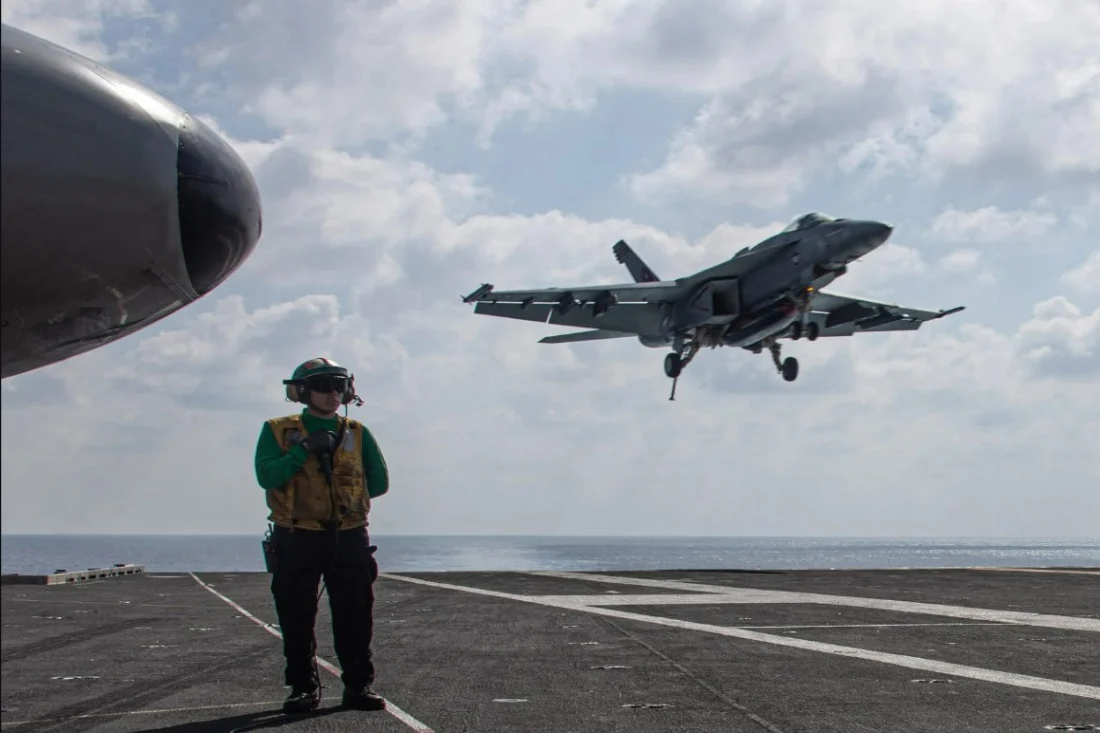
Iran has claimed responsibility for an attack on a US naval drone in the area of the Strait of Hormuz, just hours after American strikes on three of its tankers in the Gulf, renewing fears over the security of this key chokepoint for global trade.
Strait of Hormuz back in the spotlight
The Strait of Hormuz carries a significant share of the world’s seaborne oil. Any spike in tension there is closely watched by markets and by states that depend on Gulf shipping lanes.
In a statement carried by state television, Iran’s Revolutionary Guard said it had “attacked an unmanned US military surface vehicle”, a remotely operated vessel it accuses of attempting to enter a zone it considers protected.
Earlier, the same force announced it had targeted “three tankers using unauthorised passages in the Strait of Hormuz and three American vessels in other areas”, warning other ships against any transit along routes not approved by Tehran.
US strikes on Iranian tankers
Before Iran’s response, the US military command said it had targeted several Iran-linked vessels. According to its account, three Iranian tankers were hit, with two “permanently disabled” and a third “completely destroyed”.
Washington says the vessels were part of “a covert network” funnelling several billion dollars to the Revolutionary Guard and its regional allies. The strikes hit ships located:
- off the island of Kharg, home to Iran’s main oil terminal in the Gulf,
- further south near the this case, close to Jask,
- and in the Gulf of Oman.
The Revolutionary Guard has confirmed the US attack on “three tankers belonging to the Islamic Republic of Iran in the this issue”, reporting damage and denouncing what it calls a “desperate act” in the face of a tightening grip on this route.
A critical node for global trade
This latest episode underlines how fragile security remains in the the story, already the scene of multiple incidents in recent years. Each escalation raises questions over energy flows, with possible knock-on effects on transport costs, maritime insurance and, eventually, fuel prices.
For Moroccans living abroad, as for Morocco itself, developments in the area are worth monitoring for several reasons:
- persistent tensions can feed volatility in energy prices,
- businesses relying on shipping through the region may face extra costs or delays,
- the broader geopolitical climate in the Middle East can weigh on investor confidence.
So far, no state has spoken of a full closure of the strait or of a blanket obstruction of commercial vessels that follow declared routes. Iran’s warnings mainly target passages it deems “unauthorised”.
Diplomatic deadlock and economic pressure
The latest exchange of strikes comes amid a diplomatic stalemate over conflicts in the Middle East. Washington keeps repeating its intention to tighten economic pressure on Tehran, in particular by targeting financial and logistics networks that support the Revolutionary Guard and allied groups.
For now, capitals are mostly calling for de-escalation to avoid a major incident in this narrow waterway, where warships and oil tankers constantly cross paths. Any significant shift in the region of the the development will remain a key factor for the stability of global energy trade and, indirectly, for the cost of living both in Morocco and in countries where Moroccans abroad reside.
Moroccans living abroad who wish to track how such tensions may affect their projects, investments or travel plans can refer, for administrative information relating to them, to official Moroccan government portals, including the ministry in charge of Moroccans living abroad: https://www.mre.gov.ma/.
For more context, readers can follow Canal212 news for Moroccans abroad.
Don’t miss out on the latest news from the diaspora!
Sign up for our next newsletter to receive our practical guides, advice (on procedures and investment) and the latest news for French nationals living abroad, delivered straight to your inbox.