


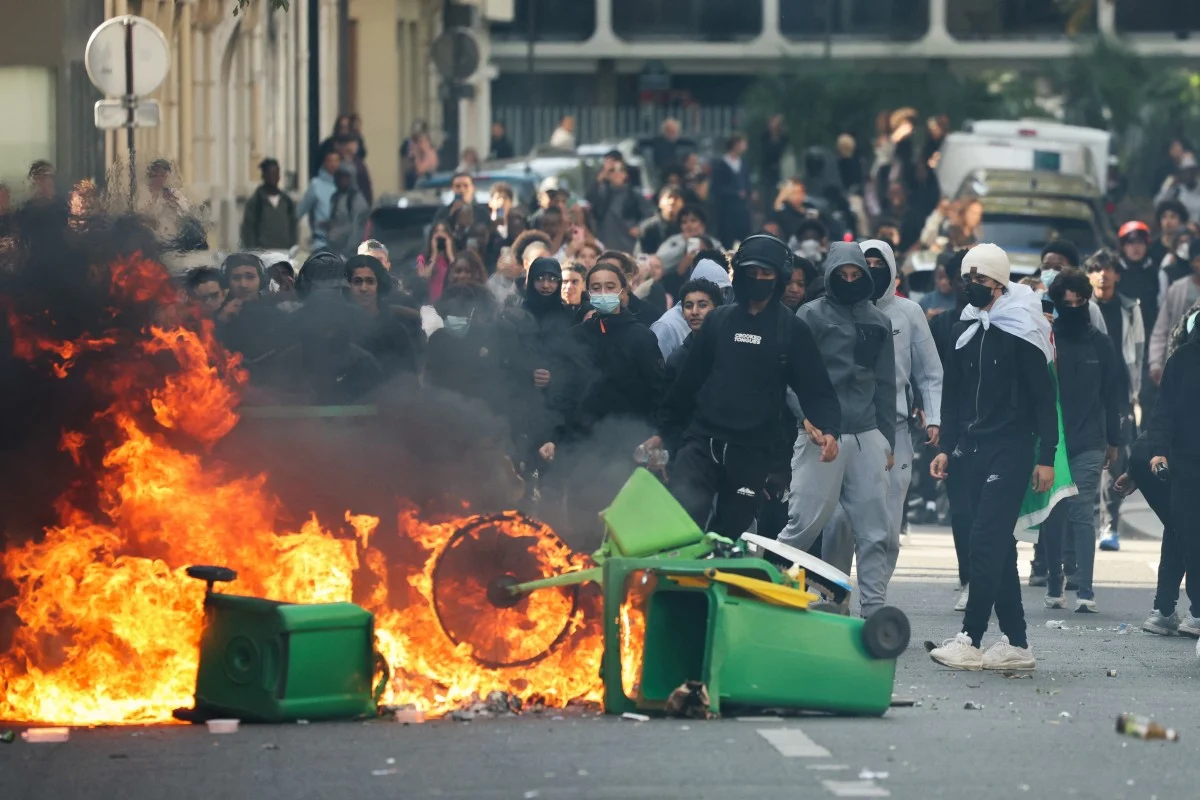
This update focuses on France police and youth. A growing controversy over police tactics against young people in France, firmly rejected by Interior Minister Laurent Nuñez, is raising concrete concerns for Moroccans living in the country, especially students and families.
France police and youth under scrutiny
In recent days, videos shared widely on social media have shown forceful police interventions against minors during high-school and university protests.
The footage, relayed by several French outlets, has shocked many viewers. In the city of Tours, a 16-year-old reportedly lost sight in his right eye after being hit by a rubber bullet fired from a launcher.
The Magistrates’ Union has called for an end to what it describes as a policy of “repressing the youth to silence them”, and denounces what it sees as disproportionate interventions, particularly targeting young people from working-class neighbourhoods.
Responding to these claims, Laurent Nuñez insists that police and gendarmes “do not repress the youth” but rather “protect” pupils and students who want to express their demands peacefully. He condemns what he calls “serious and baseless accusations” and says officers act with “proportionality”, under the supervision of their hierarchy and, where necessary, the courts.
What it changes for Moroccans living in France
For Moroccans settled in France, the France police and youth debate is not only about institutions. It can have real effects on daily life, particularly in cities where schools and universities are mobilised.
Several points deserve attention:
- Student protests can temporarily disrupt traffic around campuses and high schools.
- Police checks may be more frequent near rallies and blocked streets.
- Minors are at the heart of the issue: the minister himself notes that most people arrested are under 18.
Teachers and local mayors have joined some demonstrations to act as intermediaries and form a human “cordon” around young protesters, as reported in front of a high school in Nanterre. Staff members there say officers sometimes moved in “without warning or any form of communication”, fuelling distrust.
For Moroccan families whose children attend these schools, extra caution is advisable on protest days. Clear discussion with teenagers about the risks of staying near rallies, even peaceful ones, and careful monitoring of instructions from school authorities are key.
Daily journeys, flights and bookings: any real impact?
At this stage, there is no structural impact reported on national or international transport directly linked to the France police and youth controversy.
Flights to Morocco, operated by regular airlines, are running as scheduled, and access to major French airports has not been officially affected by school or university protests.
For Moroccans abroad planning trips between France and Morocco, a few simple precautions can help:
- Check local traffic conditions before leaving for the airport or train station.
- Allow extra time if your route crosses a city centre or university district.
- Consult official updates from your airline or train operator for any disruption.
- Avoid lingering around protest areas when carrying luggage or important documents.
The Interior Minister has publicly called on law enforcement to show “discernment” and ensure that any use of force is “strictly proportionate”, reiterating that most arrested individuals are minors. This guidance may influence how future crowd-control operations are handled.
For Moroccan students: information and caution
Moroccan students, who are strongly represented in major French university hubs, may find themselves close to these movements even if they do not actively take part.
A few basic precautions can reduce risk:
- Follow instructions from your university or high school in case of blockades or evacuations.
- Avoid front-line positions during rallies, especially when police are present.
- Keep ID documents and an emergency contact number with you.
- Update your family in Morocco about the local situation to reassure them.
So far, no specific measures targeting foreigners or Moroccans have been mentioned in this context. The situation remains sensitive, however, and the political and legal follow-up will shape how the this case debate evolves—and with it, the general climate in public spaces.
For more context, readers can follow Canal212 news for Moroccans abroad.
For official updates, readers can check the relevant official source.
Don’t miss out on the latest news from the diaspora!
Sign up for our next newsletter to receive our practical guides, advice (on procedures and investment) and the latest news for French nationals living abroad, delivered straight to your inbox.