

This update focuses on Israel Morocco EU partnership. Israel’s move to bring the European Union into its recent diplomatic rapprochement with Morocco marks a new step in the regional balance of power around the kingdom, even if the practical outcome is still uncertain.
Israel Morocco EU partnership outlined in phone call
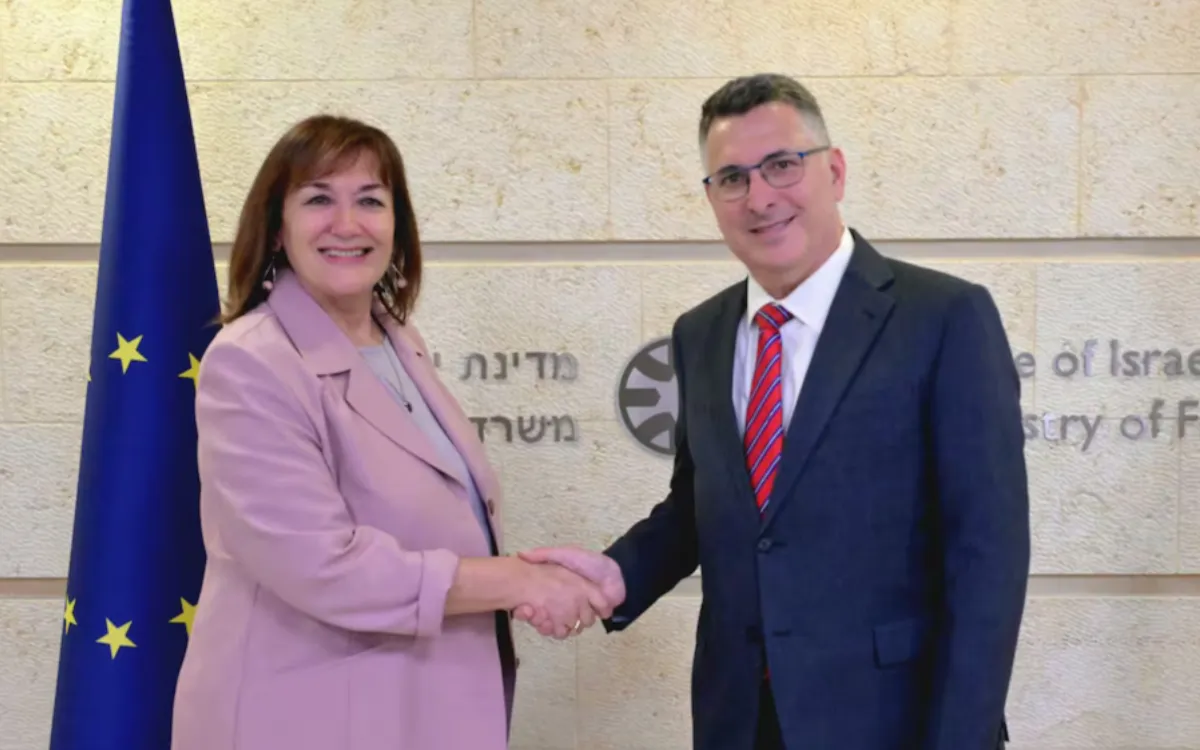
On Sunday 20 September, Israel’s foreign minister Gideon Saar used a phone call with European Commissioner for the Mediterranean Dubravka Šuica to promote joint projects between Israel, Morocco and the European Union.
According to the information made public, he urged Brussels to “encourage joint projects” involving the three partners. The initiative comes just days after the 16 September announcement that Morocco and Israel intend to upgrade their liaison offices into full embassies and appoint ambassadors.
The Israeli minister highlighted “positive progress” in ties between Rabat and Tel Aviv. This new proposal aims to add a European dimension to that bilateral rapprochement and anchor it more firmly in the EU’s Mediterranean policy.
What kind of projects, and what is at stake?
So far, no details have been released on the nature of the potential projects under the Israel Morocco EU partnership. No list of sectors, budgets or timelines has been published.
At this stage, it is more a political signal than an operational programme. It nevertheless underlines a will to position Morocco as a key partner in regional initiatives backed by the EU, in a context of shifting alliances around the Mediterranean.
For Moroccans living abroad, nothing changes in the short term regarding travel, paperwork or returns to the country. No new administrative procedure or specific measure has been officially announced.
If these projects eventually materialise, they could in the future involve, for example:
- development or infrastructure programmes in selected Moroccan regions;
- cooperation on water, environment or energy management;
- regional schemes that may touch on economic exchanges or academic partnerships.
More detailed announcements from both Moroccan and EU institutions will be needed before any concrete impact can be assessed for families, investors or students with links on both shores.
A proposal framed by regional tensions
During the same call, Gideon Saar and Dubravka Šuica also discussed two EU-backed humanitarian projects in Gaza, focusing on wastewater treatment and waste management.
The European Commissioner said she had raised with the Israeli minister the state of EU–Israel relations, regional stability and reconstruction in Gaza. These topics put the Israel Morocco EU partnership proposal in a broader context, where the Mediterranean remains central in Brussels’ strategic thinking.
For now, Morocco has not publicly detailed its position on the idea of three-way projects. The country’s authorities and EU institutions remain the main references to follow for any confirmation or clarification on the evolution of this file.
Moroccans abroad who follow these developments can rely on official Moroccan and EU websites to track the possible emergence of programmes affecting investment, jobs or mobility between Europe and Morocco.
Watching for official announcements
The this case is therefore, at this point, mostly diplomatic. It could lead to more structured Mediterranean projects, but key details are still missing.
Until clearer information is available, it is advisable to rely on official Moroccan and European channels for any practical guidance, particularly on administrative procedures, mobility or economic cooperation.
For Moroccans around the world, this story is primarily part of the geopolitical landscape surrounding Morocco. It does not currently alter travel rules, investment conditions or return plans, but it confirms the country’s growing role in regional dynamics.
For more context, readers can follow Canal212 news for Moroccans abroad.
For official updates, readers can check the relevant official source.
Don’t miss out on the latest news from the diaspora!
Sign up for our next newsletter to receive our practical guides, advice (on procedures and investment) and the latest news for French nationals living abroad, delivered straight to your inbox.