

This update focuses on Morocco fuel price surge. Morocco has decided to extend its support scheme for transport professionals in order to cushion the impact of the global fuel price surge on the national economy.
Morocco fuel price surge prompts high-level meeting in Rabat
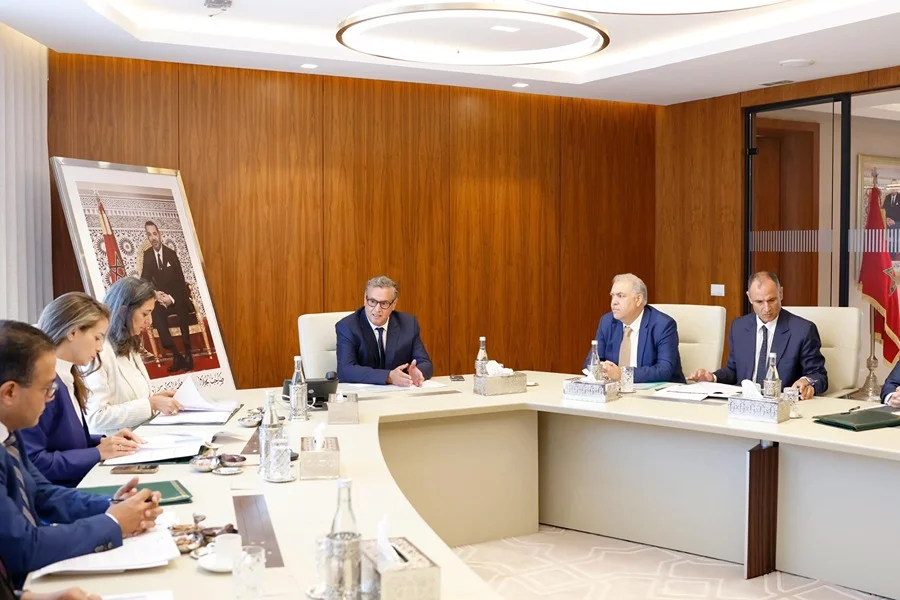
On Wednesday in Rabat, Head of Government Aziz Akhannouch chaired a meeting of the ministerial commission in charge of monitoring the impact of geopolitical tensions in the Middle East on the Moroccan economy. At the centre of the talks was the sharp rise in international fuel prices and its effect on transport and household budgets.
Following the meeting, the government confirmed that the direct and exceptional support granted to goods and passenger transport operators will continue. The amount of this support will be adjusted according to movements in fuel prices, so it can track market conditions more closely.
Keeping public transport fares stable
The main goal of the mechanism is to prevent the fuel price surge from being directly passed on to passengers. Authorities say they want to preserve current public transport fares and guarantee regular supplies to markets across the country.
For Moroccans living abroad, this decision has several concrete implications: the cost of domestic travel during visits to Morocco, the price of transporting goods to their home regions, and the operating expenses of small family-run transport businesses based in the Kingdom.
By trying to stabilise transport prices, the government is also seeking to protect household purchasing power and limit inflationary pressures. This is a key factor for the confidence of Moroccan investors and savers abroad who follow economic signals from Morocco before committing new funds.
Energy stocks and supply security
The ministerial commission underlined that Morocco currently has sufficient energy stocks, despite pressure on global energy markets. The Kingdom holds strategic reserves of butane gas and diesel covering between 40 and 60 days.
According to the same source, supplies of agricultural products and basic foodstuffs continue to reach the national market under normal conditions. Authorities insist on the need to maintain a regular flow of these goods, which is essential for social and economic stability.
- Butane gas and diesel reserves for 40 to 60 days
- Ongoing supply of agricultural and basic products
- Closer monitoring of regional tensions and their impact
Online platform reactivated for transport professionals
As in previous support rounds, goods and passenger transport operators will be able to submit their requests through a dedicated online platform. They will log in according to their professional category, file their application and monitor its processing electronically.
This digital channel is designed to speed up payments, cut down on administrative travel and ensure stronger traceability. It is particularly important for small family-owned fleets, which are highly exposed to fuel price volatility.
For Moroccans abroad who own transport vehicles or hold stakes in logistics companies in Morocco, the decision sends a signal of continuity: the State remains mobilised to absorb part of the Morocco fuel price surge and avoid a sudden jump in operating costs.
In an unsettled global context, the authorities are betting on targeted support for the transport sector and careful management of energy stocks to preserve price stability and broader economic confidence.
For more context, readers can follow Canal212 news for Moroccans abroad.
For official updates, readers can check the relevant official source.
Don’t miss out on the latest news from the diaspora!
Sign up for our next newsletter to receive our practical guides, advice (on procedures and investment) and the latest news for French nationals living abroad, delivered straight to your inbox.