


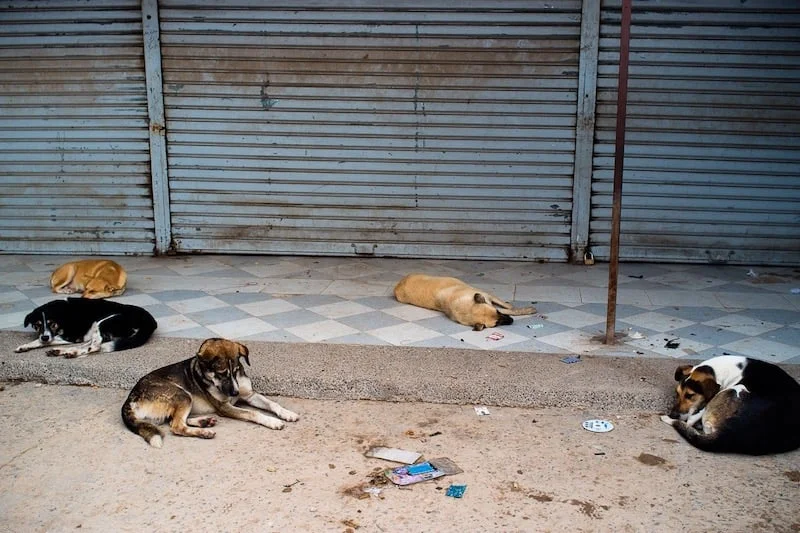
This update focuses on Morocco Law 19.25 strays. For the first time, a national law in Morocco clearly places stray animals under a specific legal protection framework, with Law 19.25 published in the Official Bulletin in August.
From rabies control to animal welfare: a century of change
Before Morocco Law 19.25 strays, Moroccan legislation on animals dated back to the early 20th century and was designed almost exclusively to protect public health and fight contagious diseases, especially rabies.
In 1914, under the French Protectorate, a dahir introduced measures to protect “domestic animals against contagious diseases”. In 1915, specific regulations were adopted to combat rabies.
By 1927, a vizierial decree based on these earlier texts set out more detailed rules, mainly concerning dogs and, in some cases, cats. At that time, animals were seen first and foremost as a sanitary and safety risk.
Harsh measures against roaming dogs
Those early rules imposed very tough measures, especially outside the main cities. Article 5 of the 1927 decree ordered that dogs found roaming during the day had to be “immediately shot”.
The same article called for culling campaigns “several times a year” in rural areas. The goal was clear: limit rabies and control dog populations, with no real consideration for animal welfare.
For Moroccans now living abroad, this legal history helps explain the gap they sometimes feel between practices still visible on the ground and the higher animal protection standards they know from their countries of residence.
Morocco Law 19.25 strays: a new framework
Law 19.25, on the protection and management of stray animals and on the prevention of the risks they may pose, opens an entirely new chapter. It no longer focuses only on public health.
The text also puts the animals themselves at the heart of the legal framework. It aims to protect them from unjustified killing, torture, violence and other forms of abuse. This is a clear break from the purely sanitary approach of the first regulations.
In practice, the law now frames:
- how stray animals are handled by competent authorities,
- how risks to people and property are prevented,
- under which conditions measures can be taken against animals,
- and the fight against mistreatment.
This framework should gradually reshape how municipalities, veterinary services and contractors manage stray animal populations.
What it means for Moroccans living abroad
For Moroccans living abroad and regularly travelling back home, Morocco Law 19.25 strays may, over time, change the look and feel of streets in cities and villages. It also responds to concerns of many families shocked by mass culling practices they sometimes witness during visits.
This new legal framework is important for those planning to move back or invest in Morocco in sectors where animal issues matter: tourism accommodation, agriculture, riding centres, leisure facilities or veterinary services.
By providing a clearer legal basis, the law can also support the work of local animal welfare organisations, often backed by Moroccans abroad through volunteering, fundraising or sterilisation projects.
The next step will be to monitor implementing decrees, allocated budgets and coordination between municipalities, veterinarians and civil society in order to assess, over the coming years, the real impact of this law on the ground.
For more context, readers can follow Canal212 news for Moroccans abroad.
For official updates, readers can check the relevant official source.
Don’t miss out on the latest news from the diaspora!
Sign up for our next newsletter to receive our practical guides, advice (on procedures and investment) and the latest news for French nationals living abroad, delivered straight to your inbox.