


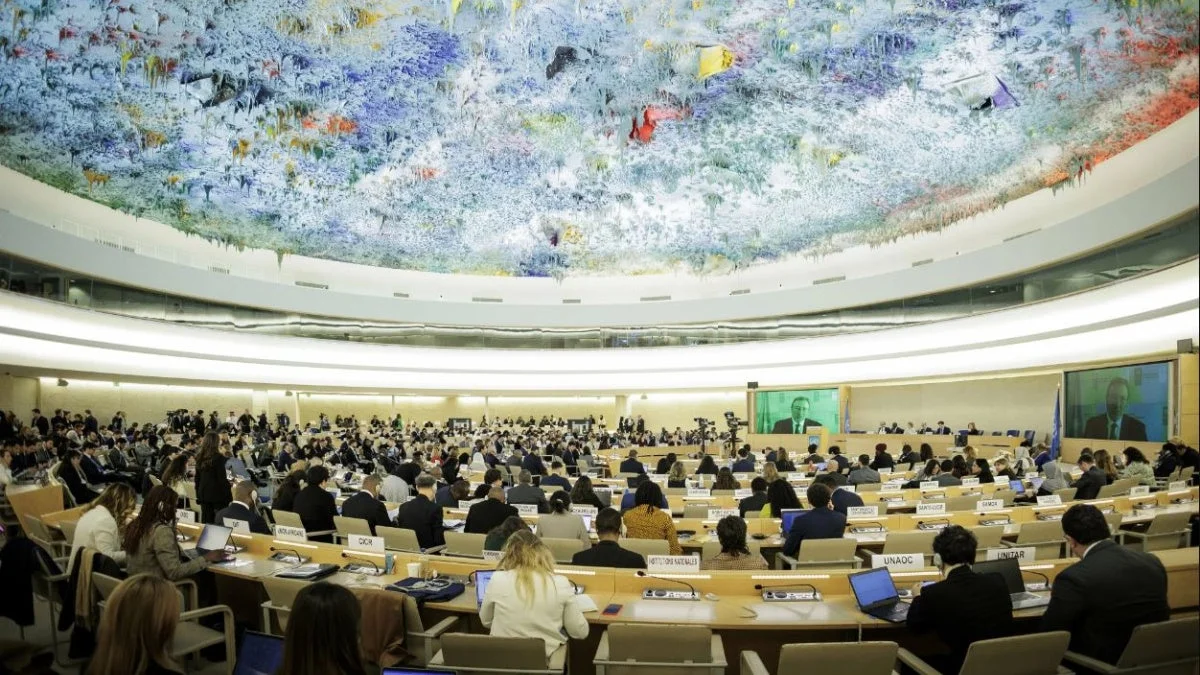
This update focuses on Morocco transitional justice. During the 63rd session of the UN Human Rights Council, Morocco highlighted its transitional justice experience on enforced and involuntary disappearances, putting the spotlight on the role of memory and the participation of victims’ families.
Morocco transitional justice presented in Geneva
In Geneva, the Moroccan delegation praised the work of the Working Group on Enforced or Involuntary Disappearances and thanked it for a report that underlines the connection between disappearances, the duty of memory and guarantees of non-repetition.
The delegation described the Equity and Reconciliation Commission as a central pillar of Morocco’s transitional justice process. It recalled that this body was tasked with establishing the truth about past human rights violations.
According to the Moroccan statement, the Commission carried out investigations, collected a large number of testimonies, held public hearings, reviewed archives and drew on all available sources to clarify disappearance cases.
Investigations, memory and families at the core
The Moroccan delegation stressed the use of forensic techniques to identify victims and clarify pending cases. This work aims in particular to provide answers to families who have been living with uncertainty for years.
Morocco also underlined the follow-up given to the Commission’s recommendations. The goal is both to shed light on the fate of the disappeared and to support relatives in confirmed death cases, through material and symbolic reparation measures.
For the delegation, this approach is in line with that of the UN Working Group, which sees memory as a key component of:
- the right to truth;
- the right to reparation;
- and the guarantee of non-repetition of violations.
In this sense, the Morocco transitional justice experience was presented as a process in which public memory and the active role of victims are structuring elements.
A political and symbolic message for the future
The Moroccan delegation asked the Working Group about the tools available to states to firmly anchor memory work in the long term. The stated objective is to prevent any recurrence of serious human rights abuses.
Beyond technical aspects, this discussion concerns how history is passed on to younger generations. It also raises questions about the role of memorial sites, education and open archives in consolidating the rule of law.
For Moroccans living abroad who closely follow human rights developments back home, this focus on transitional justice is a reminder that Morocco still faces several expectations: fully clarifying pending cases, sustaining mechanisms that support families and strengthening access to information.
These issues weigh on trust in institutions, including for those considering returning, investing or engaging in civil society projects in Morocco. The conversation taking place at the Human Rights Council shows that memory and truth remain at the centre of the international community’s view of the country.
Further official clarifications from Moroccan institutions will help measure how these commitments are translated into concrete public policies in the coming years.
For more context, readers can follow Canal212 news for Moroccans abroad.
For official updates, readers can check the relevant official source.
Don’t miss out on the latest news from the diaspora!
Sign up for our next newsletter to receive our practical guides, advice (on procedures and investment) and the latest news for French nationals living abroad, delivered straight to your inbox.