


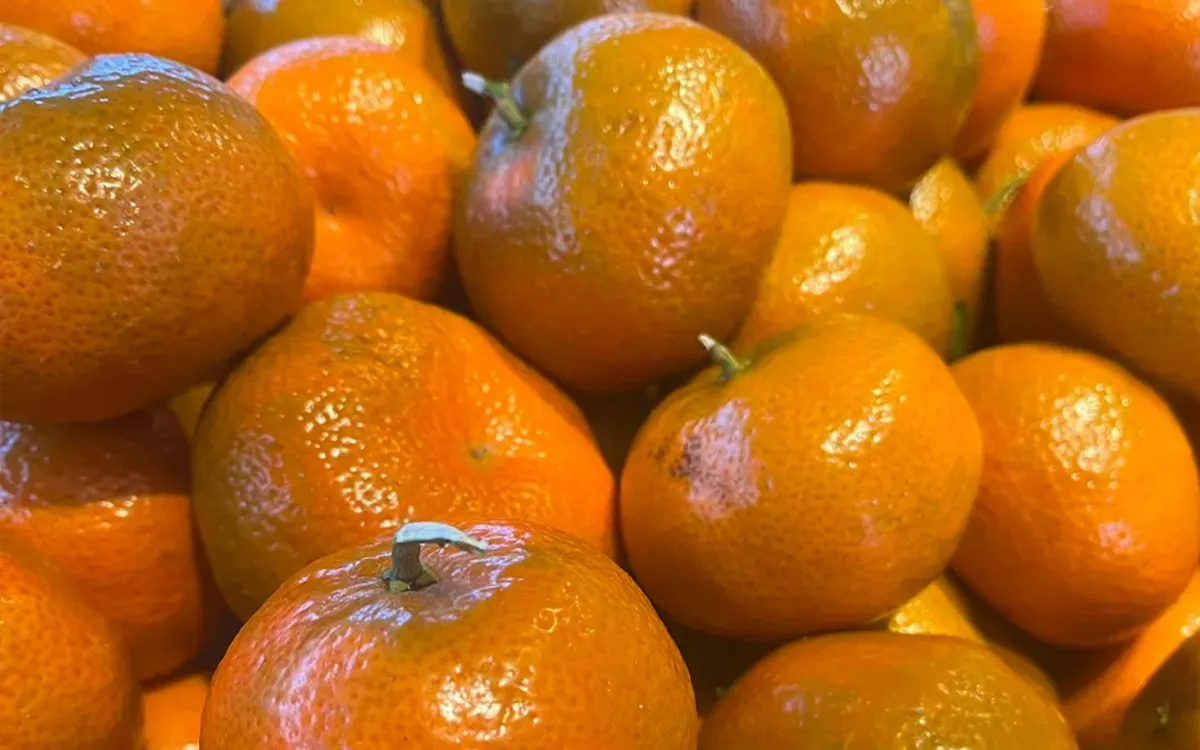
This update focuses on SweetCott Moroccan mandarin. SweetCott, a new Moroccan mandarin developed in Morocco, has just obtained definitive plant variety protection in the European Union, opening a fresh chapter for the country’s citrus exports.
SweetCott Moroccan mandarin protected until 2056
On 7 September, the Community Plant Variety Office (CPVO) granted protection to the SweetCott variety. This intellectual property right runs until 31 December 2056 and will govern how the variety is produced and marketed within the European Union.
The rights holder is NadorCott Protection, the structure that already manages the well-known Nadorcott mandarin, developed in Morocco more than thirty years ago and now among the country’s most profitable citrus varieties.
This decision is not a geographical indication: it does not specifically protect “Morocco” as the origin. It applies to the plant variety itself, meaning its distinctive agronomic and commercial characteristics.
Impact on production and export flows
With this protection in place, any multiplication and marketing of SweetCott plants inside the EU will require the rights holder’s permission. In practice, European growers who want to plant this mandarin will have to negotiate access and licences.
For Moroccan farmers and exporters already organised around such protected varieties, this provides clear, long-term visibility. SweetCott complements the existing range alongside Nadorcott and helps to smooth sales across the citrus season.
SweetCott stands out for its late maturity. It is marketed from February to May, a period when global supply of easy-peeler mandarins begins to decline. This calendar advantage can strengthen Morocco’s presence on European shelves at the very end of the season.
A signal to Moroccans abroad eyeing agribusiness
For Moroccans living abroad who are considering investment in agriculture or agrifood, EU recognition of the SweetCott Moroccan mandarin is an important signal.
- It confirms Morocco’s capacity to develop citrus varieties that are recognised and protected in major markets.
- It secures a legal framework for production and export over several decades.
- It fits into a broader trend of strong Moroccan agricultural exports, particularly in tomatoes and mandarins.
By itself, this protection does not guarantee profitability, but it shows that the sector is increasingly structured around plant intellectual property, a key factor for anyone targeting high value-added value chains.
More than thirty years after Nadorcott, a new chapter
SweetCott arrives more than thirty years after Nadorcott’s launch. Since then, Moroccan mandarins have taken a central place in the country’s export strategy, in both volume and value.
Before granting definitive protection, the CPVO had the variety tested over several full growing cycles by a technical unit linked to the Valencian Institute of Agricultural Research in Spain. These trials focused on three core criteria: distinctness, uniformity and stability of the variety’s characteristics over generations.
For families of Moroccans abroad who still own land back home or are considering a return project based on agriculture, this development shows that the sector continues to specialise and move upmarket. It comes on top of regulatory changes and support schemes that prospective returnees need to monitor carefully.
While investors await any further details from the relevant authorities, especially on opportunities for new entrants, EU protection of SweetCott confirms a strong trend: Moroccan citrus remains at the heart of the country’s export strategy.
Moroccans abroad planning a return or an agricultural investment can refer to Canal212’s guide to key procedures for the diaspora, and to official information portals, including the Moroccan ministry in charge of Moroccans living abroad: https://www.mre.gov.ma/.
For more context, readers can follow Canal212 news for Moroccans abroad.
Don’t miss out on the latest news from the diaspora!
Sign up for our next newsletter to receive our practical guides, advice (on procedures and investment) and the latest news for French nationals living abroad, delivered straight to your inbox.