


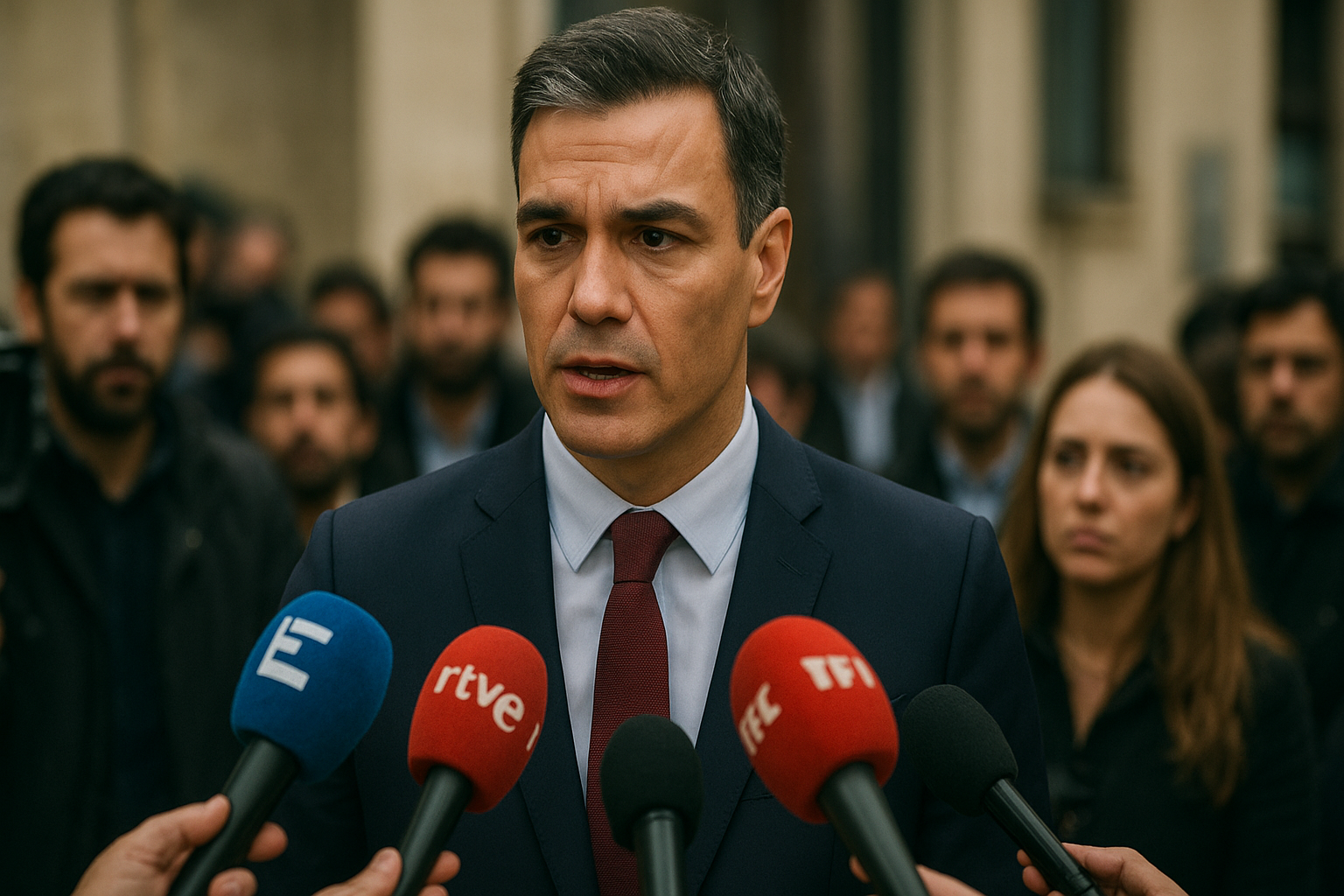
This update focuses on Ceuta crisis. Spanish Prime Minister Pedro Sánchez has taken a step back from the harsh accusations aimed at Morocco over the recent migrant crisis in Ceuta, a case closely followed by Moroccans living across Europe.
Ceuta crisis: Pedro Sánchez cautious on Morocco’s responsibility
Speaking on Monday 14 September on the TV show El Intermedio broadcast by laSexta, Pedro Sánchez stated that there was currently no solid evidence that Morocco was behind the mass arrival of migrants in Ceuta between 30 and 31 July.
The Socialist leader rejected the theory of “blackmail” by Rabat, a narrative pushed by some Spanish politicians and media outlets. He also dismissed any direct connection with the Pegasus spying affair.
According to Sánchez, the mobilisation of hundreds of young people towards the Spanish enclave was largely fuelled online. A distorted version of a court ruling allegedly spread on social networks, suggesting that people could swim to Spain without facing immediate return at the border.
Call for patience and a full investigation
The head of government called for more “patience” to identify those truly responsible for the crossings and to stabilise the situation by the end of the year.
He defended his government’s handling of the crisis, stressing that migrants must be housed, registered and identified before authorities examine any asylum request or potential return to their country of origin.
For Moroccans abroad, the way Madrid manages the Ceuta crisis directly affects the broader climate at Spanish borders, whether arrivals are by land or sea, for tourism, family visits or work.
Ceuta border and daily travel
Without announcing any new measures, Pedro Sánchez sought to reassure public opinion about the institutional management of the Ceuta border post, a highly sensitive crossing point for many Moroccans and dual nationals.
He highlighted two priorities set by his government:
- maintaining control and order at the borders of Ceuta and Melilla;
- coordinating the reception, shelter and processing of migrants who reach the enclave.
In practice, Moroccans travelling legally for holidays, studies or business are not affected by these emergency procedures, which target irregular arrivals. However, each spike in tension around the Ceuta crisis can make the atmosphere at border posts more cautious and lead to longer checks.
Intelligence messages and unanswered questions
Pedro Sánchez also played down the importance of WhatsApp messages sent by the Spanish National Intelligence Centre (CNI) to the central government’s delegation in Ceuta. These declassified reports mentioned online calls encouraging people to cross the border by sea or by climbing the fence.
For the Spanish prime minister, these messages do not amount to formal “alerts” proving state-level organisation or support for the departures. He reiterated that, to date, there is no solid evidence directly incriminating Morocco in the this case.
What this means for Moroccans abroad
For Moroccans living in Europe, this political stance mainly shows that the bilateral relationship remains officially framed by cautious cooperation, despite the sensitivity of migration issues.
For now:
- no official change has been announced to visa rules or entry procedures for Spain;
- regular travel for tourism, family visits or business continues under the usual framework;
- Moroccan and Spanish authorities maintain dialogue on joint management of migration flows.
Moroccans abroad planning a trip through Ceuta or other Spanish entry points should keep an eye on updates from consulates as well as the official portal dedicated to Moroccans abroad, in order to anticipate any procedural adjustments.
Pending further clarification from both governments, Pedro Sánchez’s message aims to cool down rhetoric around the this issue without closing ongoing investigations into the networks that encouraged these risky journeys.
For more context, readers can follow Canal212 news for Moroccans abroad.
Don’t miss out on the latest news from the diaspora!
Sign up for our next newsletter to receive our practical guides, advice (on procedures and investment) and the latest news for French nationals living abroad, delivered straight to your inbox.