


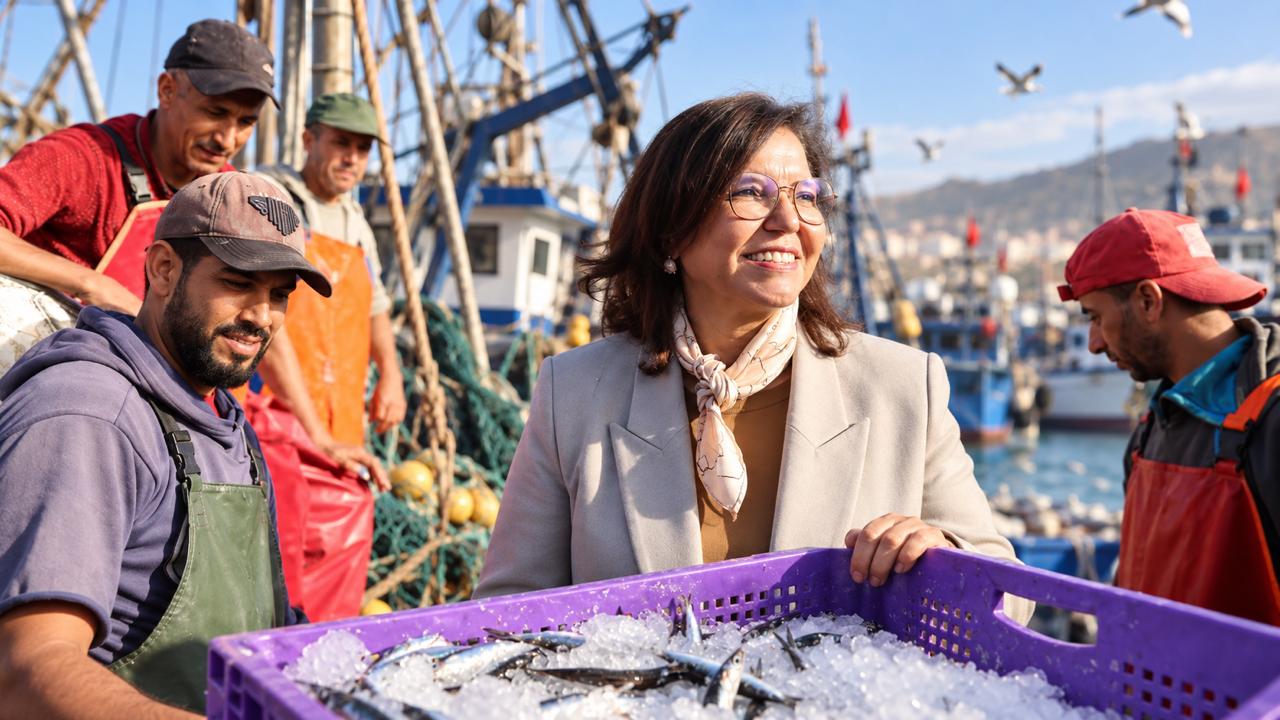
This update focuses on Morocco sardine landings. Morocco’s maritime fisheries sector is confirming its positive momentum in 2026, driven by a spectacular rise in sardine landings, a key product for households and processing industries.
Morocco sardine landings drive overall growth
Over the first eight months of the year, total seafood landings reached 786,000 tonnes, worth 12.5 billion dirhams. This represents a 6% increase in volume and a 4% rise in value compared with the same period in 2025.
Within this overall performance, Morocco sardine landings play a leading role. Between January and the end of August 2026, sardine landings amounted to around 394,200 tonnes, against 237,800 tonnes a year earlier. That is an increase of about 66%, making sardines one of the main growth engines of coastal fisheries.
The value generated is following the same trajectory. It has risen from 735.1 million dirhams to 1.22 billion dirhams, again an increase of close to 66%. This underlines the strategic importance of sardines in Morocco’s fisheries value chain.
Southern ports at the heart of the surge
The strong growth in sardine landings largely comes from the performance of southern ports. In Laayoune, sardine landings increased by more than 67,000 tonnes, a rise of 76%.
The jump is even more striking in Dakhla, where quantities grew by about 60,000 tonnes, corresponding to an increase of 222%. Two other ports also show significant progress: Tan-Tan gained around 38,000 tonnes (+110%), while Sidi Ifni added nearly 14,000 tonnes (+104%).
For sector operators, these figures confirm the improvement in coastal fishing volumes and the growing weight of these ports on the national fisheries map.
What this means for the market and for Moroccans abroad
For families in Morocco, this strong rise in sardine landings is a positive signal for domestic supply. Sardines remain one of the most widely consumed fish, especially among middle- and lower-income households.
For Moroccans living abroad who are considering a return or a business project back home, this trend may have tangible implications:
- stronger prospects for canning and freezing industries,
- potential opportunities in logistics, cold-chain services and distribution,
- growing interest in support services around ports, such as transport, maintenance and packaging.
Members of the diaspora already active in food processing or restaurant businesses may find a more reliable sourcing environment for projects in Morocco, especially in coastal cities or regions close to Laayoune, Dakhla, Tan-Tan or Sidi Ifni.
Before committing, it remains essential to consult the relevant public institutions and investment support bodies, and to monitor fisheries policies, quotas and regulations. Official data can help assess how sustainable this rise in Morocco sardine landings will be, in a sector where responsible resource management is crucial.
For those who mainly plan regular trips to the country, these figures are also a reminder of how central seafood remains to Moroccan cuisine and to the economic life of port cities.
For more context, readers can follow Canal212 news for Moroccans abroad.
For official updates, readers can check the relevant official source.
Don’t miss out on the latest news from the diaspora!
Sign up for our next newsletter to receive our practical guides, advice (on procedures and investment) and the latest news for French nationals living abroad, delivered straight to your inbox.