

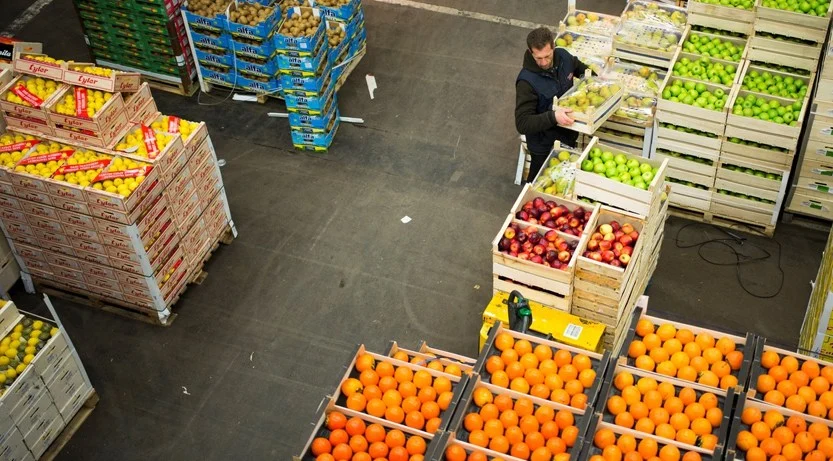
Morocco has become a major exporter of fruits, vegetables and seafood, yet it increasingly imports processed foods. This Morocco food paradox limits the value created in the country and, in the long run, weighs on household budgets, including for families of Moroccans living abroad when they consume or invest back home.
Morocco food paradox: what to know
According to the 2025 activity report of the Direction des études et des prévisions financières (DEPF), Morocco’s food exports are still dominated by minimally processed products. Raw items – fruits, vegetables and seafood – accounted on average for 45% of food exports over the 2012-2022 period.
Composite products, which already require more processing, made up about 25% of exports. These figures do not describe 2025 alone, but they show a persistent trend: the country still positions itself primarily as a supplier of agricultural and fishery raw materials.
For Moroccans abroad who monitor the economy from a distance, this means that most of the wealth generated from land and sea is captured at the production stage, before any significant industrial processing.
Processed imports on the rise
On the import side, the trend is the opposite. Morocco buys growing volumes of highly processed food products with strong added value: prepared foods, dairy products, sugar, jams and other items that rely on advanced industrial processes.
The DEPF’s breakdown of trade flows by processing level shows that the external bill is increasingly concentrated on these finished products. Each imported box or packet includes not only the raw material, but also foreign know-how, energy, logistics and industrial margins.
This gap lies at the heart of the Morocco food paradox: the country exports raw resources but buys back the added value that could, at least in part, have been generated locally.
More local processing, more value
The goal is not to call into question fresh exports, which remain essential for national value chains. It is rather to complement them with a broader range of processed products made in Morocco, able to better capture the value of local raw materials.
Developing local processing facilities could help:
- secure farmers’ and fishers’ incomes beyond volatile fresh markets;
- cushion price swings on international markets;
- create industrial jobs in producing regions;
- expand the offer of “made in Morocco” products for both export and domestic markets.
Seafood, for instance, offers significant potential for diversification: higher value canned fish, ready meals, and specialised ingredients for the global food industry. But this requires building coherent ecosystems in industry, logistics and research.
What it means for families and diaspora plans
For Moroccan households, including those who return during the summer or invest in family property, this model has a direct impact on purchasing power. The more Morocco imports processed foods, the more it remains exposed to international prices and foreign currencies to fill supermarket shelves.
A stronger domestic food-processing industry could, in the medium term, help stabilise some prices, diversify available products and reinforce food security. It would also open doors for Moroccans abroad who want to invest in:
- small and mid-size processing firms in their regions of origin;
- cold chain, storage or packaging projects;
- brands that highlight Moroccan origin on foreign markets.
For those planning a return or a life split between Morocco and their country of residence, the evolution of the food industry will weigh on the cost of living, the availability of quality local products and job prospects for relatives.
In this sense, the Morocco food paradox is not only about trade flows. It touches on food sovereignty, industrialisation and the long-term economic ties that Moroccans abroad can build with their home country. The key question is whether public policies and private capital will manage to close the processing gap and gradually reduce this imbalance.
Before investing or returning
Before any investment or return project linked to food processing, it is advisable to consult up-to-date information from official administrations via their online portals. For issues specific to Moroccans abroad, our Canal212 guide to key procedures can offer a useful starting point.
For more context, readers can follow Canal212 news for Moroccans abroad.
For official updates, readers can check the relevant official source.
Don’t miss out on the latest news from the diaspora!
Sign up for our next newsletter to receive our practical guides, advice (on procedures and investment) and the latest news for French nationals living abroad, delivered straight to your inbox.