

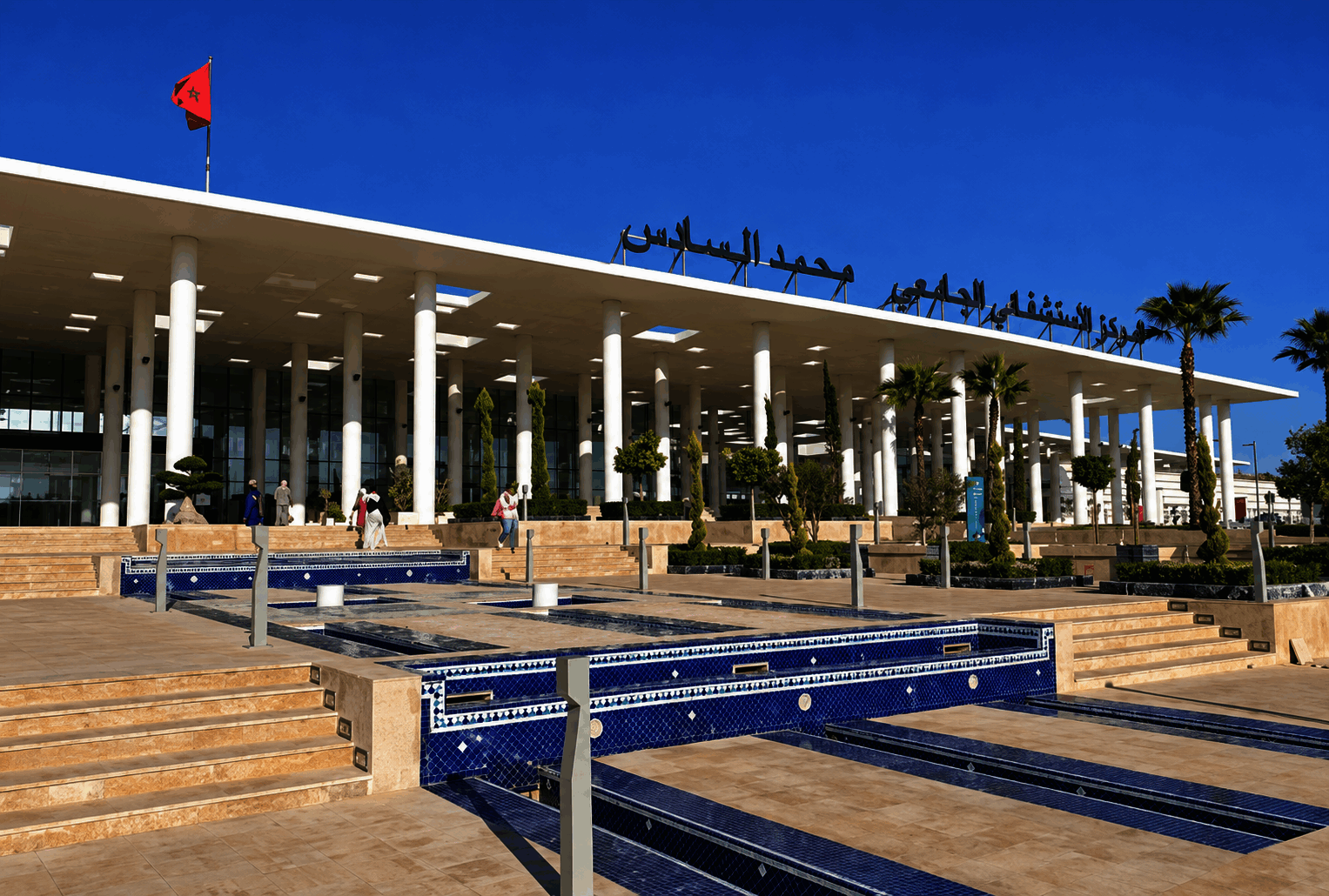
The Tanger-Tetouan-Al Hoceima health cluster, the first territorial group to reach an advanced stage of implementation, is now the reference model for Morocco’s health reform and will shape how citizens, including Moroccans living abroad when they are back home, access care over the coming decade.
A reform built around territorial health clusters
Almost two years have passed since Law 08-22, enacted by dahir No. 1.23.50 on June 28, 2023, created the Territorial Health Groups (Groupements Sanitaires Territoriaux, GST). On paper, the reform merges all public healthcare structures within a region into a single public entity with legal personality and financial autonomy.
The Tanger-Tetouan-Al Hoceima health cluster is meant to bring together the university hospital, provincial hospitals, urban health centers and rural dispensaries under one roof. The stated goal is to break down the barriers between the three levels of care – tertiary, secondary and primary – and appoint a single regional leader for each of Morocco’s twelve regions.
This Tanger-Tetouan-Al Hoceima health cluster already serves as a template for future groups in Rabat-Salé-Kénitra, Laâyoune-Sakia El Hamra, Souss-Massa and Fès-Meknès. Understanding its architecture therefore means anticipating how health governance will work across the country in the years ahead.
A six-level structure for the Tanger-Tetouan-Al Hoceima health cluster
The target organisational chart for the this case is now stabilised. It is built around six hierarchical layers, headed by a general management that concentrates strategic decisions and budget control.
Below that, several regional directorates and thematic divisions coordinate hospital medicine, primary care, logistics, human resources and financial management. The result is a strongly hospital-centred system, where major hospitals remain the heart of the structure, even though the reform emphasises the need to reinforce community health centers.
For health economist Najib Diouri, associate director of Alium Santé Maroc, the point is not to praise or criticise the law, but to submit this framework to a rigorous technical assessment. Such a reading is still largely missing from the public debate, even though the this issue will inspire all other regions.
Unanswered questions on governance and financing
Several grey areas emerge in this model. First, the actual role of primary care. A hospital-centred architecture can, if poorly managed, keep pressure on emergency departments and big hospitals, while underusing local clinics and neighborhood health centers.
Second, the distribution of responsibilities between the GST, the Ministry of Health and other public actors is not always easy to read. Who decides on investment priorities, regional health planning or recruitment? These questions are crucial for the credibility of the reform.
Third, the promised financial autonomy raises issues about funding sources and expenditure oversight. Centralising budgets within the the story must go hand in hand with strong transparency mechanisms, in order to reassure economic partners and financial institutions.
What this could mean for Moroccans living abroad
For Moroccans living abroad, the new health map will have tangible consequences in the medium term. Many rely partly on care in Morocco during holidays or longer stays, or accompany ageing parents through complex treatment paths.
With a single health cluster per region, administrative contacts should become clearer when they need to:
- arrange planned hospitalisation in a regional hospital;
- coordinate a medical file between a specialist and a local health center;
- obtain up-to-date information on available services before returning to Morocco.
The pilot role of the the development will be watched closely by families with roots in northern Morocco, who form a large share of the Moroccan community in Europe. The quality of governance, the ability to reduce bureaucratic red tape and the speed at which patients are directed to the right facility will all influence how much trust the diaspora places in the Moroccan health system.
For those considering a permanent return or investments in complementary private health services, the stability of the public regional framework embodied by each health cluster will also be a key indicator, alongside macroeconomic data published by institutions such as Bank Al-Maghrib.
The success or failure of the this case will therefore weigh on Morocco’s health attractiveness, both for residents and for its global community.
For more context, readers can follow Canal212 news for Moroccans abroad.
For official updates, readers can check the relevant official source.
Don’t miss out on the latest news from the diaspora!
Sign up for our next newsletter to receive our practical guides, advice (on procedures and investment) and the latest news for French nationals living abroad, delivered straight to your inbox.