
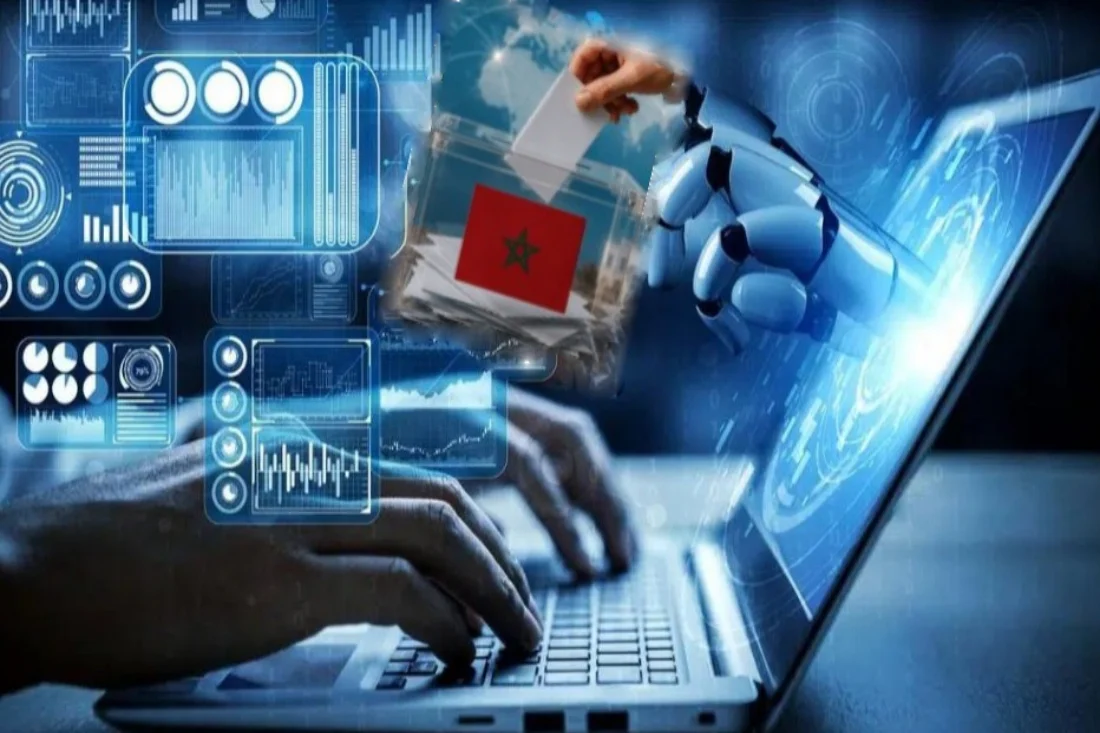
This update focuses on Morocco 2026 elections legal framework. As Morocco prepares for the 2026 parliamentary elections, the country is introducing a dedicated legal framework to tackle political deepfakes and online disinformation, at a time when social media and artificial intelligence dominate public debate.
A reworked digital framework for the 23 September 2026 vote
The legislative elections are scheduled for 23 September 2026. Regulation of the political contest now goes far beyond rallies, posters and traditional media. It explicitly targets the digital sphere, which has become a decisive arena in every campaign.
Widespread access to social platforms and the rapid rise of generative AI tools capable of producing highly realistic audio and video deepfakes have changed the nature of electoral risk. A single rumor can spread in minutes, reaching voters inside Morocco and abroad, and undermining trust in the integrity of the vote.
Lawmakers have responded by tightening the rules. The Morocco 2026 elections legal framework signals a turning point in the way electoral security is handled, particularly online.
A new Article 51-bis targeting falsified content
At the heart of the reform is the introduction of Article 51-bis into Organic Law 53.25, which amends and supplements Organic Law 27.11 governing the House of Representatives.
This new provision criminalises the use of information technologies to:
- capture speech, images or documents without consent;
- fabricate falsified content (montages, fake audio, manipulated videos);
- disseminate such material with the intention to mislead the public.
The target is not political criticism itself but the deliberate manipulation of voices and images. The aim is twofold: to protect the moral integrity of candidates and voters, and to safeguard transparency in electoral operations.
Morocco 2026 elections legal framework: strong penalties, clear limits
From a criminal perspective, Article 51-bis sets out prison sentences ranging from two to five years, along with fines between 50,000 and 100,000 dirhams. The message is direct: creating or amplifying a malicious deepfake during the campaign is no longer a matter of mere “buzz”, but a punishable offence.
At the same time, the text draws a clear line between manipulation and open political debate. The mechanism is built on the notion of criminal intent (specific intent). For an offence to be established, the courts must prove a deliberate will to:
- damage someone’s reputation;
- deceive voters;
- or disrupt the proper conduct of the election.
In other words, criticism, satire or strong political opinions do not automatically fall under Article 51-bis if there is no intention to mislead through falsification.
A system aligned with the Criminal Code
This new electoral framework does not start from scratch. It complements existing provisions in the Criminal Code, in particular Articles 447-1 to 447-3, which already punish the distribution of private content or defamatory montages.
Those articles provide for prison sentences of up to three years. Article 51-bis adds an extra layer focused on election periods and on the new risks linked to advanced digital technologies.
In the age of deepfakes, a fake statement falsely attributed to a political figure or a doctored video can influence ballots, erode confidence in institutions and distort the link between citizens and their representatives.
What this means for Moroccans living abroad
For Moroccans living abroad, who mostly follow political news through social media and messaging apps, this shift is highly relevant. Falsified content moves across borders instantly, and some may base voting decisions or return plans on misleading information.
The reinforcement of the Morocco 2026 elections legal framework also aims to make this remote information space safer. It encourages voters to check the origin of videos and quotes before sharing them, and to rely on official channels for sensitive announcements.
In parallel, Moroccans abroad can track legal changes and practical procedures via institutional portals, such as the ministry in charge of Moroccans living abroad: https://www.mre.gov.ma/.
In an increasingly unstable digital environment, the reform reflects an attempt to balance freedom of expression, pluralism and protection of the ballot, just months ahead of a key national vote.
For more context, readers can follow Canal212 news for Moroccans abroad.
Don’t miss out on the latest news from the diaspora!
Sign up for our next newsletter to receive our practical guides, advice (on procedures and investment) and the latest news for French nationals living abroad, delivered straight to your inbox.