

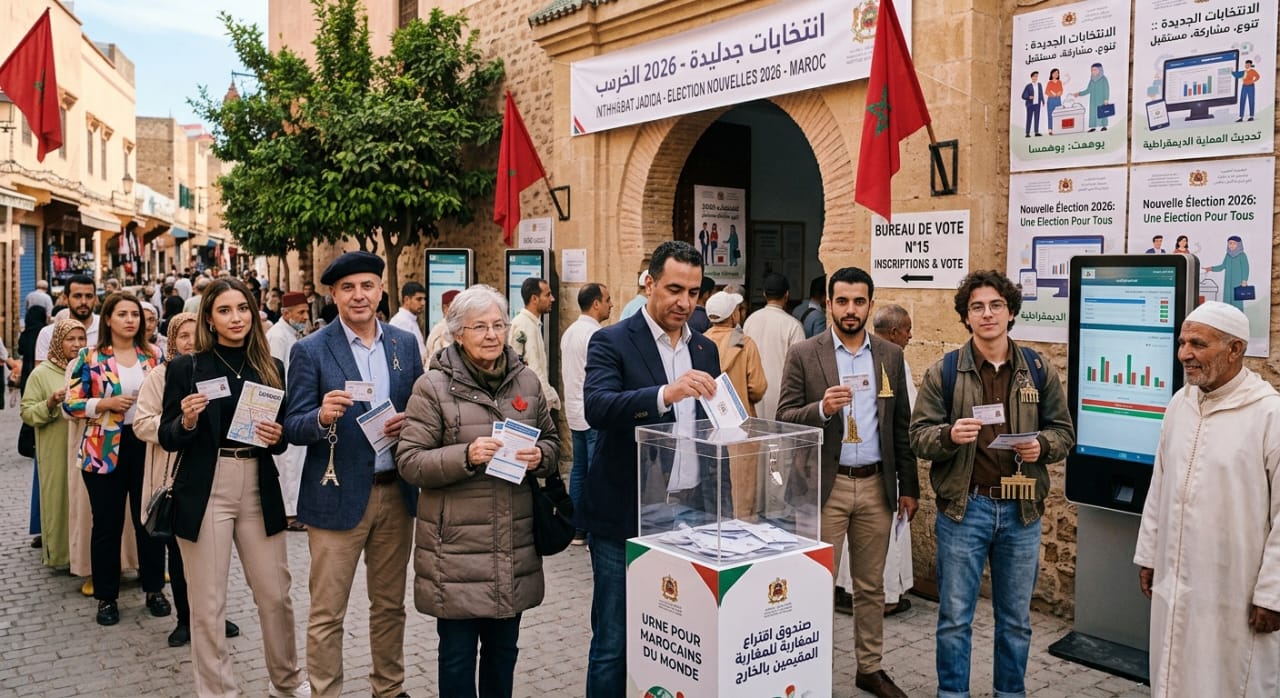
As the 23 September 2026 legislative elections draw closer, the issue of political representation for Moroccans of the world is returning to the forefront. Although Moroccan citizens living abroad enjoy electoral rights enshrined in the Constitution, the absence of directly elected parliamentary representation from abroad continues to fuel debate within the diaspora.
For part of this community, the stakes now go beyond simply taking part in the vote. The objective is to have the concerns of millions of Moroccans living outside the Kingdom heard directly in Parliament and reflected in national public policies.
Moroccans of the world: citizenship rights guaranteed by the Constitution
The 2011 Constitution explicitly safeguards the citizenship rights of Moroccans residing abroad.
Article 17 states in particular that they enjoy full citizenship rights, including the right to vote and to stand for election. It also provides for their participation in national institutions and elections, under the conditions laid down by law.
From a political standpoint, however, how this principle is translated into practice remains at the heart of ongoing discussions.
Legislative elections 2026: how do MREs take part in the vote?
For the 2026 legislative elections, Moroccans residing abroad who are registered on the electoral rolls can participate in the vote by proxy.
This mechanism enables them to exercise their right to vote from their country of residence, in accordance with procedures set by the Moroccan authorities.
However, the current system does not provide for specific parliamentary constituencies dedicated to Moroccans living abroad. It is precisely this point that is driving demands for direct representation of the diaspora.
A long-standing demand for direct political representation
For several years now, associations and diaspora actors have been calling for a mechanism that would allow Moroccans of the world to elect their own representatives directly to Parliament.
One of the proposals regularly mentioned is the creation of electoral constituencies abroad, or the establishment of a specific representation system tailored to MREs.
Supporters of such a reform believe that the issues faced by Moroccans living abroad require more suitable and responsive political representation. Taxation, pensions, investment, consular protection, mobility, and return and reintegration in Morocco are among the topics most frequently raised.
Why is reform so difficult to implement?
Creating constituencies abroad raises several practical and organisational challenges.
First, the geographical scope of these constituencies would need to be defined and the number of seats allocated to each area determined. The electoral system would also have to guarantee proper voter identification and the security and integrity of the ballot.
In-person voting at consulates, postal voting and electronic voting solutions each raise their own technical, logistical and legal questions.
These constraints have so far contributed to maintaining a system in which MREs can participate in national elections, without benefiting from parliamentary representation directly elected from their places of residence.
The diaspora refuses to be reduced to its economic weight
The debate is also generational. New generations of Moroccans of the world maintain multiple and regular ties with the Kingdom. They follow national news, engage in economic and community projects, and increasingly claim their place in Morocco’s public life.
For a number of diaspora representatives, their relationship with Morocco cannot be reduced to remittances and investment flows alone.
Their demands also concern the exercise of citizenship, democratic participation, and the ability to influence decisions that directly affect Moroccans living abroad.
The 2026 legislative elections reignite the debate
The 23 September 2026 vote marks a new stage in this ongoing debate. Moroccans of the world have a mechanism that enables them to take part in the elections, but the question of their direct representation in Parliament remains unresolved.
For advocates of reform, the next parliamentary term could be an opportunity to reopen this institutional file and move from principles to implementation.
The goal would be to bring the constitutional principle closer to its concrete political translation and to give the diaspora a more direct and visible place within the Kingdom’s institutions.
The debate is therefore far from over. For Moroccans of the world, the issue is no longer just participation in elections, but how to be directly represented in shaping Morocco’s public policies.
External sources:
Don’t miss out on the latest news from the diaspora!
Sign up for our next newsletter to receive our practical guides, advice (on procedures and investment) and the latest news for French nationals living abroad, delivered straight to your inbox.