


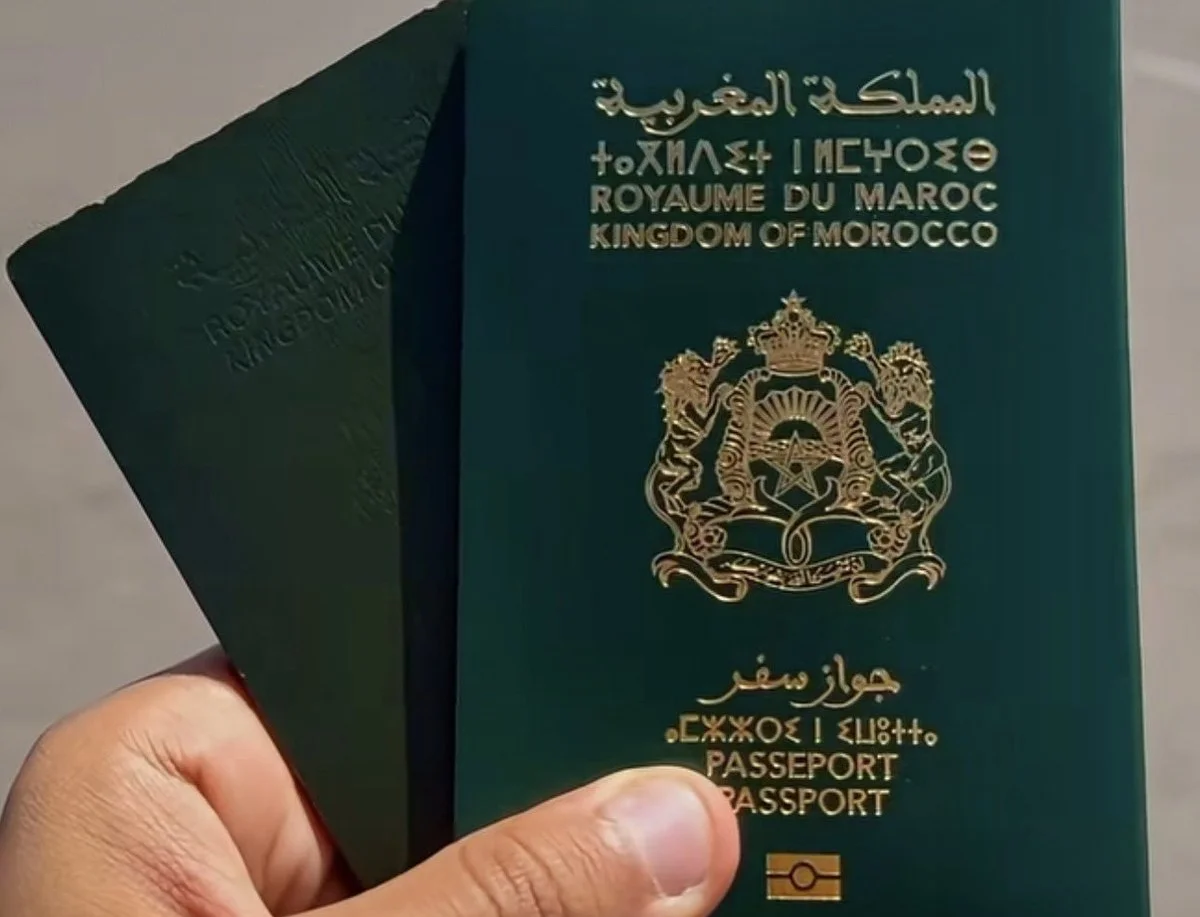
The new Moroccan biometric passport, which has been gradually rolled out since August, is now officially recognized and accepted by French consulates, despite recent reports of difficulties from some visa applicants.
Moroccan biometric passport: French authorities clarify their position
In recent days, several Moroccans applying for visas or residence permits in France have said that their new Moroccan biometric passport was refused or returned by visa centers working with the French administration.
These cases quickly fueled speculation online. Some users suggested that the new Amazigh wording in Tifinagh script on the passport might be the reason behind these temporary refusals.
Asked by local media, the French embassy in Morocco firmly denied this explanation. It stated that applications for residence permits filed with the new Moroccan biometric passport are “fully admissible in French consulates”.
The embassy added that the new travel document has been officially recognized by the French authorities following close coordination with the Moroccan authorities.
A technical issue, not a question of language or validity
According to the embassy, the presence of Amazigh in Tifinagh on the this case is not causing any problem on the French side. Only “a small number of files” were affected by a technical issue when the new document was being rolled out.
These difficulties seem to have been linked to the way some new passports were received or processed at a specific stage, not to the legal validity of the this issue itself.
The new passport includes Arabic and Amazigh, the two official languages of the Kingdom, alongside French and English. It also meets higher international security standards designed to better protect against fraud and forgery.
What this means for Moroccans living abroad
For Moroccans living in Europe and elsewhere, the key message is clear: the the story is recognized and accepted by French consulates.
Still, a few simple habits can help avoid delays with travel plans or paperwork:
- Always check the validity and physical condition of your passport before booking appointments.
- Keep your previous expired passport, especially if you have ongoing procedures, until the new one has been used without any issue.
- Allow extra time for visa or residence applications in case your file is returned due to a technical issue.
- Regularly consult official websites of French consulates and visa centers for updated guidance.
For Moroccans abroad who plan to visit family in Morocco or transit through France, there is currently no reason to change existing travel bookings solely because of the new format of the the development, as long as it is still valid.
If you have a flight coming up, it may be useful to double-check travel conditions with your airline or on official travel information websites, in addition to information from consular channels.
This clarification on the this case comes as the country continues to modernize its travel documents, directly impacting the everyday mobility and administrative procedures of Moroccans worldwide.
For more context, readers can follow Canal212 news for Moroccans abroad.
For official updates, readers can check the relevant official source.
Don’t miss out on the latest news from the diaspora!
Sign up for our next newsletter to receive our practical guides, advice (on procedures and investment) and the latest news for French nationals living abroad, delivered straight to your inbox.