


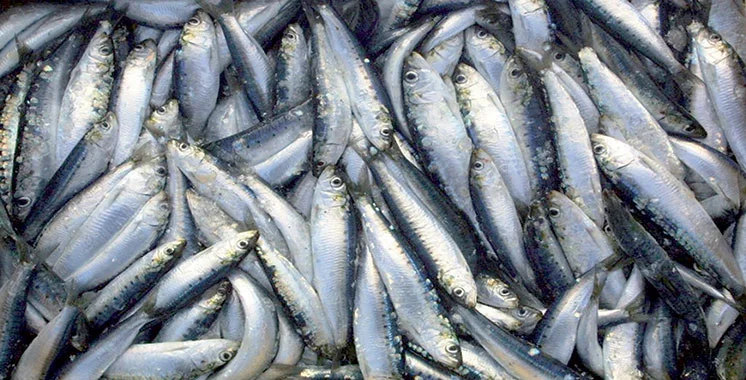
This update focuses on PHV virus Morocco. Morocco’s State Secretariat for Maritime Fisheries and the National Institute of Fisheries Research (INRH) have confirmed that the PHV virus does not affect sardines caught in Morocco, a message that directly reassures consumers in the country and Moroccan families living abroad.
PHV virus Morocco: what is actually at stake?
The Pilchard herpesvirus (PHV) has recently been linked to episodes of fish mortality in South Africa, affecting a species known as Sardinops sagax, or South African pilchard. These events have been recorded in the Benguela current system off southern Africa.
Moroccan authorities underline that these cases concern this South African species only. From a taxonomic and ecological point of view, it is different from the sardine found along Moroccan coasts.
Moroccan sardines belong to the European species Sardina pilchardus, which lives in the Canary Current ecosystem and the Mediterranean. According to the joint statement, the PHV virus “has never been detected” in this species.
Why Moroccan sardines are not concerned
INRH experts stress that the presence of a virus in one fish species and region does not mean that it is present in another species in a different marine ecosystem.
In the case of the PHV virus Morocco, no detection has been reported in the European sardine Sardina pilchardus. Monitoring campaigns on the national coastline have not revealed the virus in Moroccan stocks.
Authorities also insist on the strict specificity of PHV: it only affects fish and is not transmitted to humans.
No risk to human health or seafood consumption
The statement recalls that PHV is not a zoonotic agent. In other words, the PHV virus Morocco poses “no danger” to human health and does not compromise the safety of seafood consumption.
The mere presence of viral material in a fish does not automatically cause mass mortality. Clinical disease expression is multifactorial and depends on several environmental stressors, including:
- sharp variations in seawater temperature;
- coastal hypoxia, or lack of oxygen;
- very dense fish shoals;
- degradation of the marine environment or algal blooms.
The detection of viral material alone is therefore not proof of clinical disease, nor a direct cause of fish mortality.
Permanent surveillance along the Moroccan coastline
To address emerging risks, Morocco maintains a permanent surveillance system along its coastline. This system is based on scientific monitoring networks, sanitary controls and cooperation with specialized institutions.
For Moroccans living abroad, many of whom value Moroccan sardines during summer visits or through canned products exported by national companies, this official message is meant to be reassuring. It confirms that local sardines remain safe to eat, within the usual food safety controls.
When rumors circulate online about the quality of Moroccan seafood, authorities encourage consumers to rely on official statements and information published by competent public institutions and official administration portals.
For more context, readers can follow Canal212 news for Moroccans abroad.
For official updates, readers can check the relevant official source.
Don’t miss out on the latest news from the diaspora!
Sign up for our next newsletter to receive our practical guides, advice (on procedures and investment) and the latest news for French nationals living abroad, delivered straight to your inbox.