


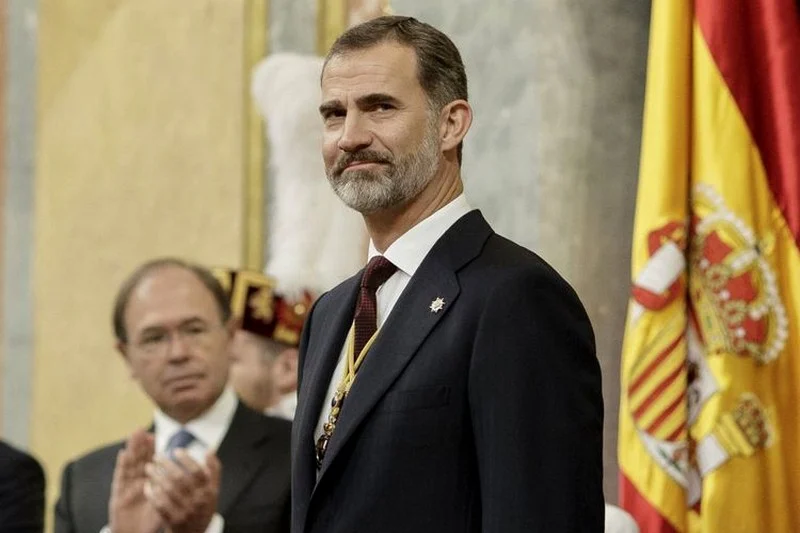
This update focuses on King Felipe VI Ceuta visit. For the first time since his accession to the throne in 2014, Spain’s King Felipe VI will pay an official visit to the occupied presidios of Ceuta and Melilla on 13 and 14 October, a highly symbolic move at a time when the two enclaves are again at the centre of migration and border debates.
King Felipe VI Ceuta visit and first trip to Melilla as monarch
The visit will mark Felipe VI’s first official presence in both cities as king. According to information reported by Spanish news agencies, the royal couple, Felipe VI and Queen Letizia, will travel first to Ceuta on 13 October before continuing on to Melilla on 14 October.
The dates were agreed jointly by the Royal Household and Spain’s central government. Madrid is presenting the trip as an institutional visit aimed at “strengthening the link” between the two cities and the Spanish state.
The last visit by a Spanish monarch dates back to November 2007, when King Juan Carlos I and Queen Sofia travelled to Ceuta and Melilla, prompting strong official reactions in Rabat at the time.
A visit framed by summer migration tensions
The announcement comes after a summer marked by tensions over migration flows toward Ceuta. Arrivals of migrants pushed the enclave back into the national spotlight in Spain and reopened debates on border management.
Spanish authorities have multiplied political signals toward the two cities, including ministerial visits and increased presence of senior officials. In this context, the King Felipe VI Ceuta visit and his trip to Melilla are part of a broader effort to increase the visibility of Spain’s institutions in the territories.
Spanish media also highlight the close coordination between Prime Minister Pedro Sánchez’s government and the Royal Household in preparing the trip, which is presented as having been planned well in advance rather than as a direct reaction to the July migration episode.
What could this mean for Moroccan travellers abroad?
For Moroccans living abroad, Ceuta and Melilla are above all sensitive border zones and transit areas rather than destinations. The Spanish king’s visit does not, at this stage, come with any announced change to border procedures or visa regimes.
However, it may have several indirect effects worth watching over the coming months:
- a possible increase in Spanish security deployment around the enclaves;
- a more heated domestic debate in Spain on migration controls;
- a recalibration of Morocco–Spain talks on border issues.
For Moroccans who regularly travel through northern Morocco, especially in summer, the main concern remains smooth border crossings and stable agreements between Rabat and Madrid. So far, no new concrete measures affecting mobility have been made public.
A sequence closely watched in Rabat and by the diaspora
Although the trip is first and foremost part of Spain’s domestic political agenda, it will be closely followed in Morocco and among the Moroccan community abroad, particularly in Spain. Previous tensions around the enclaves have often spilled over into the political climate and bilateral discussions.
Moroccans in Europe who are planning a return, a family visit or an investment in the country keep a close eye on the state of Morocco–Spain relations, which are key for the stability of travel flows and mobility projects across the Strait.
The King Felipe VI Ceuta visit and his stop in Melilla on 13–14 October therefore fit into a wider diplomatic sequence where borders, people’s movement and security cooperation remain central, even if there is, for now, no direct impact on Moroccan expatriates’ procedures.
Pending any official statements from Moroccan authorities, Moroccans abroad are advised to monitor updates from official channels and consulates for any changes that may affect their journeys to and from Morocco.
For more context, readers can follow Canal212 news for Moroccans abroad.
For official updates, readers can check the relevant official source.
Don’t miss out on the latest news from the diaspora!
Sign up for our next newsletter to receive our practical guides, advice (on procedures and investment) and the latest news for French nationals living abroad, delivered straight to your inbox.