
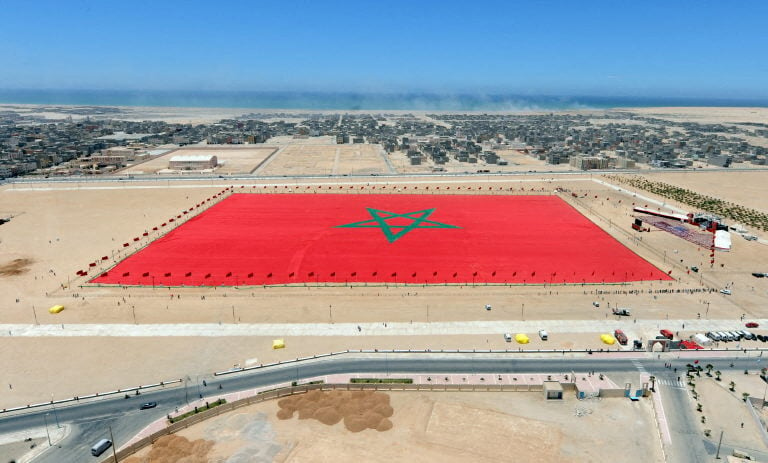
Debates on Western Sahara are continuing in New York as part of the work of the Fourth Committee of the United Nations General Assembly. On this occasion, several countries have voiced support for Morocco’s position and for the autonomy initiative proposed by Rabat.
Qatar, Bahrain, Gabon, Peru, Côte d’Ivoire and Burkina Faso are among the countries mentioned in the diplomatic statements made on this issue. Their interventions are part of the broader international discussions aimed at finding a political solution to the dispute.
Western Sahara at the UN: Gulf countries restate their stance
Qatar and Bahrain are among the Arab countries that support Morocco’s position on the Sahara.
Doha in particular highlights the peaceful settlement of disputes and the efforts conducted under the auspices of the United Nations. The country stresses the need for a durable and consensual political solution.
This approach is part of the diplomatic relations between Morocco and the member states of the Gulf Cooperation Council. However, each statement must be examined in its exact wording in order to distinguish general backing for a political solution from explicit support for Morocco’s autonomy plan.
Backers among African countries
In Africa, Côte d’Ivoire, Gabon and Burkina Faso are among the countries aligned with Morocco’s position on this dossier.
These diplomatic ties are embedded in a broader cooperation framework between Morocco and its African partners. They notably include trade, investment, infrastructure projects and regional cooperation.
On the Sahara issue, Rabat promotes its autonomy initiative as the basis for a political settlement. The declarations of partner states must nonetheless be considered individually to clarify the exact scope of their support.
Peru calls for a negotiated solution
In South America, Peru also maintains diplomatic relations with Morocco.
The UN debates are part of an international process aimed at reaching a political solution to the Western Sahara dispute. The United Nations continues to play a central role in mediation efforts.
Lima’s precise position must be assessed on the basis of its official statement. It is important to distinguish a general call for negotiations from explicit support for Morocco’s autonomy initiative.
The role of the UN Fourth Committee
The Fourth Committee of the General Assembly is responsible in particular for special political questions and decolonization. It reviews the question of Western Sahara every year as part of its work.
Its debates allow member states to set out their positions. They provide an important diplomatic forum, but should not be confused with the decisions of the Security Council.
The political process concerning Western Sahara also falls within the remit of the Security Council and the efforts of the UN Secretary-General and his Personal Envoy.
A diplomatic dossier under constant UN scrutiny
Western Sahara remains at the heart of an ongoing international political process. Morocco advocates a solution based on autonomy under its sovereignty, while the United Nations continues its efforts toward a political settlement.
Statements by the various states reflect the diplomatic positions expressed in this context. Their significance must be evaluated on the basis of the official texts and the speeches delivered before the competent UN bodies.
For Morocco, the backing of its partners is a key element of its diplomatic action. The search for a lasting political solution nonetheless remains tied to the process conducted under UN auspices.
External sources:
Don’t miss out on the latest news from the diaspora!
Sign up for our next newsletter to receive our practical guides, advice (on procedures and investment) and the latest news for French nationals living abroad, delivered straight to your inbox.