


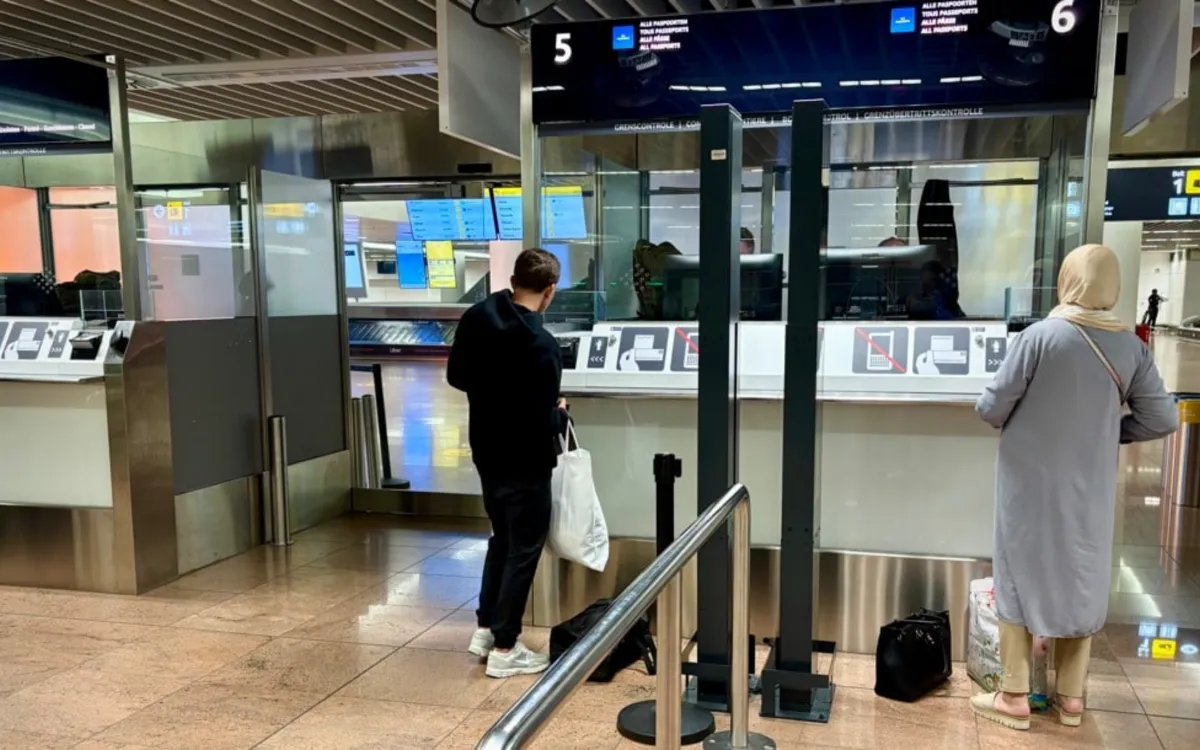
Passengers are facing waits of up to five hours at border controls. At Brussels Airport, problems linked to the new European Entry/Exit System, known as EES, are raising concerns as the Christmas holidays approach.
EU Commissioner for Home Affairs and Migration, Magnus Brunner, is calling on the Belgian authorities to find solutions. He wants to avoid travellers facing new queues during this high-traffic period.
Brussels Airport: five hours’ wait at passport control
Travellers arriving at Brussels Airport can be met with long lines at passport control. At the end of September, some waiting times reached five hours, according to reports from the European press.
These delays are mainly linked to the roll-out of the EES system. This European scheme is designed to register the entry and exit of nationals of third countries who travel to the Schengen Area for short stays.
The system records passport data and, depending on the situation, biometric data. These additional checks can slow border crossings when equipment or staffing levels are not sufficient to handle the number of passengers.
EES system under pressure before the Christmas holidays
The European Entry/Exit System is transforming checks at the external borders of the Schengen Area.
It is gradually replacing manual passport stamping with digital registration. This allows authorities to track the entry and exit dates of the travellers concerned.
However, its deployment requires procedures to be adapted. Airports must manage these new checks while keeping passenger flows smooth.
In Brussels, the problems observed raise a very practical question: do the infrastructure and staffing levels provide enough capacity to cope with passenger flows at peak times?
Magnus Brunner urges Belgium to act
In response to these delays, Magnus Brunner is urging Member States to act quickly. In an interview with POLITICO, the European Commissioner stressed the need to resolve the issues before the Christmas getaway.
Belgium is particularly affected because of the difficulties reported at Brussels Airport.
The aim is to prevent long queues from becoming a regular feature of the holiday season. The authorities must look at ways to better organise checks and strengthen processing capacity at peak hours.
Which travellers are covered by EES?
The EES system mainly applies to nationals of third countries travelling to the Schengen Area for a short stay.
Moroccan travellers who do not have resident status in the European Union may therefore be affected when they cross an external Schengen border.
By contrast, EU citizens and people who benefit from certain exemptions are not subject to the same registration procedures. The checks that apply depend on the traveller’s status and situation.
For Moroccans planning a trip to Europe, it is therefore advisable to anticipate these controls and allow enough time between arrival and any possible connecting flight.
Solutions expected before the Christmas break
The coming weeks will be crucial for airports facing difficulties with the new system.
In Brussels, the authorities must strike a balance between strict border-control requirements and a smooth passenger experience.
For travellers, the issue is very concrete: avoiding spending several hours in queues before they can continue their journey.
The European Commission’s message is clear: the problems must be resolved before the Christmas holidays, a period when air traffic increases sharply.
External sources:
Don’t miss out on the latest news from the diaspora!
Sign up for our next newsletter to receive our practical guides, advice (on procedures and investment) and the latest news for French nationals living abroad, delivered straight to your inbox.