


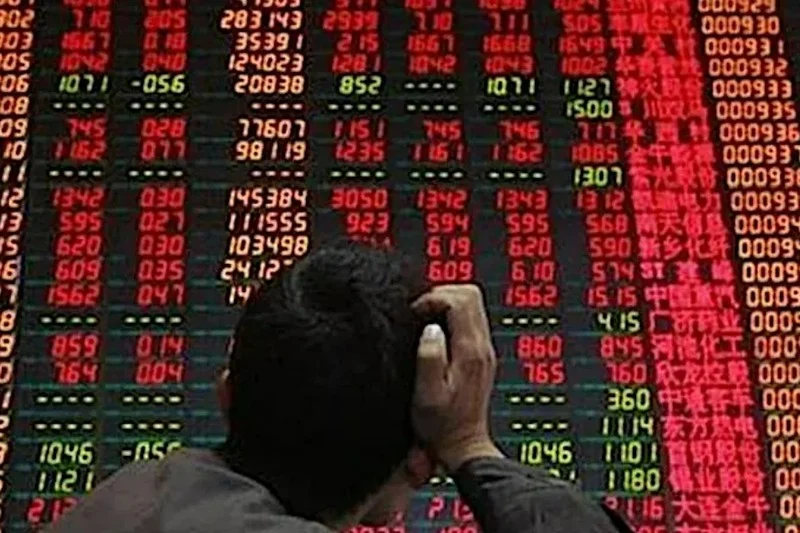
The Casablanca Stock Exchange closed sharply lower on Monday, sending a cautionary signal to Moroccans who keep part of their savings invested back home, including those living abroad.
Casablanca Stock Exchange under pressure across key indices
The main MASI index lost 1.16%, ending the session at 18,400.02 points. This new drop confirms a widespread downward move on the market.
The MASI 20 index, which tracks the 20 most liquid stocks, fell by 0.73% to 1,330.14 points. The MASI ESG index, focused on companies with the best environmental, social and governance ratings, declined by 1.08% to 1,368.03 points.
Mid and small caps were also affected. The MASI Mid and Small Cap index lost 1.18% to close at 1,788.02 points.
Sectors hit hard, others holding up better
The session on the Casablanca Stock Exchange highlighted strong contrasts between sectors. Some segments saw steep corrections, while others posted gains.
- Real estate investment companies: -5.31%
- Chemicals: -4.57%
- Agricultural industry: -3.25%
- Food production: +1.38%
- Pharmaceutical industry: +1.09%
- Transport: +1.05%
For Moroccan savers, these moves are a reminder that a portfolio heavily concentrated in a single sector is more exposed to market swings.
Solid trading volumes and focus on major blue chips
Trading volumes exceeded 279.13 million dirhams, mainly on the central market. Three major blue chips dominated activity: Itissalat Al-Maghrib (79.01 million dirhams), TGCC (41.83 million dirhams) and Akdital (36.48 million dirhams).
Total market capitalisation on the Casablanca Stock Exchange stood at over 1,081 billion dirhams, underlining the size of the Moroccan equity market in financing the economy.
On individual stocks, the sharpest declines included Cartier Saada, Aradei Capital, SNEP, SGTM and IB Maroc.Com. On the upside, Auto Nejma, Rebab Company, M2M Group, Lesieur Cristal and Aluminium du Maroc recorded the strongest gains of the day.
What this means for Moroccans investing from abroad
For Moroccans living abroad who monitor the this case from a distance, this session confirms a volatile environment. A 1.16% drop in the MASI does not in itself signal a long-term market reversal, but it is a reminder to review portfolio allocation.
Those who hold Moroccan stocks or equity funds through accounts in Morocco may want to:
- check how diversified their portfolio is by sector,
- assess their exposure to pressured segments such as real estate investment or certain industries,
- identify more resilient areas like food production or pharmaceuticals.
For those planning a future return or a property project in Morocco, this market move has no immediate impact on administrative procedures. However, it can influence the timing of decisions to increase or reduce exposure to Moroccan equities, ideally with advice from a financial professional.
In the end, the this issue reminds investors that equities are a long-term asset. Moroccans abroad who want to maintain a financial link with the country can combine safer savings products with a measured exposure to stocks, consistent with their time horizon and risk tolerance.
For more context, readers can follow Canal212 news for Moroccans abroad.
For official updates, readers can check the relevant official source.
Don’t miss out on the latest news from the diaspora!
Sign up for our next newsletter to receive our practical guides, advice (on procedures and investment) and the latest news for French nationals living abroad, delivered straight to your inbox.