
This update focuses on El Mansouri government. In Rabat, talks to form El Mansouri’s next government are entering a decisive stage, with the 2030 World Cup and strong social demands in the background.
A key meeting between El Mansouri and the Constitutional Union
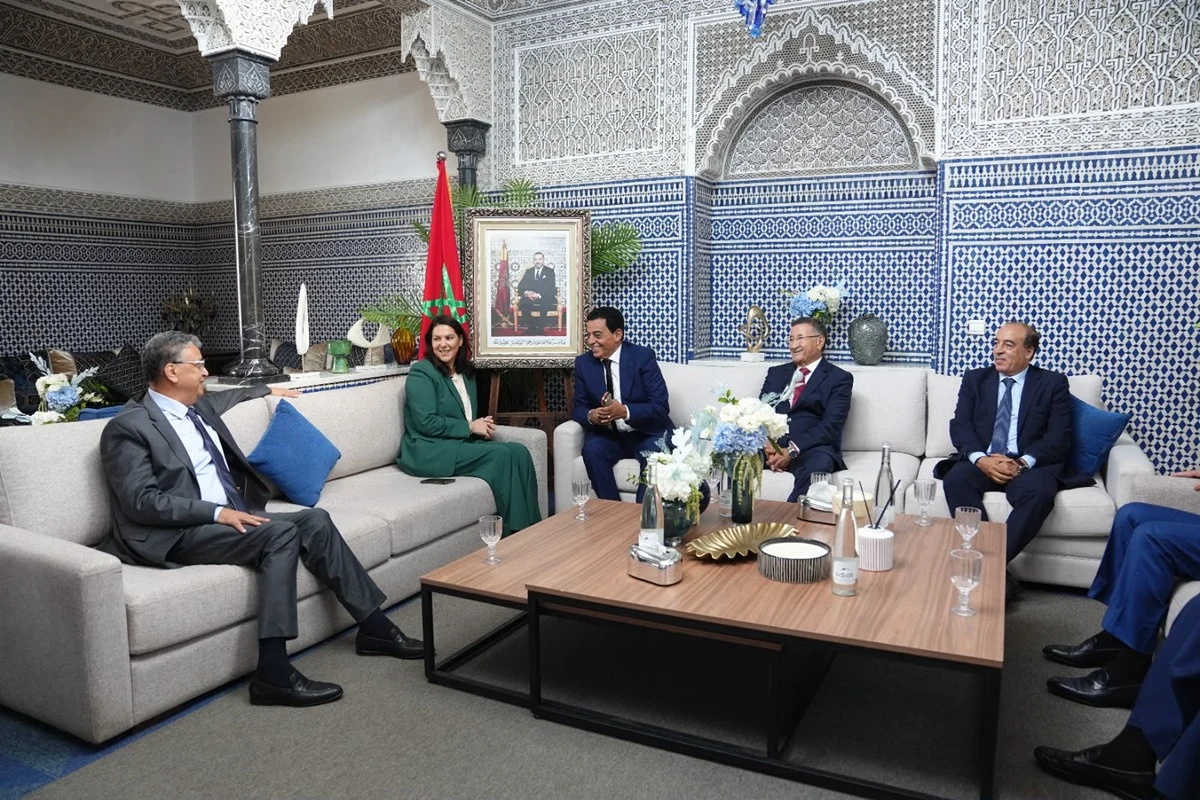
On Thursday 1 October, designated head of government Fatima-Zahra El Mansouri received a delegation from the Constitutional Union (UC). The party secured 17 seats in the 23 September elections.
The delegation was led by secretary general Mohamed Joudar, joined by deputy secretary general El Houssine Abyaba and Chaoui Belassal, president of the party’s National Council.
This meeting is part of the first round of talks launched by the Authenticity and Modernity Party with other political forces to build a majority around the future El Mansouri government.
Jobs, cost of living, health and education as core priorities
After the talks, Mohamed Joudar said the discussions focused on the main lines of the updated government programme.
Several priorities were highlighted:
- promoting employment, especially for young people;
- boosting households’ purchasing power;
- improving the health system;
- overhauling the education system.
According to the UC leader, Morocco needs to pursue a more balanced model of development, based on territorial justice and social justice.
These priorities directly affect the daily lives of families in Morocco, but also of relatives living abroad, who often help support parents and siblings back home.
El Mansouri government: balancing social needs and the 2030 World Cup
Joudar stressed that these social priorities must move forward in parallel with the major infrastructure projects linked to the 2030 World Cup.
He recalled that several strategic projects, launched under King Mohammed VI, are under way or planned, including:
- expansion and development of the high-speed rail network;
- modernisation and extension of airports;
- construction and renovation of stadiums;
- increased hotel and tourism capacity;
- other facilities to support the 2030 World Cup.
For Moroccans living abroad, these projects can bring tangible benefits: better connected airports, faster rail links between cities, more accommodation options for trips home, and new investment opportunities in regions hosting these projects.
A five-year window to accelerate development
According to Joudar, the coming period is a unique opportunity for Morocco to accelerate its development over the next five years.
He underlined that the country must give special attention to the social dimension, while also succeeding on the international stage through co-hosting the 2030 World Cup.
For Moroccan families abroad, the stakes are twofold: seeing their regions of origin better equipped and better connected, and hoping for public policies able to reduce inequality, youth unemployment and cost-of-living pressures that often weigh on remittances.
Political consultations still under way
The secretary general of the Constitutional Union also confirmed that talks to build a governing majority will continue in the coming days between the Authenticity and Modernity Party and other political actors.
The final shape of the coalition, and the balance it strikes between social spending and 2030 World Cup–related investments, will be closely watched by Moroccans both in the country and abroad, who are attentive to decisions that will shape Morocco in the years ahead.
Official announcements on the composition of the government and the approval of its programme will provide a clearer idea of how these priorities will affect public services, infrastructure and economic opportunities.
For more context, readers can follow Canal212 news for Moroccans abroad.
For official updates, readers can check the relevant official source.
Don’t miss out on the latest news from the diaspora!
Sign up for our next newsletter to receive our practical guides, advice (on procedures and investment) and the latest news for French nationals living abroad, delivered straight to your inbox.