
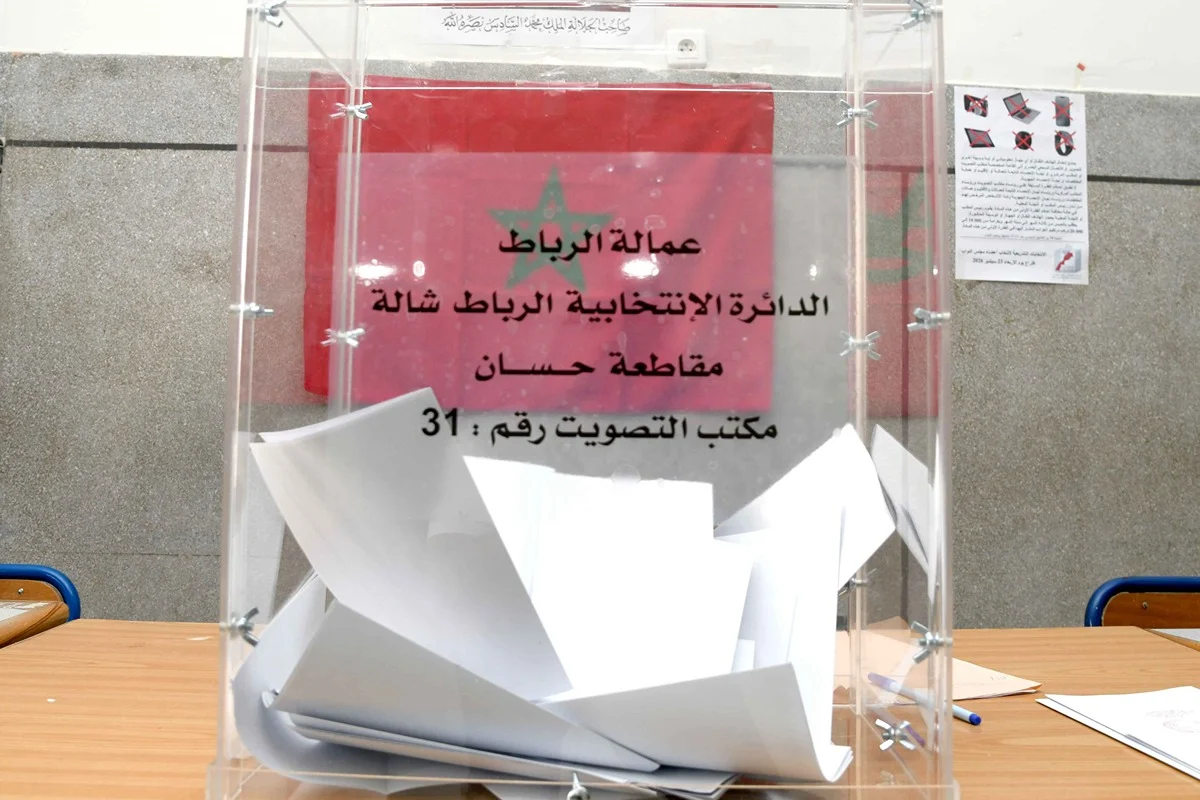
This update focuses on Morocco 2026 legislative elections. Morocco’s 12th legislative elections since independence opened on Wednesday 23 September 2026, against a backdrop of political fragmentation and concern over voter turnout.
Morocco 2026 legislative elections: crowded race, fragmented scene
For these Morocco 2026 legislative elections, 28 political parties, one ad hoc alliance and two independent lists are competing for the 395 seats in the House of Representatives.
This crowded field reflects a wide political offer but also makes the ballot harder to read for citizens, including those who have left the country but still follow events closely.
For Moroccans living abroad, this fragmented landscape signals potentially difficult talks to build a stable governing majority once the votes are counted.
Turnout as the main political signal
Beyond how seats are shared between parties, many observers see turnout as the main yardstick for these Morocco 2026 legislative elections.
Public law professor Hannoun Azeddine, from Ibn Tofail University, stresses that the real political message of this election will depend on how many citizens actually go to the polls.
This question also matters to Moroccans abroad. Even when their own participation is not directly at stake, turnout inside the country is often read as a barometer of trust between society and its institutions.
For those considering a future return, a family move or an investment project back home, civic and political dynamics are an indicator to watch, alongside economic trends and security.
An aging electorate and an under-represented youth
The structure of the electorate adds another dimension to the this case: a strong generational imbalance.
Young people aged 18 to 24 account for only 4% of registered voters, while citizens aged 60 and over make up 29% of the electoral roll.
According to Professor Azeddine, this contrast reveals “an aging electorate and a structurally under-represented youth”, even before knowing the final turnout.
This imbalance shapes the outcome of the vote, the priorities carried to Parliament and, in the longer term, public policies. Decisions on jobs, education, healthcare or the investment climate may thus reflect more the expectations of older generations.
What is at stake for Moroccans living abroad
For Moroccans around the world watching this election from a distance, several elements will be key in the coming days:
- overall turnout, which will show whether the ballot strengthens or weakens institutional legitimacy;
- the balance of power between parties, which will determine the shape of the next governing coalition;
- the attention given to issues that affect links with the homeland: mobility, investment, return schemes and consular services.
If the majority emerging from the polls can provide political stability, this may reassure those planning a property purchase, a business venture or a medium-term return to Morocco.
On the other hand, a fragile coalition or protracted negotiations could delay reforms, including those that matter to Moroccans living abroad.
In any case, the official results and the formation of the next majority will be milestones to watch, alongside practical information provided by official portals and our Canal212 guide to key procedures for Moroccans abroad.
For more context, readers can follow Canal212 news for Moroccans abroad.
For official updates, readers can check the relevant official source.
Don’t miss out on the latest news from the diaspora!
Sign up for our next newsletter to receive our practical guides, advice (on procedures and investment) and the latest news for French nationals living abroad, delivered straight to your inbox.