


In Ceuta, the story of 19-year-old Saad, now a symbol of Ceuta risky crossings, exposes the hidden side of improvised attempts to reach Europe. After 48 days surviving on a beach, the young Moroccan took a decision many around him still refuse to consider: going back home.
A Spanish dream that ended on a beach in Ceuta
Saad managed to cross into the Spanish enclave. Like many others, he imagined continuing on to mainland Spain. Reality quickly caught up with him.
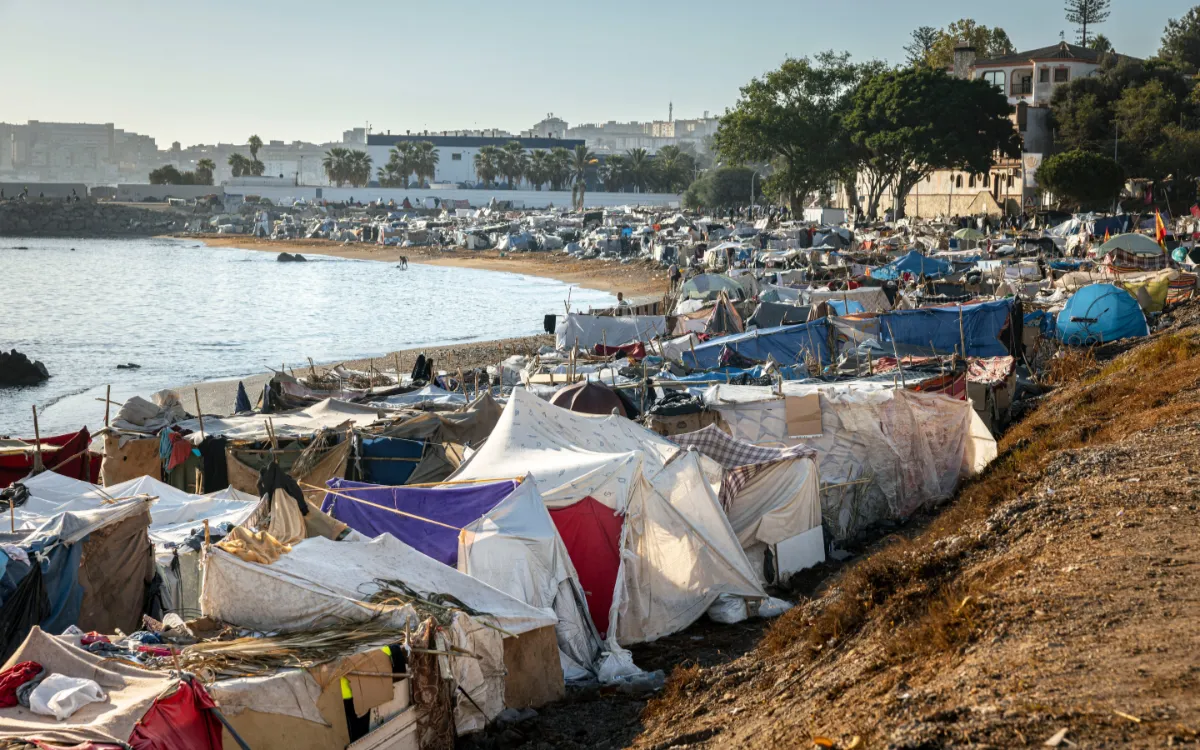
Since the mass crossings at the end of July, thousands of people have been sleeping on Ceuta’s beaches, particularly in an area known as Trampolín. Shelters are built from branches, plastic sheets and cardboard. Some manage to find an abandoned mattress; others sleep directly on the cold sand.
Showers were only installed recently, and toilets are far too few. Nights are a mix of cold, tension, fights and fear of police checks. These were Saad’s living conditions for 48 days, with no stable solution in sight.
Ceuta risky crossings: a dead-end limbo
For Moroccans stranded in Ceuta, daily life becomes a draining limbo. They have no clear status, no guaranteed shelter and no visibility over their future.
A new reception center with 1,800 places was opened in the port to accommodate some of those sleeping outside. Saad and his friends did not get a place. His companions decided to wait a little longer on the beach. He felt he had “waited enough”.
The lack of capacity also hits vulnerable people. Five Moroccan women who had just given birth remained in hospital, not for medical reasons but because they had nowhere to go with their newborns. Being discharged would have meant life on the streets.
Stories like these show that Ceuta risky crossings are not a shortcut to Europe. They are often a humanitarian and administrative trap.
A warning for families and Moroccans abroad
Saad is only 19. After 48 days outside, he told the journalist who met him that he is “giving up” and prefers to return to Morocco rather than continue living on the streets.
His decision sends a clear message:
- departures without a concrete plan or accommodation are extremely risky;
- crossing a border does not automatically open the way to Europe;
- in such conditions, going back home can be the least dangerous option.
For families in Morocco and abroad, Saad’s story is a brutal reminder. Many young people leave without properly informing their relatives, or by downplaying the risks. Distance then complicates everything: financial help, paperwork and emotional support.
What this changes for travel and returns
For Moroccans living abroad, this situation does not directly affect regular flights, ferries or holiday bookings. Scheduled routes, including those operated by major sea and air carriers, continue as usual, subject to the latest updates from official operators.
However, the crisis in Ceuta should be part of family conversations about projects to leave or return. Relatives already settled in Europe often play a decisive role in guiding young candidates for departure.
Before any journey, a few basic checks are essential:
- verify entry and transit rules in each country;
- find out what reception facilities exist – or do not exist – along the way;
- prioritise legal routes, even if they are longer and more expensive;
- do not trust promises of an “easy passage” via Ceuta or other enclaves.
Ceuta risky crossings reflect the economic and social distress of many young people, but also serve as a warning. Between the illusion of departure and the harsh reality of an unplanned return, the margin for error is very small. Saad’s experience shows that the price of such choices is often paid first on the streets.
For more context, readers can follow Canal212 news for Moroccans abroad.
For official updates, readers can check the relevant official source.
Don’t miss out on the latest news from the diaspora!
Sign up for our next newsletter to receive our practical guides, advice (on procedures and investment) and the latest news for French nationals living abroad, delivered straight to your inbox.