
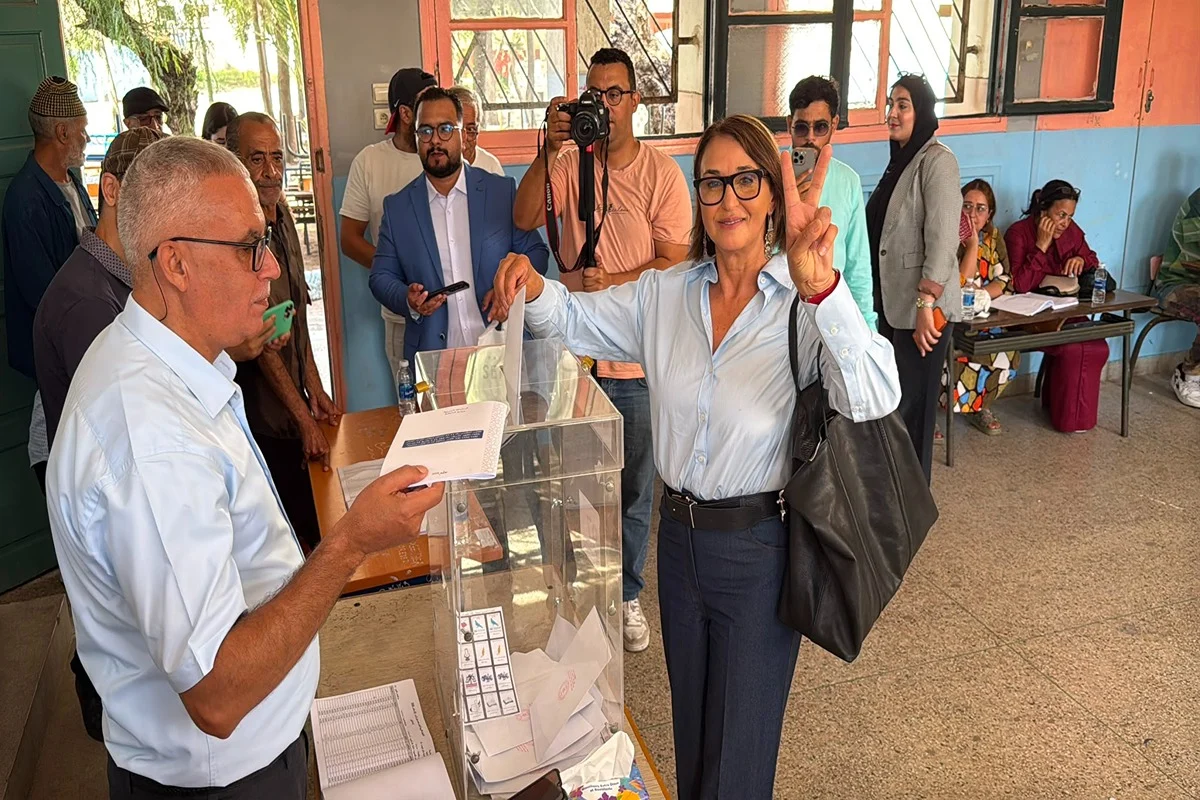
This update focuses on Morocco voter turnout. As Moroccans headed to the polls on 23 September to elect the 395 members of the House of Representatives, several political leaders used their own vote to underline what is at stake: Morocco’s voter turnout and the credibility of its institutions over the coming years.
Morocco voter turnout in the spotlight
Throughout election day, citizens lined up at polling stations across the country to choose their MPs. In almost every statement, one concern stood out: how many people would actually vote.
For Moroccans living abroad, this election will shape the political landscape that manages key files: business climate, investment, infrastructure, public services and the continuity of major national projects. Even if many in the diaspora cannot vote directly from their country of residence, the parliament produced by this ballot will influence their future plans, travel and administrative ties with Morocco.
Morocco voter turnout is therefore seen as a central indicator of democratic vitality and of the level of trust placed in public institutions.
Nabila Mounib warns of corruption and calls for democratic change
In the Casablanca-Anfa constituency, Nabila Mounib, secretary-general of the Unified Socialist Party (PSU), described the election as a crucial step in Morocco’s democratic construction. In her view, this vote should translate popular will into popular sovereignty.
She nonetheless drew a harsh picture of the way institutions currently function, arguing that parliament does not fully assume its role in drafting laws, overseeing government action and monitoring public policies.
Mounib also denounced what she sees as the return of political figures associated with corruption and vote-buying. She called for strengthening the country’s internal front and institutions to support major national projects, particularly those linked to territorial integrity.
Addressing young people, she urged them to remain engaged and to work towards democratic change based on justice and dignity. Her message resonates with many young Moroccans abroad, who are often critical of politics but still closely follow Morocco’s institutional evolution.
Benabdallah and Baraka highlight calm, turnout and legitimacy
In Rabat, Nabil Benabdallah, secretary-general of the Party of Progress and Socialism (PPS), struck a more measured tone. After casting his ballot in his usual polling station, he expressed the hope that the vote would proceed smoothly until the final results are announced.
He also said he hoped that the election outcome would meet citizens’ expectations, at a time when social, economic and territorial challenges remain significant.
Nizar Baraka, secretary-general of the Istiqlal Party, also put Morocco voter turnout at the heart of his message. He described a solid level of participation as a positive signal for democratic life.
After voting in Rabat, Baraka stressed the need for the ballot to produce a government with strong popular legitimacy and a clear mandate to deliver reforms. He called for a Morocco moving « at a single speed », where public policies narrow the gap between regions and social groups.
What it means for Moroccans abroad
Beyond party differences, the three leaders converge on a few priorities that matter directly to Moroccans outside the country:
- rebuilding trust in institutions responsible for drafting laws and monitoring public policies;
- fighting corruption and vote-buying, which is key to a healthy environment for investment and return projects;
- institutional stability, essential for planning family, professional or retirement projects in Morocco;
- continuity of major national projects, including territorial integrity and infrastructure development.
For many Moroccans abroad who travel frequently or are considering moving back, the next parliamentary term will weigh on the quality of public services, the management of major facilities and the legal security of investments.
In that sense, this case becomes more than just a percentage: it is a barometer of the legitimacy of the next government and of its capacity to respond to expectations both inside the country and across the diaspora.
To better understand how these institutional developments can affect your procedures from abroad, you can consult Canal212’s guide to essential administrative steps for Moroccans living overseas, as well as practical travel updates from major transport operators, including the official channels of Royal Air Maroc.
For more context, readers can follow Canal212 news for Moroccans abroad.
For official updates, readers can check the relevant official source.
Don’t miss out on the latest news from the diaspora!
Sign up for our next newsletter to receive our practical guides, advice (on procedures and investment) and the latest news for French nationals living abroad, delivered straight to your inbox.