


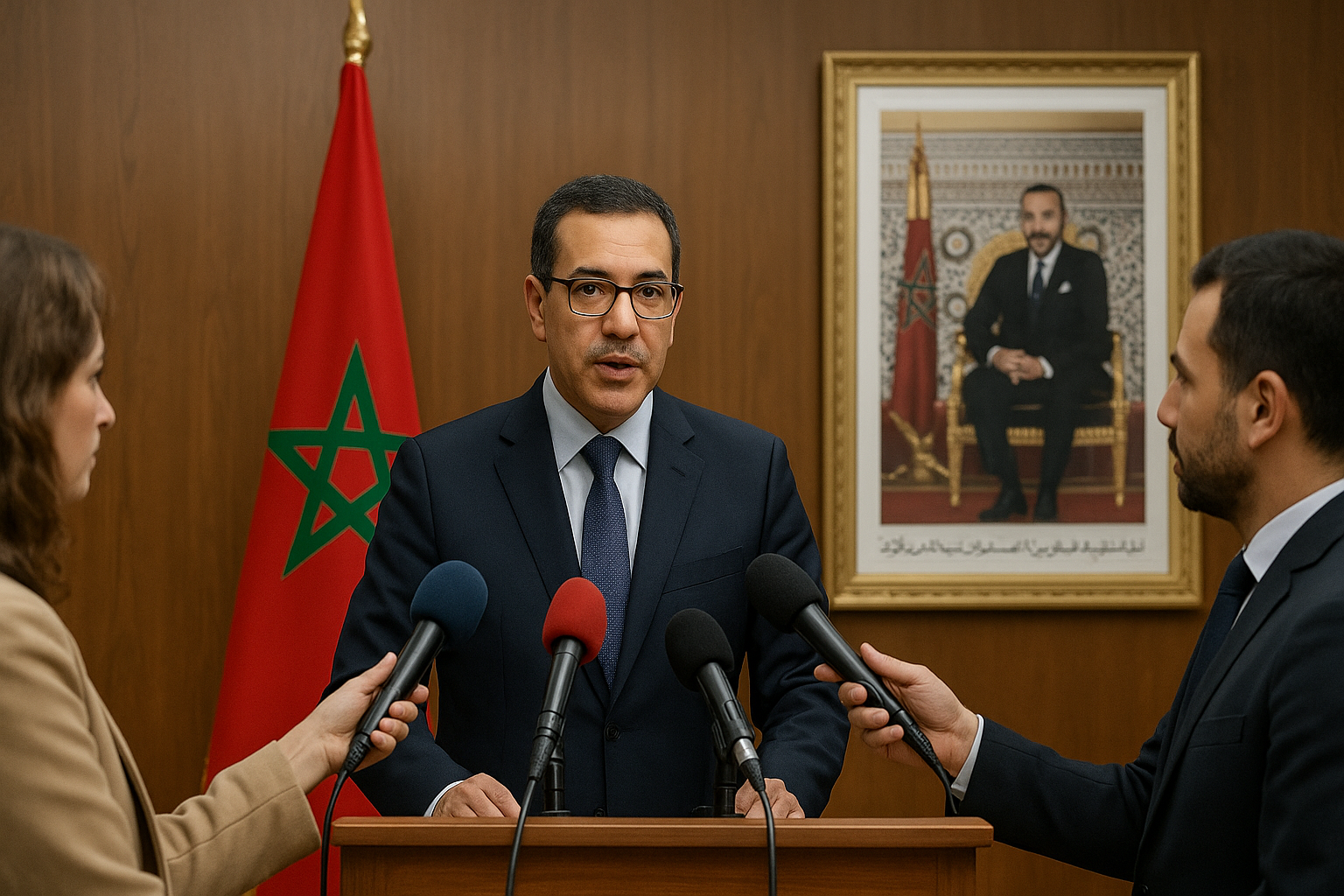
This update focuses on Morocco public waqf rules. Morocco’s Ministry of Habous and Islamic Affairs has taken a new step in modernising the management of public waqf assets by tightening the rules that govern their contracts for works, supplies and services.
Morocco public waqf rules get a new framework
Published in the latest issue of the Official Bulletin, Ministerial Order No. 348.26, dated 24 Chaabane 1447 (13 February 2026), sets out a detailed framework for contracts concluded on behalf of public waqf properties.
Adopted under Article 147 of the Habous Code and based on a proposal from the Higher Council for Financial Control of Public Habous, the text aims to improve spending efficiency and ensure sound use of waqf resources.
The new framework enshrines several guiding principles that must now shape all contracts: free access to public procurement, equal treatment of bidders, protection of their rights and full transparency in decisions made by contracting authorities.
Transparency, competition and sustainable development goals
Beyond procedures, the ministry is adding new priorities to how Morocco public waqf rules apply in practice. Contracting authorities must now take into account the economic, social, environmental and ecological dimensions of projects financed or carried out by public waqf assets.
The text underlines the need to contribute to sustainable development goals, energy efficiency and the preservation of water resources. It also highlights the importance of enhancing urban landscapes, protecting national heritage and historical monuments, and supporting research, development and innovation.
In practice, this means that projects backed by public waqf funds will be expected, whenever relevant, to integrate sustainability and heritage-protection criteria alongside traditional factors such as cost and deadlines.
Stricter definition of needs and clearer tender documents
The ministry is also reshaping the way projects are prepared. Under the new Morocco public waqf rules, contracting authorities must clearly define their needs before launching any call for tenders, specifying the nature of the services, their volume and technical characteristics.
This preparatory phase is designed to avoid vague or oversized contracts and to align projects more closely with the actual needs of public waqf assets.
Tender documents are also more tightly regulated. They may no longer contain explicit references to specific brands, patents or identified sources that would unduly restrict competition among bidders.
- Ban on naming a specific brand or patent, except in duly justified cases;
- Obligation to describe needs in generic and technical terms;
- Objective to maximise fair competition between offers.
An exception remains possible when the technical particularity of a product or service makes it unavoidable, but it must then be clearly justified.
Which contracts are covered, and which are excluded?
The new text applies to contracts for works, supplies and services awarded on behalf of public waqf properties. It governs the main stages of procurement, from preparation to execution.
Some operations, however, fall outside this framework. Exclusions notably include:
- Agreements governed by ordinary civil or commercial law;
- Public-private partnership arrangements;
- Transfers of assets between public entities;
- Other forms of cooperation that do not take the form of classic procurement contracts.
For Moroccans living abroad who follow how religious and charitable assets are managed back home, this overhaul of this case is meant to guarantee more transparent and efficient use of waqf resources, which are often seen as a long-term social and spiritual lever.
By modernising this framework, the authorities hope to reinforce trust in the institutions managing these assets, whether the projects concern construction, heritage restoration or service contracts financed through public waqf funds.
For more context, readers can follow Canal212 news for Moroccans abroad.
For official updates, readers can check the relevant official source.
Don’t miss out on the latest news from the diaspora!
Sign up for our next newsletter to receive our practical guides, advice (on procedures and investment) and the latest news for French nationals living abroad, delivered straight to your inbox.