


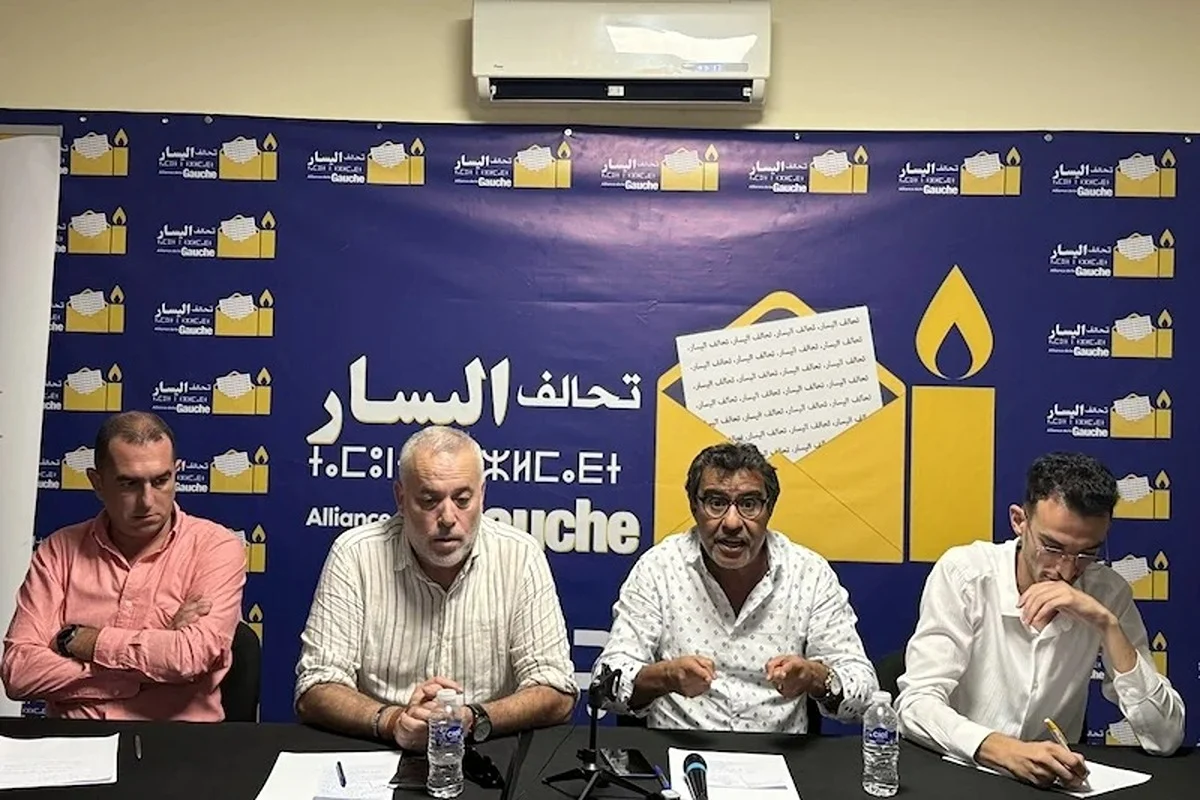
This update focuses on Moroccan left-wing alliance. Political consultations to form Morocco’s next government have hit an early snag, with talks between Fatima Zahra El Mansouri and a key left-wing alliance put on hold, a development closely watched by Moroccans living abroad who follow the country’s political direction.
Moroccan left-wing alliance suspends meeting
The Moroccan left-wing alliance, bringing together the Unified Socialist Party (PSU) and the Federation of the Democratic Left (FGD), announced it had suspended its planned meeting with El Mansouri.
The designated head of government had invited them as part of talks with all parties represented in Parliament, a standard step before building a new governing coalition.
The two parties had agreed in principle to attend. However, a persistent disagreement over the venue of the meeting prevented the talks, scheduled for Friday, from going ahead.
A dispute over the institutional setting
In a statement, the coalition said it wanted the talks to take place in a neutral space, separate from party headquarters.
According to the PSU and FGD, this condition was meant to safeguard the institutional nature of the discussion between a designated head of government and party leaders who will sit in the new legislature.
The Moroccan left-wing alliance stressed it was not refusing dialogue. It argued instead that the framework of these consultations is particularly important, as Fatima Zahra El Mansouri is leading the process while also serving as coordinator of the collective leadership of the Authenticity and Modernity Party (PAM).
With no agreement on a venue acceptable to all sides, the meeting simply did not take place.
What this means for the next majority
This setback comes as the PAM had already scheduled a meeting with the two left-wing parties as part of its preparations for building the next governing majority.
The coalition, however, has reiterated that its political line is already clear: the PSU and FGD have chosen to sit in parliamentary opposition.
- An opposition they describe as a strategic and long-term stance.
- A declared ambition to act as a counterweight in Parliament.
- A signal about the shape of upcoming political debates.
In other words, even if the meeting had gone ahead, the chances of seeing the alliance join the government majority were slim.
Why Moroccans abroad should pay attention
For Moroccans living abroad, this episode does not immediately affect daily dealings with Moroccan administrations, travel plans, or investment projects.
It does, however, offer a glimpse of the political climate in which the future government will be formed, a government that will have to address issues closely followed by the diaspora: consular services, digital administration, business climate, mobility, and return plans.
A structured left-wing opposition in Parliament could influence discussions on social protection, public education, housing, and public services — topics that matter for families spread between Morocco and their host countries.
Moroccans abroad who want to monitor policy developments or prepare a project back home should keep an eye on how coalition talks evolve, the final composition of the government, and its first decisions. For practical procedures, our online guide remains a useful reference, alongside the official portal dedicated to Moroccans living abroad.
For more context, readers can follow Canal212 news for Moroccans abroad.
Don’t miss out on the latest news from the diaspora!
Sign up for our next newsletter to receive our practical guides, advice (on procedures and investment) and the latest news for French nationals living abroad, delivered straight to your inbox.