


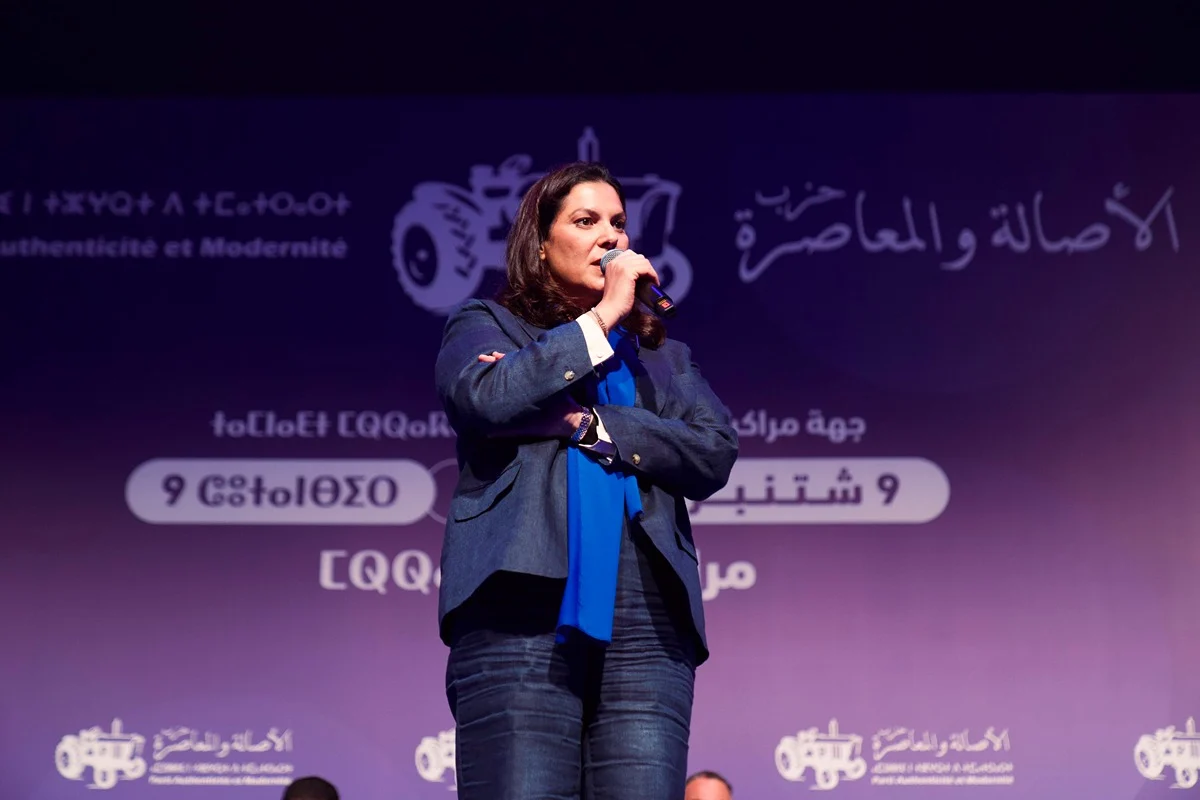
Designated head of government Fatima Zahra El Mansouri has stated that participation in talks to shape the future El Mansouri government is a matter of choice for every political party, while underlining the need for open institutional dialogue.
A consultation process framed by the Constitution
El Mansouri spoke after the second day of consultations held at the headquarters of the Authenticity and Modernity Party (PAM), which came first in the latest legislative elections.
She stressed that this round of talks is required by Morocco’s institutional framework. Consultations are part of the democratic process that leads to the formation of a new cabinet.
According to her, once the election results were announced, PAM moved quickly to reach out to all parties represented in Parliament. The goal is to listen to every political voice and explore the basis for a possible coalition government.
Party freedom and the role of dialogue
Reacting to comments by Abdelilah Benkirane, secretary general of the Justice and Development Party (PJD), who declined the invitation to take part, Fatima Zahra El Mansouri insisted that each party is free to respond as it wishes.
She explained that PAM has contacted all parliamentary parties, but that no party is forced to sit at the table. For the designated head of government, this freedom does not weaken the importance of consultation in a democracy.
She defended the central role of dialogue in the functioning of institutions, describing it as a pillar of any democratic state and a hard-won achievement for Morocco.
El Mansouri government talks: who joined the first meetings?
The latest round of discussions took place on Thursday with two political formations: the Constitutional Union (UC) and the Democratic and Social Movement Party (MDS).
The Constitutional Union delegation was led by its secretary general, Mohamed Joudar, accompanied by political bureau members Houcine Abyaba and Chaoui Belassal. The MDS was represented by its national leadership.
These meetings form part of the schedule set by the El Mansouri government team to sound out the parties and clarify the outlines of a future majority.
What is at stake for Moroccans living abroad?
For Moroccans living abroad, the make-up of the next government is not just a political headline. It will shape several public policies that affect families, mobility and investment projects.
Among the priorities closely watched by the diaspora are:
- simplifying administrative procedures that can be done remotely;
- the quality of consular services and protection of rights abroad;
- conditions and incentives for productive investment in Morocco;
- practical arrangements for temporary or permanent return to the country.
The way the El Mansouri government is formed, the political balance it reflects and its policy agenda will all have a direct impact on these issues.
While consultations are still ongoing, Moroccans abroad can keep an eye on official announcements regarding reforms, and follow information provided through competent institutional channels such as ministries and consulates.
Next steps after the consultations
Once the consultation phase is over, the designated head of government will have to present the composition of her cabinet and the programme of the next executive.
This programme will set the priorities for the coming years, particularly in public services, social justice, the business climate and administrative modernisation.
Moroccans abroad, who often have to deal with procedures from a distance or plan investments and return projects, will want to look closely at the commitments made in these areas and at how they are implemented during the term.
For individual procedures, the authorities point to up-to-date information available on official portals of the relevant administrations and through diplomatic and consular representations.
For more context, readers can follow Canal212 news for Moroccans abroad.
For official updates, readers can check the relevant official source.
Don’t miss out on the latest news from the diaspora!
Sign up for our next newsletter to receive our practical guides, advice (on procedures and investment) and the latest news for French nationals living abroad, delivered straight to your inbox.